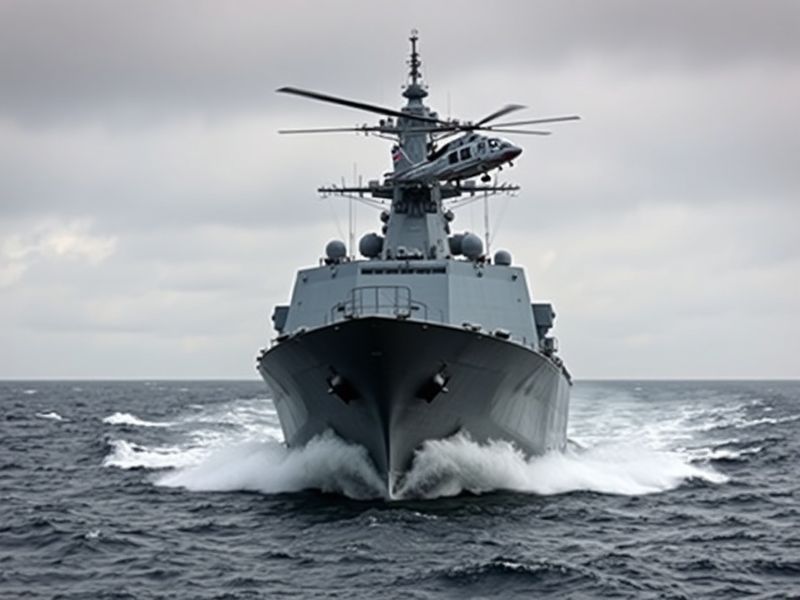
Royal Navy: History, Modern Role, and Future Challenges Explained
“`html
The Royal Navy: Power, Tradition, and Modern Challenges
The Royal Navy stands as one of the world’s most storied naval forces, with a legacy stretching back over a thousand years. From its medieval origins to its modern role in global security, the service has evolved while maintaining its core identity. Today, it faces a critical juncture, balancing tradition with the demands of 21st-century warfare.
A Brief History: From the Middle Ages to the Modern Era
The Royal Navy’s roots can be traced to the reign of Alfred the Great in the 9th century, though its formal establishment came centuries later. By the Tudor period, naval power became essential to England’s survival, culminating in victories like the defeat of the Spanish Armada in 1588. The 18th and 19th centuries marked the Royal Navy’s golden age, as Britannia ruled the waves during the age of empire.
World War I and World War II tested the fleet’s resilience, proving its strategic importance in global conflicts. Post-war, the Royal Navy adapted to the Cold War, focusing on anti-submarine warfare and nuclear deterrence. The Falklands War in 1982 demonstrated its enduring combat effectiveness, while the end of the Cold War shifted its mission toward expeditionary operations and humanitarian missions.
Key Milestones in Royal Navy History
- 1588: Defeat of the Spanish Armada solidifies England’s naval dominance.
- 1707: Formation of the Kingdom of Great Britain leads to the unification of English and Scottish navies.
- 1914-1918: Royal Navy plays a crucial role in World War I, enforcing blockades and protecting supply routes.
- 1982: Victory in the Falklands War showcases the fleet’s operational prowess.
- 2020s: Transition to a more agile, technology-driven force with a focus on the Indo-Pacific.
The Modern Royal Navy: Structure and Capabilities
Today, the Royal Navy operates as a blue-water force, capable of projecting power across the globe. Its fleet includes destroyers, frigates, submarines, and amphibious assault ships, supported by advanced technology and a professional corps of sailors. The service remains a cornerstone of the UK’s defense strategy, working closely with NATO allies and partners.
One of the Royal Navy’s most visible assets is the Queen Elizabeth-class aircraft carriers, the largest warships ever built for the Royal Navy. These carriers enable the UK to deploy air power independently, a capability not seen since the Falklands War. Alongside them, the Type 45 destroyers provide advanced air defense, while the Type 23 and Type 26 frigates focus on anti-submarine and general-purpose missions.
The submarine service, including the Vanguard-class ballistic missile submarines, remains a critical component of the UK’s nuclear deterrent. Meanwhile, the Royal Fleet Auxiliary supports long-range operations with its fleet of replenishment and logistics vessels.
Challenges and Opportunities in the 21st Century
The Royal Navy faces a complex security environment, with shifting geopolitical dynamics and emerging threats. Russia’s resurgence in the North Atlantic, China’s growing naval presence, and instability in the Middle East all demand a more agile and technologically advanced fleet. Budget constraints and the need for modernization further complicate these challenges.
One of the most pressing issues is the Royal Navy’s shrinking fleet size. With fewer than 20 major surface combatants, the service is stretched thin, raising concerns about its ability to meet global commitments. The Type 26 and Type 31 frigates, currently under construction, are expected to address this gap, but delays and cost overruns have raised questions about their timely deployment.
Technology is both an opportunity and a challenge. The Royal Navy is investing in unmanned systems, artificial intelligence, and cyber capabilities to enhance its operational effectiveness. However, integrating these systems into existing platforms requires significant investment and expertise. The service must also contend with the rise of asymmetric threats, such as cyber attacks and drone warfare, which demand new tactics and training.
Royal Navy’s Role in Global Security
- NATO Commitments: The Royal Navy plays a key role in NATO’s collective defense, particularly in the North Atlantic and Baltic Sea.
- Counter-Piracy Operations: Deployments in the Gulf of Aden and Indian Ocean help secure vital shipping lanes.
- Humanitarian Assistance: Ships like HMS Ocean have provided disaster relief in regions like the Caribbean and Southeast Asia.
- Expeditionary Operations: The Royal Navy maintains a persistent presence in the Mediterranean, Middle East, and Asia-Pacific.
- Nuclear Deterrence: The continuous at-sea deterrent ensures the UK’s strategic security.
The Future of the Royal Navy: Modernization and Reform
The Royal Navy’s future hinges on its ability to adapt to evolving threats while maintaining its operational edge. The Defence Command Paper 2023 outlines plans to increase the fleet’s size to around 24 major surface combatants by the 2030s, alongside investments in new technology. However, achieving this goal will require sustained political and financial support.
Another critical area is recruitment and retention. The Royal Navy must attract and retain skilled personnel in an increasingly competitive labor market. Initiatives like the Future Navy Talent Management Programme aim to address these challenges by improving career pathways and modernizing training methods.
The service is also exploring new concepts, such as the “Distributed Maritime Operations” framework, which emphasizes smaller, more agile units operating in a networked environment. This approach could enhance the Royal Navy’s resilience and flexibility in contested waters.
Ultimately, the Royal Navy’s success will depend on its ability to balance tradition with innovation. While its history is a source of pride, its future will be shaped by its willingness to embrace change. As the UK navigates an increasingly uncertain world, the Royal Navy remains a vital instrument of national power and global stability.
The Royal Navy’s journey is far from over. From its medieval origins to its modern challenges, it has continually evolved to meet the demands of its time. In an era of rapid technological change and shifting geopolitical realities, the service’s ability to adapt will determine its place in the decades to come.