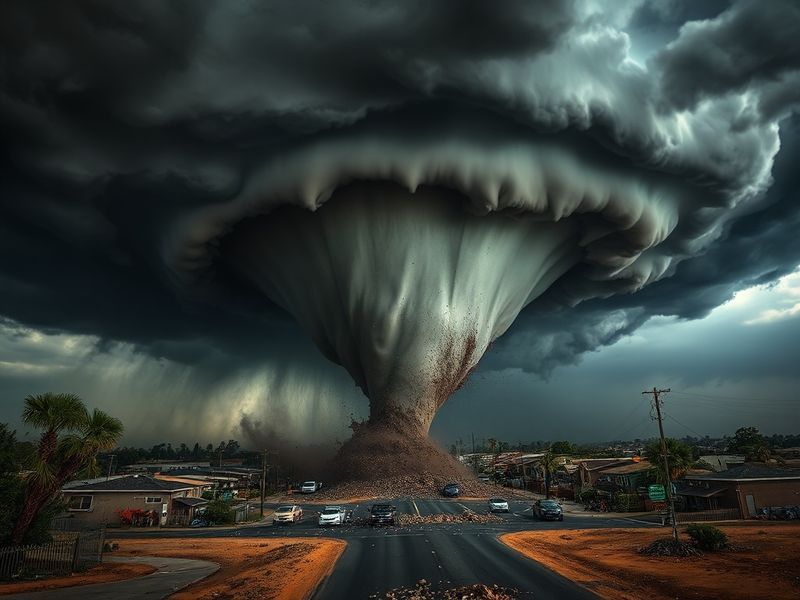
The city of Fresno, California, rarely finds itself in the path of tornadoes, yet on a seemingly ordinary Tuesday afternoon, a rare EF-1 tornado touched down in the heart of the Central Valley. With winds reaching up to 100 mph, the twister carved a 1.5-mile path of damage through residential neighborhoods, uprooting trees, damaging roofs, and sending debris flying across streets. The event left residents stunned and raised questions about the increasing frequency of such unusual weather in a region better known for droughts and wildfires than tornadoes.
While tornadoes are common in the Midwest and Southern United States, California averages fewer than one tornado per year. When they do occur, they are typically weak, short-lived, and cause minimal damage. The Fresno tornado, however, defied expectations, prompting meteorologists to examine whether climate change is altering weather patterns in unexpected ways. This event serves as a reminder that no region is entirely immune to the whims of nature.
How the Tornado Formed: A Meteorological Anomaly
Meteorologists later attributed the tornado to a combination of unusual atmospheric conditions. A strong low-pressure system collided with a moist air mass moving in from the Pacific, creating an unstable environment ripe for thunderstorms. Within one of these storms, a rotating updraft—a mesocyclone—formed, eventually descending to the ground as a tornado. What made this event particularly rare was its location: the Central Valley, where the terrain and typical weather patterns usually prevent such formations.
The National Weather Service confirmed the tornado’s strength as an EF-1 on the Enhanced Fujita Scale, with damage estimates ranging from $500,000 to $1 million. While no fatalities were reported, several injuries required medical attention, and displaced residents faced the daunting task of assessing structural damage to their homes. The tornado’s path cut through a mix of suburban and industrial zones, highlighting how even a relatively weak tornado can disrupt daily life in a major city.
Key Factors Behind the Fresno Tornado
- Unseasonal Moisture: A rare influx of moisture from the Pacific contributed to the storm’s intensity.
- Atmospheric Instability: A strong temperature gradient between the surface and upper atmosphere fueled thunderstorm development.
- Localized Wind Shear: Changes in wind speed and direction with height allowed rotation to develop within the storm.
- Urban Heat Island Effect: Fresno’s built environment may have played a role in intensifying the storm’s energy.
Experts note that while EF-1 tornadoes are not uncommon in the U.S., their occurrence in California is statistically rare. The state’s last significant tornado was an EF-2 that struck near Bakersfield in 2022. The Fresno event, therefore, stands out not just for its impact but for its departure from typical California weather norms.
Community Response: Resilience in the Face of Uncertainty
The days following the tornado were marked by a swift community response. Local emergency services, including the Fresno Fire Department and American Red Cross, mobilized to provide shelter, food, and medical aid to affected residents. Social media became a vital tool for communication, with hashtags like #FresnoTornado circulating as people shared photos of damage and offered assistance to neighbors.
One resident, Maria Gonzalez, recounted how her family huddled in a hallway as the tornado passed within blocks of their home. “We heard the sirens, but we never expected a tornado,” she said. “It sounded like a freight train.” Her experience mirrored that of many others who described the eerie combination of wind and debris as the tornado touched down just after 3 PM, a time when most were still going about their day.
City officials quickly declared a state of emergency, enabling access to state and federal disaster relief funds. The Fresno City Council also announced plans to review building codes in tornado-prone areas, a move that could lead to stronger roofing standards and better emergency alert systems for future events.
Broader Implications: Is California’s Weather Changing?
The Fresno tornado has reignited discussions among climate scientists about whether California’s weather patterns are evolving. While no single event can be directly attributed to climate change, researchers point to a growing body of evidence suggesting that warming temperatures and shifting jet streams may be contributing to more extreme weather events in unexpected regions.
A 2023 study published in the Journal of Climate found that atmospheric rivers—long, narrow bands of moisture that often bring heavy rain—have become more intense in recent decades. While these are not directly linked to tornadoes, they indicate that California’s climate is becoming more volatile. Some scientists speculate that the same atmospheric conditions that fuel wildfires could, under the right circumstances, also spawn rare tornadoes.
For policymakers, the Fresno tornado serves as a wake-up call. The state’s emergency preparedness plans have historically focused on earthquakes, wildfires, and droughts. While these remain the most significant threats, the possibility of tornadoes—even rare ones—now demands attention. The California Office of Emergency Services has begun reviewing its disaster response protocols to ensure they account for all potential hazards.
What Residents Should Know
For those living in the Central Valley or other regions unaccustomed to tornadoes, preparedness is key. The National Weather Service recommends the following steps:
- Identify a Safe Room: A basement or interior room on the lowest floor of a sturdy building provides the best protection.
- Stay Informed: Sign up for local emergency alerts and monitor weather updates via NOAA Weather Radio or trusted apps.
- Prepare an Emergency Kit: Include water, non-perishable food, flashlights, batteries, and a first-aid kit.
- Know the Signs: Watch for dark, greenish skies, large hail, or a loud roar similar to a freight train.
- Have a Plan: Ensure all family members know where to go and how to communicate in the event of a tornado warning.
While the Fresno tornado was a rare event, it underscores the importance of being prepared for the unexpected. Communities that take proactive steps now may find themselves better equipped to handle whatever Mother Nature throws their way next.
Looking Ahead: Lessons from Fresno
The Fresno tornado will likely be studied for years to come as researchers seek to understand why it occurred and whether similar events could happen elsewhere in the state. For now, residents are left to pick up the pieces and rebuild, while scientists and policymakers grapple with the broader implications of a changing climate.
One thing is certain: the tornado that struck Fresno on that Tuesday afternoon was a reminder that nature is full of surprises. Whether these surprises become more frequent remains to be seen, but one thing is clear—California must adapt to a future where even its most unlikely disasters are no longer out of the question.
For more on extreme weather events and their impacts, explore our News and Science sections for in-depth analysis and expert commentary.