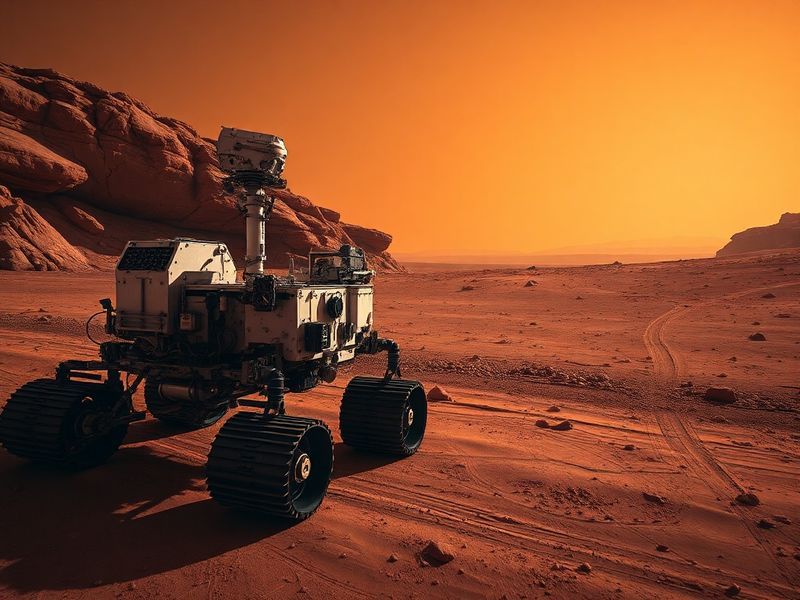
NASA’s Curiosity rover has once again rewritten the narrative of Mars exploration. In a discovery announced in July 2024, the rover identified complex organic compounds in Martian soil that could provide critical clues about the planet’s past habitability. This finding, though not definitive proof of life, significantly strengthens the case for ancient microbial activity on the Red Planet.
The compounds—thiophenes, benzene, and small-chain carbon molecules—were detected in samples from Gale Crater, a region once home to a lake billions of years ago. Scientists believe these organics may have formed through geological processes or, intriguingly, as remnants of past biological activity. The discovery builds on earlier detections by Curiosity in 2018, but this latest analysis offers a more detailed molecular breakdown thanks to the rover’s upgraded Sample Analysis at Mars (SAM) instrument suite.
How the Discovery Unfolded: A Timeline of Key Moments
The journey to this revelation began in 2012, when Curiosity first landed in Gale Crater. Since then, the rover has been methodically drilling into Martian rocks and analyzing soil samples, searching for signs of past life. The breakthrough came when SAM heated a powdered rock sample to 850°C, releasing gases that revealed the presence of organic molecules.
Key steps in the process included:
- Sample Collection: Curiosity drilled into a rock formation named “Mary Anning,” named after the pioneering 19th-century paleontologist.
- Heating Experiment: The SAM instrument vaporized the sample, allowing scientists to analyze the released gases with a mass spectrometer.
- Data Transmission: Results were sent back to Earth over several months, where researchers cross-referenced the findings with previous data.
- Peer Review: The results were published in the journal Nature, following rigorous validation by independent experts.
This meticulous approach ensures that the findings are not merely anomalies but part of a broader pattern pointing to Mars’ dynamic chemical history.
What These Organic Compounds Tell Us About Mars’ Past
Organic compounds are the building blocks of life as we know it, but their presence on Mars doesn’t automatically confirm the existence of past life. These molecules can form through abiotic processes, such as volcanic activity or chemical reactions in water. However, their complexity and the specific conditions under which they were found suggest a more nuanced story.
Researchers have proposed several possibilities:
- Biological Origin: The compounds could be remnants of ancient microbial life, preserved in the Martian soil for billions of years. On Earth, similar molecules are often linked to biological activity.
- Geological Formation: They may have formed through interactions between water and minerals, a process that doesn’t require life but indicates a wet, dynamic environment.
- Meteorite Delivery: Organic-rich meteorites could have delivered these compounds to Mars, though this doesn’t explain their concentration in specific locations.
The Gale Crater site is particularly compelling because it contains evidence of an ancient lake, complete with clay minerals that typically form in water. This suggests that Mars once had conditions suitable for life—liquid water, organic molecules, and a source of energy. The next step is to determine whether these conditions persisted long enough for life to emerge.
The Broader Implications: Why This Discovery Matters
This discovery is more than a scientific curiosity; it has profound implications for our understanding of life in the universe. Mars, once thought to be a barren, lifeless world, is now revealing itself as a planet with a rich chemical history. The presence of organic compounds challenges the notion that Earth is unique in harboring life’s essential ingredients.
For astrobiologists, this finding is a critical piece of the puzzle. It suggests that the ingredients for life are not rare but may be widespread in the universe. The next Mars rover mission, Perseverance, is already searching for signs of ancient life in Jezero Crater, another site with a history of water. If it finds similar compounds, the case for Martian life will grow even stronger.
Beyond the search for life, this discovery also informs future human missions to Mars. Astronauts will need to understand the planet’s chemistry to safely harvest resources like water and oxygen. Organic compounds could even be used to produce fuel or building materials, making Mars more hospitable for colonization.
What Comes Next? The Future of Mars Exploration
The Curiosity rover’s findings are just the beginning. NASA’s upcoming Mars Sample Return mission, in partnership with the European Space Agency, aims to bring Martian soil samples back to Earth by the early 2030s. These pristine samples will allow scientists to conduct far more detailed analyses than is possible with a robotic rover.
In the meantime, researchers will continue to study the data from Curiosity and Perseverance, looking for patterns that might hint at biological processes. The discovery of organic compounds has also reignited debates about how to detect life on other planets. Should future missions prioritize chemical signatures over visual evidence? Could there be life forms that don’t rely on the same organic molecules as Earth life?
The answers to these questions will shape the next generation of Mars exploration. One thing is certain: the Red Planet is no longer a blank slate. It has a story to tell, and we are only beginning to uncover it.
For those eager to follow the latest developments in space exploration, visit Dave’s Locker Technology for in-depth coverage of NASA missions and breakthroughs. To learn more about the science behind planetary discoveries, check out our Science section.