Exploring Deep Learning: Mechanisms and Applications
Understanding Deep Learning
Deep learning is a subset of machine learning that utilizes neural networks with many layers to analyze various forms of data. Unlike traditional machine learning techniques, which often require manual feature extraction, deep learning automates this process. This capability allows for more complex data representations and has led to significant advancements in areas such as image and speech recognition.
How Deep Learning Works
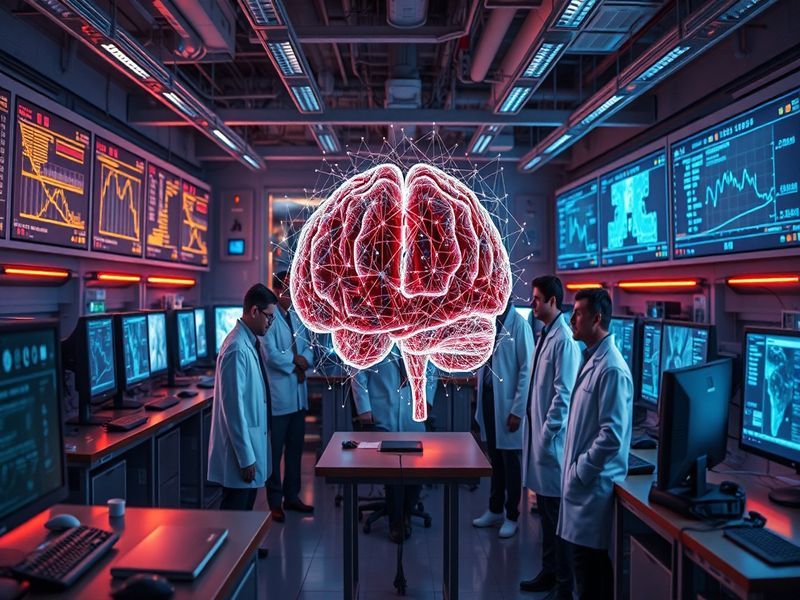
At its core, deep learning mimics the way the human brain operates. Neural networks consist of interconnected nodes, or neurons, that process information in layers. Each layer extracts different features from the input data. The initial layers may focus on simple features, while deeper layers combine these features to identify more complex patterns.
The training process involves feeding the network a large dataset, allowing it to learn from the data through a method called backpropagation. This method adjusts the weights of the connections between neurons based on the errors in the output compared to the expected results. Over time, the model improves its accuracy.
Applications of Deep Learning
Deep learning has found applications across various fields, demonstrating its versatility and effectiveness. Here are some notable areas where deep learning is making an impact:
- Image Recognition: Systems can identify objects, faces, and even emotions in images.
- Natural Language Processing: Deep learning models are used in chatbots, translation services, and voice-activated assistants.
- Healthcare: Algorithms can analyze medical images and predict patient outcomes, aiding in diagnosis and treatment.
- Autonomous Vehicles: Self-driving cars rely on deep learning to interpret sensory data and make driving decisions.
The Future of Deep Learning
The future of deep learning is promising, with ongoing research and development aimed at improving its capabilities and efficiency. As computational power increases and algorithms become more refined, we can expect deeper and more complex networks, which may lead to breakthroughs in artificial intelligence.
However, challenges remain. Issues such as bias in training data, the interpretability of models, and the need for large amounts of data pose significant hurdles. Researchers are actively working to address these concerns to make deep learning more ethical and reliable.
Conclusion
Deep learning stands at the forefront of technological innovation, shaping how we interact with machines and data. Its applications span a wide range of industries, promising to transform sectors from healthcare to transportation. As we move forward, the focus will likely shift towards refining these systems, ensuring they are not only effective but also equitable and transparent.
For more insights into technology and innovation, visit our Technology and Science pages.