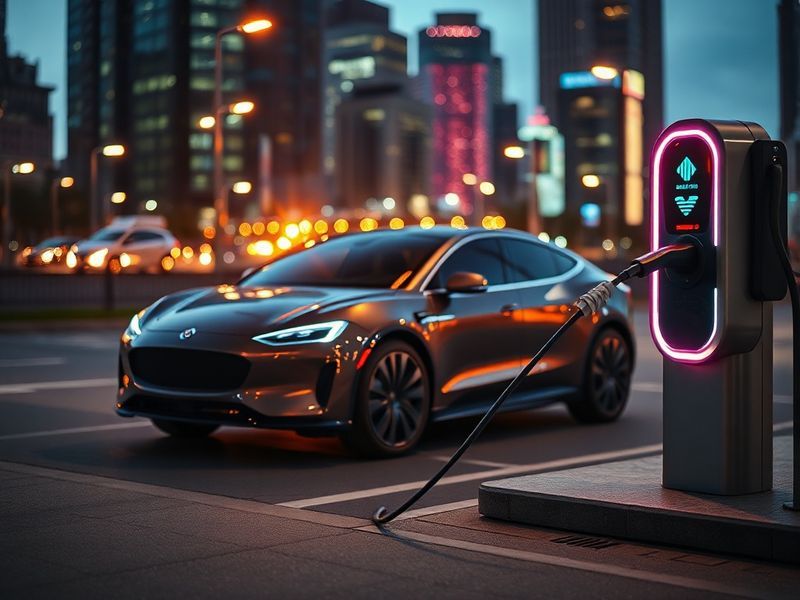
Electric Vehicles: How EVs Are Reshaping Transportation
“`html
Electric Vehicles: The Quiet Revolution on Four Wheels
The automotive industry is undergoing a transformation that’s as quiet as it is profound. Electric vehicles (EVs) have moved from niche curiosity to mainstream necessity, reshaping how we think about transportation, energy, and even urban design. The shift isn’t just about swapping gasoline engines for batteries; it’s a fundamental reimagining of mobility itself.
The Rise of EVs: Numbers Don’t Lie
Sales figures tell a compelling story. In 2023, global EV sales exceeded 14 million units, a 35% increase from the previous year. China, the world’s largest auto market, accounted for more than half of those sales, while Europe and North America followed at a growing pace. This isn’t just incremental growth—it’s exponential momentum.
Several factors are driving this surge:
- Policy shifts: Governments worldwide are implementing stricter emissions regulations and offering incentives like tax credits, rebates, and exemptions from congestion charges.
- Battery breakthroughs: The cost of lithium-ion batteries has dropped by nearly 90% over the past decade, making EVs more affordable without sacrificing range.
- Consumer awareness: Climate change concerns and the rising cost of gasoline have pushed buyers to reconsider their transportation choices.
- Corporate commitments: Nearly every major automaker has pledged to phase out internal combustion engines within the next 10–15 years.
Yet numbers alone don’t capture the cultural impact. EVs are redefining what it means to own and operate a vehicle. The absence of engine noise, the instant torque delivery, and the minimalist interiors are creating a new aesthetic for automobiles. Even the way we charge these vehicles is evolving, with fast-charging networks expanding to rival the convenience of gas stations.
The Ripple Effects: Beyond the Tailpipe
The implications of this transition extend far beyond the automotive sector. The energy grid, for instance, is being forced to adapt. As more EVs plug in, demand for electricity will surge, particularly during peak hours. This has prompted utilities and policymakers to explore smart charging solutions, battery storage integration, and even vehicle-to-grid technology, where EVs can feed power back into the grid during shortages.
Urban planning is another area feeling the effects. Cities are redesigning parking structures to accommodate charging stations, and some are considering dedicated EV-only lanes to ease traffic flow. The concept of “range anxiety” is also fading as battery ranges push past 300 miles on a single charge, making long-distance travel more feasible.
There’s also the question of jobs. The shift to EVs is disrupting traditional automotive manufacturing, where internal combustion engine expertise has long dominated. While new roles are emerging in battery production, software development, and charging infrastructure, the transition isn’t without friction. Legacy automakers and suppliers are racing to upskill their workforce or risk obsolescence.
Challenges and Controversies
Despite the progress, significant hurdles remain. One of the most pressing is the environmental cost of battery production. Mining lithium, cobalt, and nickel—key components of EV batteries—has been linked to water pollution, human rights abuses, and ecosystem destruction. While EVs produce fewer emissions over their lifetime compared to gas-powered cars, the extraction process remains a stain on their green credentials.
Another challenge is the infrastructure gap. Rural areas and developing nations often lack reliable access to charging stations, creating a digital divide in transportation equity. Even in urban centers, multi-unit dwellings may not have the electrical capacity to support widespread EV charging, leaving renters at a disadvantage.
Then there’s the issue of battery disposal. While recycling programs are expanding, the majority of EV batteries still end up in landfills at the end of their lives. Innovations in battery recycling are critical to ensuring that the EV revolution doesn’t simply replace one environmental problem with another.
What’s Next? The Road Ahead
The future of EVs is likely to be defined by three key trends: standardization, innovation, and integration.
Standardization will play a crucial role in accelerating adoption. Universal charging standards, such as the Combined Charging System (CCS) and Tesla’s North American Charging Standard (NACS), are reducing fragmentation. Meanwhile, governments are pushing for common regulations on battery safety, performance, and recycling to streamline global trade.
Innovation will continue to push boundaries. Solid-state batteries promise greater energy density and safety, while wireless charging could eliminate the need for cables altogether. Autonomous driving, often paired with EVs, is also on the horizon, with companies like Tesla, Waymo, and traditional automakers testing self-driving capabilities that could redefine car ownership.
Integration will see EVs become part of a larger ecosystem. Vehicle-to-everything (V2X) technology, for example, allows cars to communicate with traffic lights, power grids, and even other vehicles to optimize traffic flow and energy use. This interconnectedness could lead to smarter cities and more efficient transportation networks.
For consumers, the choices will only grow more diverse. From compact city cars to high-performance luxury vehicles, EVs are no longer a monolith. Brands like Rivian, Lucid, and BYD are challenging the dominance of legacy automakers, while startups are experimenting with novel designs, such as modular vehicles that can adapt to different needs.
The transition to electric vehicles is more than a technological shift—it’s a societal one. It challenges our assumptions about energy, infrastructure, and mobility while offering a path toward a more sustainable future. The road ahead won’t be smooth, but the destination is clear: a world where transportation is cleaner, quieter, and more connected than ever before.
For those interested in the broader automotive landscape, Dave’s Locker’s Automotive section offers deeper analysis on industry trends, while the Technology section covers the innovations driving this revolution.