space exploration
“`html
Space Exploration: The Next Frontier Beyond Earth
Humanity’s quest to explore the cosmos has evolved from ancient stargazing to sophisticated missions probing the depths of space. Space exploration represents one of the most ambitious and transformative endeavors in history, driven by scientific curiosity, technological innovation, and the unyielding human spirit. From the first satellite launch to plans for crewed missions to Mars, each milestone has expanded our understanding of the universe and our place within it.
This pursuit is not merely about discovery—it is about survival, progress, and redefining the boundaries of what is possible. As governments and private companies invest billions into space programs, the conversation around space exploration has shifted from a Cold War competition to a global collaboration with profound implications for technology, economics, and even culture. The journey into space is no longer the stuff of science fiction; it is an unfolding reality with tangible impacts on daily life.
The Historical Milestones That Shaped Space Exploration
The history of space exploration is marked by a series of groundbreaking achievements that have reshaped humanity’s relationship with the cosmos. It began in 1957 when the Soviet Union launched Sputnik 1, the first artificial satellite, into orbit. This event not only ignited the Space Race but also demonstrated that humans could place objects beyond Earth’s atmosphere. Four years later, Yuri Gagarin became the first human in space aboard Vostok 1, proving that spaceflight was not just possible but survivable.
The United States responded with the Apollo program, culminating in the 1969 moon landing when Neil Armstrong and Buzz Aldrin set foot on the lunar surface. This momentous event was watched by an estimated 600 million people worldwide, cementing space exploration as a unifying human achievement. Following the Apollo era, focus shifted toward long-term space stations, with the Soviet Mir and later the International Space Station (ISS) serving as symbols of international cooperation.
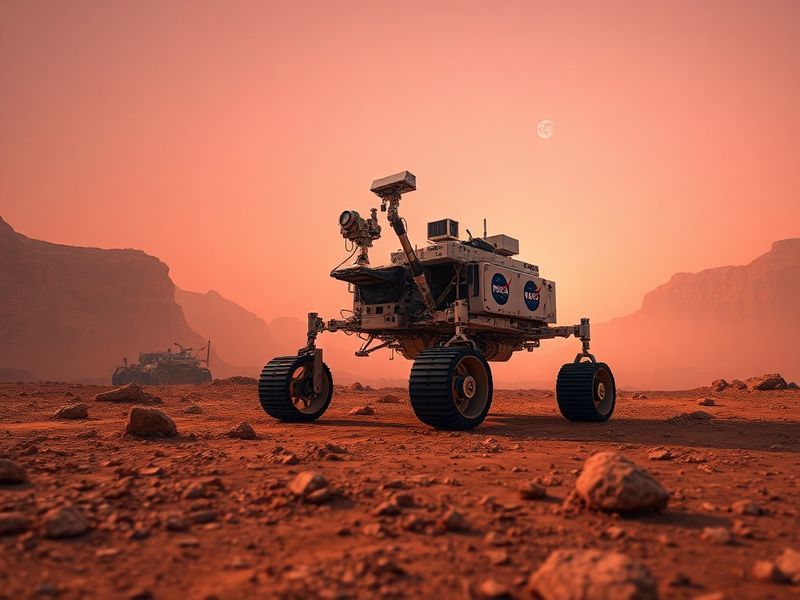
In recent decades, robotic missions have taken center stage. The Voyager 1 probe, launched in 1977, has traveled beyond the solar system, while rovers like Perseverance on Mars continue to send back unprecedented data about the Red Planet. These missions have expanded our knowledge of distant worlds and laid the groundwork for future human exploration.
Key Achievements in Space Exploration
- 1957: First artificial satellite, Sputnik 1, launched by the Soviet Union.
- 1961: Yuri Gagarin becomes the first human in space aboard Vostok 1.
- 1969: Apollo 11 mission lands the first humans on the Moon.
- 1977: Voyager 1 launched, becoming the first human-made object to enter interstellar space.
- 1998: International Space Station (ISS) construction begins, a symbol of global collaboration.
- 2021: Perseverance rover lands on Mars, collecting samples and searching for signs of ancient life.
The Role of Private Companies in Modern Space Exploration
While government agencies like NASA, Roscosmos, and ESA continue to play pivotal roles, private companies have become major players in space exploration. SpaceX, founded by Elon Musk in 2002, has revolutionized the industry with reusable rockets and ambitious plans for Mars colonization. The company’s Falcon 9 and Starship rockets have significantly reduced the cost of launching payloads into orbit, making space more accessible.
Blue Origin, led by Jeff Bezos, is another key player focusing on suborbital tourism and lunar missions. Its New Shepard rocket has successfully completed multiple crewed flights, offering civilians a taste of space travel. Meanwhile, companies like Boeing and Lockheed Martin are developing next-generation spacecraft, such as the Starliner and Orion, which will support NASA’s Artemis program aimed at returning humans to the Moon.
These private ventures are not just about profit—they are driving innovation at an unprecedented pace. The competition among companies has accelerated technological advancements, from propulsion systems to life-support technologies. However, it has also raised concerns about regulation, space debris, and the ethical implications of commercializing space.
The Scientific and Economic Benefits of Space Exploration
Space exploration yields tangible benefits that extend far beyond the confines of the cosmos. Many technologies developed for space missions have found practical applications on Earth. For example, satellite technology underpins modern communication, weather forecasting, and GPS navigation. Medical advancements, such as improved imaging techniques and telemedicine, have also been derived from space research.
Economically, the space industry is a major driver of growth. According to the Space Foundation, the global space economy was valued at over $447 billion in 2022, with projections to exceed $1 trillion by 2040. This growth is fueled by increased investment in satellite launches, space tourism, and resource extraction from asteroids and the Moon. Mining water ice on the Moon, for instance, could provide fuel for deep-space missions, reducing the cost of interplanetary travel.
Moreover, space exploration inspires the next generation of scientists, engineers, and innovators. Programs like NASA’s Artemis initiative aim to land the first woman and person of color on the Moon, promoting diversity and inclusion in STEM fields. These efforts are crucial for addressing global challenges, from climate change to sustainable energy.
The Challenges and Ethical Considerations of Space Travel
Despite its promise, space exploration is fraught with challenges and ethical dilemmas. One of the most pressing issues is space debris. With over 30,000 pieces of debris larger than a softball orbiting Earth, the risk of collisions with active satellites or spacecraft is growing. This debris, traveling at speeds of up to 17,500 mph, poses a significant threat to both robotic and crewed missions. Efforts to mitigate this problem include active debris removal missions and stricter regulations on satellite disposal.
Another challenge is the health risks associated with long-duration spaceflight. Astronauts on the ISS face muscle atrophy, bone density loss, and exposure to high levels of radiation. These risks will only intensify for missions to Mars, which could take up to three years round-trip. Research into artificial gravity, radiation shielding, and advanced life-support systems is underway, but solutions remain elusive.
Ethically, the commercialization of space raises questions about resource ownership and environmental impact. The Outer Space Treaty of 1967 prohibits nations from claiming celestial bodies, but it does not address private companies’ rights to extract resources. As companies like SpaceX and Blue Origin eye lunar and Martian resources, international agreements will be necessary to prevent conflicts and ensure sustainable practices.
Major Challenges in Space Exploration
- Space Debris: Over 30,000 pieces of debris threaten active missions and satellites.
- Health Risks: Astronauts face muscle atrophy, radiation exposure, and psychological challenges during long missions.
- Resource Extraction: Ethical and legal questions surround the commercial use of lunar and Martian resources.
- Cost and Accessibility: High costs limit participation to wealthy nations and corporations, raising concerns about inequality.
- Planetary Protection: Preventing contamination of other worlds with Earth microbes and vice versa.
Looking Ahead: The Future of Space Exploration
The future of space exploration is brimming with possibilities. NASA’s Artemis program aims to establish a sustainable human presence on the Moon by the end of this decade, serving as a stepping stone for Mars missions. The Lunar Gateway, a small space station orbiting the Moon, will support these efforts and facilitate international collaboration. Meanwhile, China’s Tiangong space station and Russia’s plans for lunar bases highlight the increasing diversity of spacefaring nations.
Mars remains the ultimate goal for human exploration. SpaceX’s Starship is designed to carry up to 100 people to the Red Planet, with the first crewed mission potentially launching in the late 2020s. The challenges are immense—radiation, life support, and psychological factors—but the potential rewards are even greater. A self-sustaining colony on Mars could ensure the survival of humanity in the event of a catastrophic event on Earth.
Beyond Mars, robotic missions to the outer planets and even interstellar space are on the horizon. NASA’s Europa Clipper mission, launching in 2024, will study Jupiter’s moon Europa, which may harbor a subsurface ocean capable of supporting life. Meanwhile, the Breakthrough Starshot initiative aims to send tiny probes to the Alpha Centauri system, traveling at 20% the speed of light.
As humanity ventures further into the cosmos, the boundaries between science fiction and reality continue to blur. Space exploration is no longer a distant dream—it is an ongoing journey that will define the next chapter of human history. The challenges are daunting, but the potential rewards—scientific discovery, economic growth, and the survival of our species—are worth the pursuit.
For those eager to stay updated on the latest developments, Dave’s Locker Science section offers in-depth coverage of space missions, technological innovations, and the broader impact of space exploration on society. Whether you’re a seasoned enthusiast or a curious newcomer, the final frontier has never been more accessible.
—METADATA—
{
“title”: “Space Exploration: How Humanity is Expanding Beyond Earth”,
“metaDescription”: “From moon landings to Mars missions, explore the history, challenges, and future of space exploration and its impact on science and society.”,
“categories”: [“Science”, “Technology”],
“tags”: [“space exploration”, “NASA Artemis”, “Mars missions”, “SpaceX Starship”, “International Space Station”],
“imageDescription”: “A high-tech spacecraft in orbit above Earth, with