David Scott is one of the most significant yet understated figures in the history of space exploration. As an astronaut with NASA during the Apollo era, Scott played a pivotal role in some of the most daring missions of the 20th century. His career spanned the transition from early spaceflight to more scientific and exploratory missions, embodying the spirit of innovation that defined the space race.
Born in 1932 in San Antonio, Texas, Scott graduated from the United States Military Academy at West Point before joining the Air Force. His technical precision and leadership qualities quickly caught the attention of NASA, leading to his selection as an astronaut in 1963. Scott’s early contributions included serving as a member of the backup crew for the Gemini 8 mission, a critical step in perfecting docking procedures in space. This experience laid the groundwork for his later achievements.
Apollo 9 and the First Lunar Module Test Flight
Scott’s first spaceflight came in March 1969 aboard Apollo 9, a mission designed to test the Lunar Module (LM) in Earth orbit. While this mission did not reach the Moon, it was essential for validating the hardware that would later land humans on the lunar surface. Scott, serving as Command Module Pilot, demonstrated the same level of professionalism and technical skill that would define his career.
The Apollo 9 mission included a critical rendezvous and docking exercise, where Scott and his crewmates, James McDivitt and Russell Schweickart, practiced maneuvers essential for lunar operations. Schweickart’s spacewalk, in particular, tested the new spacesuit designed for Moonwalks. Though overshadowed by later Apollo missions, Apollo 9 was a technical triumph, proving that NASA’s engineering could support lunar exploration.
The Apollo 15 Mission and the First Extended Lunar Exploration
Scott’s most enduring legacy comes from Apollo 15, the fourth mission to land on the Moon, launched in July 1971. This mission marked a shift toward more ambitious scientific objectives. Unlike previous Apollo landings, which focused on proving the technology could work, Apollo 15 was designed as a full scientific expedition. Scott, now the mission commander, led a crew that included James Irwin and Alfred Worden.
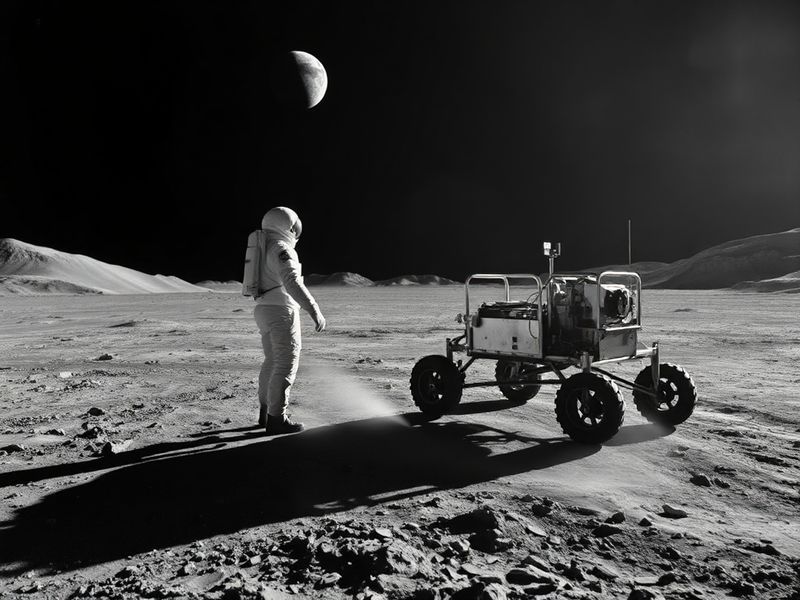
Apollo 15 introduced the Lunar Roving Vehicle (LRV), a battery-powered car that allowed astronauts to traverse greater distances on the Moon’s surface. Scott and Irwin used the LRV to explore the Hadley Rille and Apennine Mountains, collecting 170 pounds of lunar samples. These samples provided invaluable insights into the Moon’s geology and the early history of the solar system.
One of the most iconic moments of the mission—and Scott’s career—occurred during a live television broadcast from the lunar surface. In a demonstration of Galileo’s theory of gravity, Scott dropped a hammer and a feather simultaneously, showing that in the absence of air resistance, both objects fell at the same rate. The experiment was a powerful reminder of the scientific purpose behind the Apollo program.
The Cultural and Scientific Impact of Apollo 15
Apollo 15 was not just a technological achievement; it represented a cultural shift in how humanity viewed space exploration. The mission brought science to the forefront, moving beyond Cold War competition to a broader quest for knowledge. Scott’s leadership during this mission helped redefine the role of astronauts from mere pilots to field scientists.
On a global scale, Apollo 15 captivated audiences worldwide. Television broadcasts allowed millions to witness the Moon landings in real time, fostering a sense of global unity and curiosity. The mission’s scientific focus also inspired educational initiatives, encouraging students to pursue careers in science, technology, engineering, and mathematics (STEM).
The samples collected during Apollo 15 continue to be studied decades later. In 2021, NASA opened a previously untouched sample from the mission, using advanced techniques to extract new data. This underscores the long-term value of the Apollo program and the enduring legacy of missions like Apollo 15.
Life After NASA: Advocacy and Legacy
After leaving NASA in 1977, Scott remained active in the space community. He founded Scott Science and Technology, Inc., a company focused on aerospace consulting and education. He also authored books, including Two Sides of the Moon, co-written with cosmonaut Alexei Leonov, which offered a rare dual perspective on the space race.
Scott has been a vocal advocate for space exploration, emphasizing the importance of international collaboration. His career spanned both the competitive era of the 1960s and the more cooperative spirit of later decades. Today, he is often sought after for his insights into the future of human spaceflight, particularly as NASA’s Artemis program prepares to return humans to the Moon.
Key Contributions to Space Exploration
- Gemini 8 Backup Crew: Played a critical role in testing docking procedures, a foundational skill for lunar missions.
- Apollo 9: Tested the Lunar Module in Earth orbit, proving its readiness for lunar missions.
- Apollo 15: Commanded the first extended lunar mission, introducing the Lunar Roving Vehicle and conducting groundbreaking science.
- Science Advocacy: Promoted the role of astronauts as scientists and educators, shaping future missions.
The Global Influence of Apollo 15
Apollo 15’s success had a ripple effect beyond the United States. The mission’s scientific focus aligned with growing global interest in planetary science. European and Asian nations, many of which were developing their own space programs, closely followed the mission. The inclusion of international scientists in later Apollo missions, such as the Apollo-Soyuz Test Project, reflected a broader shift toward cooperation.
In Japan, for example, the mission inspired a generation of engineers who later contributed to JAXA’s Hayabusa and Kaguya missions. Similarly, in India, the success of Apollo 15 fueled interest in the country’s own lunar ambitions, culminating in the Chandrayaan missions. Scott’s work demonstrated that space exploration was not just a national endeavor but a global one.
Conclusion: A Lasting Legacy
David Scott’s career encapsulates the evolution of space exploration from a race to a scientific endeavor. His contributions to Apollo 9 and Apollo 15 were instrumental in advancing human understanding of the Moon and beyond. More than just a participant in history, Scott helped shape its direction, emphasizing the importance of science, exploration, and global collaboration.
As humanity prepares to return to the Moon with NASA’s Artemis program and international partnerships like the Lunar Gateway, Scott’s legacy serves as a reminder of what can be achieved through vision, perseverance, and a commitment to discovery. His story is not just one of personal achievement but of how exploration can unite and inspire the world.