Spanish football’s Segunda División and La Liga often showcase dramatically different narratives, where established giants clash with ambitious underdogs. One of the most compelling matchups in recent seasons has been between Elche C.F. and Atlético Madrid. While Atlético Madrid has cemented its status as a European heavyweight, Elche C.F. has navigated the challenges of lower-league football with resilience and ambition. This contrast makes their encounters more than just games—they reflect broader trends in Spanish football’s hierarchy.
Elche, based in the Alicante region, has spent much of the past decade oscillating between Segunda División and La Liga, embodying the struggle of mid-tier clubs trying to break into the elite. Atlético Madrid, on the other hand, has transformed under Diego Simeone into a consistent Champions League contender and domestic force. Their head-to-head meetings highlight not just tactical differences but also the financial and structural gaps between clubs in Spain’s top two tiers.
The Rise of Atlético Madrid: From Cup Winners to Champions League Contenders
Atlético Madrid’s resurgence under Diego Simeone since 2011 has been one of modern football’s most remarkable stories. After years of being overshadowed by Real Madrid and Barcelona, Los Rojiblancos redefined their identity through a blend of defensive solidity and relentless counter-attacking football. This tactical approach has yielded two Europa League titles, a Copa del Rey, and two Champions League finals, including the dramatic 2014 and 2016 clashes with Real Madrid.
The club’s financial transformation has been equally impressive. Atlético’s move to the Wanda Metropolitano in 2017 marked a new era, with the stadium becoming a symbol of their ambition. Their revenue streams have diversified, thanks to commercial growth and smart transfers, allowing them to compete financially with their more illustrious rivals. Players like Antoine Griezmann, Diego Godín, and more recently Jan Oblak and Thomas Partey have become icons of this new Atlético era.
Despite their European pedigree, Atlético’s domestic league performances have been a study in consistency. They have finished in the top four in La Liga for nine consecutive seasons, often challenging for the title. Their ability to grind out results, even in difficult away fixtures, has made them a team opponents fear. This consistency is a testament to Simeone’s man-management and the club’s clear footballing philosophy.
Elche C.F.: A Club Fighting for Survival and Ambition
Elche C.F.’s story is one of perseverance in the face of financial and competitive adversity. Founded in 1923, the club has spent decades bouncing between Spain’s top two divisions, often acting as a stepping stone for players and managers on their way to bigger clubs. Their most recent promotion to La Liga in 2020 was a cause for celebration, but survival has remained a constant challenge. The 2021-22 season saw them relegated after just two years, a stark reminder of the volatility in Spanish football’s lower tiers.
Financially, Elche operates on a far smaller budget compared to Atlético Madrid. While Atlético’s revenue exceeds €400 million annually, Elche’s figures are closer to €50 million. This disparity affects their ability to retain top talent or invest in infrastructure. The club’s Vinalopó stadium, with a modest capacity of 33,732, reflects their limited resources. Despite these constraints, Elche has cultivated a reputation for developing young talent and playing attractive football, often under managers who prioritize youth development.
Elche’s recent history includes several near-misses in promotion playoffs, showcasing their ambition. Their 2023-24 campaign in Segunda División has been closely watched, with fans hoping for a swift return to La Liga. The club’s focus on local talent and community engagement has also strengthened their identity, making them a symbol of regional pride in the Alicante province.
Head-to-Head: Tactical and Psychological Battles
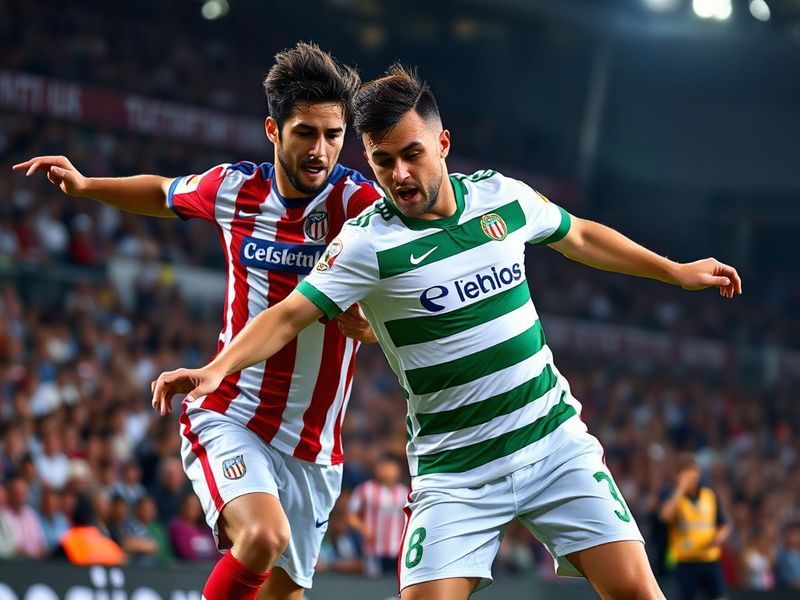
When Elche and Atlético Madrid meet, the contrast in their approaches is immediately apparent. Atlético’s high-pressing, physical style often overwhelms smaller teams, but Elche has shown tactical flexibility in frustrating their opponents. In their most recent La Liga clash in May 2022, Elche held Atlético to a 1-1 draw at the Metropolitano, a result that highlighted their defensive organization and ability to exploit set-pieces.
Atlético’s dominance in possession and territorial advantage is usually overwhelming, but Elche’s compact 5-4-1 or 4-4-2 formations have proven effective in breaking their rhythm. Atlético’s reliance on wingers like Yannick Carrasco and Marcos Llorente can be neutralized by Elche’s disciplined full-backs and midfielders. However, Atlético’s quality in transition often exposes gaps, making their matches unpredictable.
The psychological edge often favors Atlético, given their status and resources. However, Elche’s underdog mentality can work in their favor, as seen in their 2021 Copa del Rey run, where they defeated Segunda División sides before falling to Atlético in the round of 16. These encounters are not just about results; they are about proving that smaller clubs can challenge the elite on their day.
Key Matchups to Watch
When these two teams face off, several individual battles stand out:
- Antoine Griezmann (Atlético) vs. Elche’s defensive line: Griezmann’s movement and creativity often decide games. If Elche’s backline can contain him, they significantly increase their chances.
- Jan Oblak (Atlético) vs. Elche’s attack: Oblak’s shot-stopping ability is a constant threat to Elche’s forwards. High-pressure moments against him could lead to mistakes.
- Elche’s midfield vs. Atlético’s pressing: Elche’s ability to play out from the back under pressure will be crucial. Atlético’s aggressive pressing could force errors if Elche lacks composure.
- Set-pieces: Both teams have scored crucial goals from dead-ball situations in recent years, making this a key area to watch.
The Bigger Picture: What These Clubs Represent in Spanish Football
The rivalry between Elche and Atlético Madrid is more than a fixture; it embodies the structural challenges and opportunities in Spanish football. Atlético Madrid represents the financial and sporting elite, a club that has successfully transitioned from underdog to powerhouse. Their model—balancing European success with domestic consistency—has become a blueprint for other ambitious clubs.
Elche, meanwhile, represents the struggle and resilience of mid-tier clubs. Their journey reflects the broader challenges of Spanish football’s pyramid system, where financial disparities often dictate competitive balance. Clubs like Elche rely on smart recruitment, youth development, and community support to survive. Their occasional successes against bigger teams provide hope and inspiration to similar clubs across Spain.
For fans, these matches offer a microcosm of football’s unpredictability. While Atlético’s quality is undeniable, Elche’s spirit and tactical nous make their encounters compelling. Whether in La Liga or cup competitions, these games remind us that football is not just about resources—it’s about heart, strategy, and the will to compete.
Conclusion: A Rivalry Beyond the Scoreboard
Elche C.F. vs. Atlético Madrid is not just a football match; it’s a clash of cultures, ambitions, and footballing philosophies. For Atlético, these games are about maintaining their elite status and proving their consistency. For Elche, they are opportunities to challenge the status quo and showcase their potential.
As Spanish football continues to evolve, the story of these two clubs will remain relevant. Atlético Madrid’s pursuit of trophies and titles contrasts sharply with Elche’s fight for survival and ambition. Yet, both clubs contribute to the rich tapestry of Spanish football, offering lessons in resilience, ambition, and the unpredictable nature of the beautiful game.
For fans of either club, these matches are a reminder that football is more than just points and trophies—it’s about identity, passion, and the stories that unfold on the pitch.
To explore more about La Liga’s evolving landscape, visit our News section. For deeper analysis on tactical trends in Spanish football, check out our Analysis category.