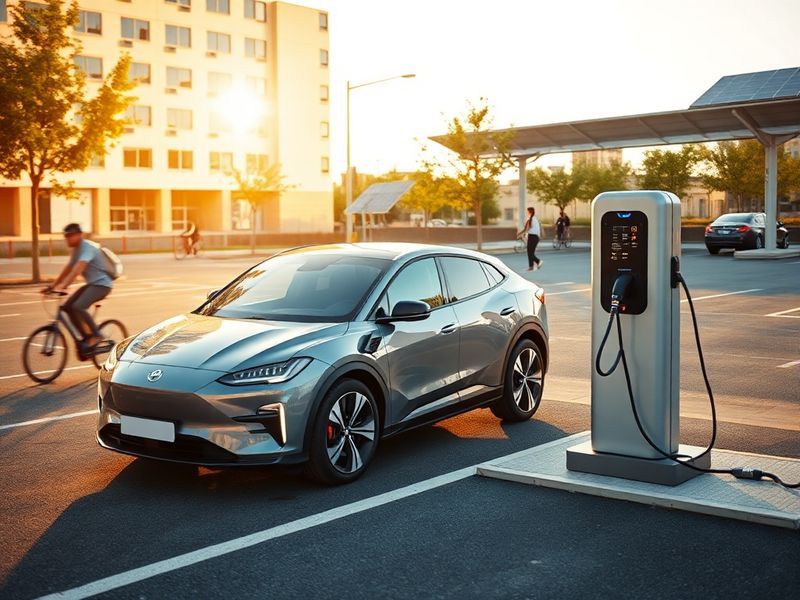
electric vehicles
“`html
Electric Vehicles: The Quiet Revolution on Four Wheels
By Alex Mercer
Published June 12, 2024
The Current State of Electric Mobility
The automotive industry is undergoing its most significant transformation since the invention of the internal combustion engine. Electric vehicles (EVs) have moved from niche curiosity to mainstream transportation, with global sales exceeding 14 million units in 2023—a 35% increase from the previous year. This surge isn’t confined to passenger cars; commercial fleets, delivery services, and even public transportation are rapidly electrifying.
Several factors explain this momentum. Battery technology has improved dramatically, with energy density increasing by 8-10% annually while costs have plummeted from $1,100 per kilowatt-hour in 2010 to under $130 in 2023. Government incentives, stricter emissions regulations, and growing environmental awareness among consumers have all contributed to this shift. In Europe, EVs accounted for 19.6% of new car registrations in 2023, up from just 1.4% in 2018.
The charging infrastructure has expanded significantly, though it remains uneven across regions. Norway leads the world with over 20,000 fast-charging stations, while many developing nations still lack basic charging networks. This disparity highlights the challenges ahead in achieving truly global EV adoption.
Key Advantages That Are Driving Adoption
The appeal of electric vehicles extends beyond environmental benefits. Here are the primary advantages that are convincing drivers to make the switch:
- Lower Operating Costs: Electricity remains cheaper than gasoline on a per-mile basis in most regions. Maintenance costs are also reduced due to fewer moving parts and no need for oil changes.
- Instant Torque and Smooth Acceleration: Electric motors deliver maximum torque immediately, providing responsive acceleration that many drivers find more engaging than traditional engines.
- Home Charging Convenience: For those with private parking, charging at home overnight eliminates trips to gas stations entirely.
- Quiet Operation: The near-silent nature of EVs reduces noise pollution in urban areas, creating a more peaceful driving experience.
- Regulatory Benefits: Many cities offer perks like free parking, HOV lane access, and reduced registration fees for EV owners.
These benefits have translated into measurable consumer satisfaction. JD Power’s 2023 U.S. Electric Vehicle Study found that EV owners reported higher satisfaction scores than owners of internal combustion engine vehicles across multiple categories, including vehicle quality, dealership experience, and driving performance.
The Broader Implications for Society and Industry
The rise of electric vehicles isn’t just changing how we get from point A to point B—it’s reshaping entire industries and economic systems. The automotive supply chain is undergoing a fundamental transformation, with traditional manufacturers facing pressure to adapt or risk obsolescence. Companies like Tesla, BYD, and Rivian have demonstrated that new entrants can compete effectively in this space.
Energy production and distribution are also being affected. The increased electricity demand from EVs is pushing utilities to modernize their grids and invest in renewable energy sources. Some analysts predict that by 2035, EVs could account for 20% of global electricity consumption. This shift is accelerating the retirement of coal-fired power plants in favor of cleaner energy sources.
The job market is another area experiencing disruption. While traditional auto manufacturing jobs may decline in some regions, new opportunities are emerging in battery production, software development, charging infrastructure installation, and renewable energy sectors. The International Energy Agency estimates that the EV sector could support 14 million jobs globally by 2030, up from about 3 million in 2022.
Perhaps most significantly, the widespread adoption of EVs could help reduce global carbon emissions. Transportation accounts for approximately 16% of global CO2 emissions, with passenger vehicles representing the largest share. While EVs themselves produce zero tailpipe emissions, their overall environmental impact depends on how the electricity used to charge them is generated.
Challenges That Could Slow the Transition
Despite the impressive growth, several obstacles remain on the path to full electrification. The most pressing challenge is battery supply and production capacity. The International Energy Agency projects that by 2030, annual battery production will need to increase from current levels of about 750 GWh to 4,500 GWh to meet demand. This requires massive investments in mining operations for critical minerals like lithium, cobalt, and nickel, which are concentrated in a few countries and often associated with environmental and human rights concerns.
Charging infrastructure remains a hurdle, particularly for apartment dwellers and those without dedicated parking. While fast-charging networks are expanding, they still can’t match the convenience of gasoline stations for long-distance travel. Range anxiety persists among many potential buyers, even though the average EV now offers over 250 miles of range—more than adequate for most daily driving needs.
The upfront cost of EVs remains higher than comparable internal combustion vehicles for many consumers, despite falling battery prices. While total cost of ownership calculations often favor EVs over time, the initial purchase price can be a barrier. This is particularly true in markets where financing options for traditional vehicles are more accessible.
Finally, the environmental impact of battery production and disposal cannot be ignored. While EVs produce fewer lifetime emissions than gasoline cars, the mining and manufacturing processes for EV batteries have significant ecological footprints. The industry is responding with initiatives to improve recycling programs and develop alternative battery chemistries that reduce reliance on scarce materials.
What the Future May Hold
The next decade will likely see several transformative developments in the EV space. Solid-state batteries promise to solve many current limitations by offering higher energy density, faster charging times, and improved safety. Major automakers and battery manufacturers are investing billions in this technology, with commercial applications expected by the late 2020s.
Vehicle-to-grid technology could turn EVs into mobile energy storage units, allowing them to feed power back into the grid during peak demand. This innovation could help stabilize renewable energy sources and reduce the need for expensive peak power plants. Pilot programs in California and Europe are already testing these capabilities.
The concept of mobility-as-a-service may reshape car ownership entirely. With autonomous driving technology advancing rapidly, many analysts predict a future where people rely more on shared electric fleets than on individual vehicle ownership. This shift could dramatically reduce the total number of cars needed while improving utilization rates.
Regardless of the specific path forward, one thing is clear: electric vehicles have moved beyond being a niche technology. They represent the future of transportation, with implications that extend far beyond the automotive industry. As battery technology continues to improve and charging infrastructure expands, the internal combustion engine’s dominance appears increasingly tenuous. The question now isn’t whether electric vehicles will dominate the market, but how quickly this transition will occur and what form it will ultimately take.
—
METADATA
{
“title”: “Electric Vehicles: How EVs Are Changing Transportation Forever”,
“metaDescription”: “Discover how electric vehicles are transforming the automotive industry and what challenges remain in the global EV revolution.”,
“categories”: [“Automotive”, “Technology”],
“tags”: [“electric vehicles”, “EV adoption”, “battery technology”, “automotive industry”, “sustainable transportation”],
“imageDescription”: “A modern electric vehicle charging at a sleek urban charging station during golden hour, with city skyline in background. The car is a mid-size sedan with subtle blue LED lighting accents, connected to a white charging unit. Urban environment with contemporary architecture, showing the integration of EV infrastructure into city life.”
}
—END METADATA—
“`