<!DOCTYPE html>
<html lang="en">
<head>
    <meta charset="UTF-8">
    <meta name="viewport" content="width=device-width, initial-scale=1.0">
    <title>Electric Vehicles: A Look at the Road Ahead</title>
</head>
<body>
    <article>
        <h1>Electric Vehicles: A Look at the Road Ahead</h1>

        <p>The automotive industry is undergoing one of its most significant transformations since the invention of the internal combustion engine. Electric vehicles (EVs) have shifted from being a niche curiosity to a mainstream transportation option. Automakers worldwide are committing billions to electrification, while governments implement policies to accelerate adoption. This shift isn't merely about replacing gas tanks with batteries—it's reshaping infrastructure, energy systems, and consumer behavior.</p>

        <p>What makes EVs so compelling isn't just their environmental benefits, though those are substantial. Modern electric cars offer instant torque, quiet operation, and lower operating costs compared to their gasoline counterparts. Yet challenges remain, from charging infrastructure to battery production sustainability. The transition to electric mobility represents both an opportunity and a complex puzzle that society must solve together.</p>

        <h2>The Current State of EV Adoption</h2>

        <p>As of 2024, electric vehicles account for about 18% of new car sales globally, with some markets leading far ahead. Norway remains the undisputed leader, where EVs comprised nearly 90% of new vehicle registrations in 2023. China, the world's largest auto market, sold over 8 million EVs last year—more than the rest of the world combined. In the United States, EV adoption is growing fastest in states with strong incentives and robust charging networks.</p>

        <p>The technology itself has matured significantly. Early concerns about range anxiety have been largely addressed, with many new models offering 300-400 miles per charge. Battery costs have fallen from over $1,000 per kilowatt-hour in 2010 to around $130 in 2023, making EVs competitive on price in many segments. Charging infrastructure has expanded dramatically, with over 1.8 million public charging ports available worldwide as of early 2024.</p>

        <p>Several factors are driving this adoption:</p>

        <ul>
            <li><strong>Regulatory pressure:</strong> Countries including the UK, France, and Canada have announced plans to ban new gasoline car sales by 2035, with California targeting 2030.</li>
            <li><strong>Corporate commitments:</strong> Major automakers like Volkswagen, Ford, and Hyundai have pledged to go all-electric or significantly increase EV production in the coming decade.</li>
            <li><strong>Consumer demand:</strong> Surveys show that 40% of new car buyers now consider EVs seriously, up from 20% just two years ago.</li>
            <li><strong>Energy independence:</strong> Countries seeking to reduce reliance on imported fossil fuels see electrification as a strategic advantage.</li>
        </ul>

        <h2>The Infrastructure Challenge: Charging Networks in Development</h2>

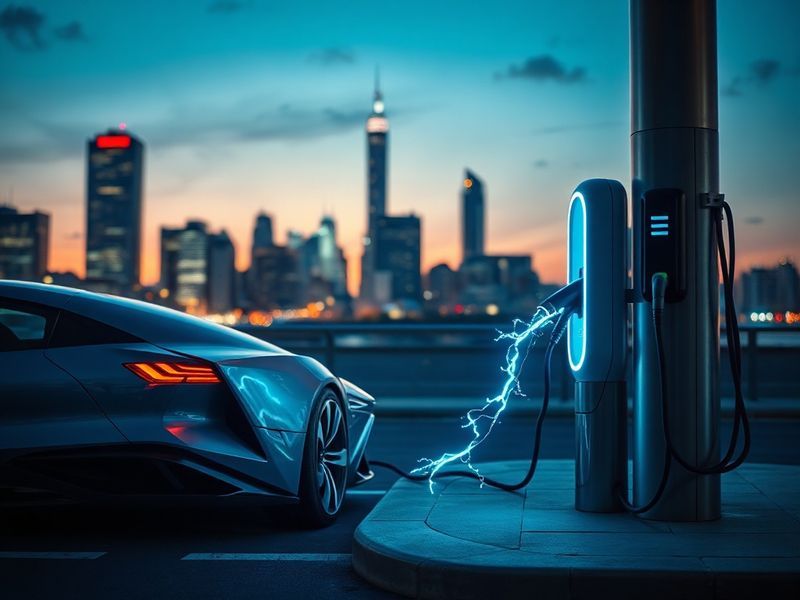
        <p>While range anxiety has diminished for most drivers, the charging experience remains inconsistent for many. Home charging solves the problem for those with garages or dedicated parking, but apartment dwellers and renters often face barriers. Public charging networks are expanding but still have gaps in rural areas and along highways.</p>

        <p>Several innovative approaches are emerging to address these challenges:</p>

        <ol>
            <li><strong>Ultra-fast charging corridors:</strong> Tesla's Supercharger network and Electrify America are installing 350 kW chargers along major highways, capable of adding 200 miles in 15 minutes.</li>
            <li><strong>Destination charging:</strong> Hotels, restaurants, and shopping centers are installing Level 2 chargers to attract EV-driving customers.</li>
            <li><strong>Wireless charging:</strong> Companies like WiTricity and Plugless are developing systems that charge vehicles while parked or even driving on special lanes.</li>
            <li><strong>Battery swapping:</strong> Startups like NIO in China are expanding battery-swapping stations that can replace a drained battery in under five minutes.</li>
        </ol>

        <p>Government investment is crucial to this expansion. The U.S. Infrastructure Investment and Jobs Act allocated $7.5 billion specifically for EV charging infrastructure, with a goal of 500,000 new public chargers by 2030. The European Union's Alternative Fuels Infrastructure Regulation requires member states to ensure charging coverage along major transport routes.</p>

        <p>Yet challenges persist. Standardization remains an issue, with different charging connectors and payment systems complicating the user experience. Rural areas often lack the economic incentive for private companies to install chargers. And in some urban centers, the grid infrastructure isn't yet prepared to handle the increased demand from widespread EV adoption.</p>

        <h2>The Battery Revolution: Materials, Recycling, and Sustainability</h2>

        <p>At the heart of every EV is its battery pack, and the industry is racing to make these power sources more sustainable, powerful, and affordable. The dominant chemistry today is lithium-ion, with variations like NMC (nickel-manganese-cobalt) and LFP (lithium iron phosphate) batteries leading the market. Each chemistry offers trade-offs between energy density, cost, and safety.</p>

        <p>However, concerns about supply chains and environmental impact are driving innovation. Cobalt mining, particularly in the Democratic Republic of Congo, has faced criticism for poor labor conditions and environmental degradation. In response, automakers are reducing cobalt content—some Tesla batteries now contain as little as 2% cobalt, down from 12% just a few years ago.</p>

        <p>Recycling is another critical frontier. The International Energy Agency estimates that by 2030, spent EV batteries could contain enough lithium to meet 10% of global demand. Companies like Redwood Materials in the U.S. and Northvolt in Europe are building large-scale recycling facilities to recover valuable metals. These operations can recover over 95% of nickel, cobalt, and copper from spent batteries.</p>

        <p>Emerging battery technologies promise even greater improvements:</p>

        <ul>
            <li><strong>Solid-state batteries:</strong> Companies like QuantumScape and Solid Power are developing batteries with solid electrolytes that promise higher energy density, faster charging, and improved safety compared to current liquid-based systems.</li>
            <li><strong>Sodium-ion batteries:</strong> Researchers are exploring sodium-based alternatives that could reduce reliance on scarce materials like lithium while maintaining good performance in colder climates.</li>
            <li><strong>Silicon anodes:</strong> Startups like Sila Nanotechnologies are developing silicon-based anodes that could increase energy density by 20-40% without changing the battery's basic chemistry.</li>
        </ul>

        <h2>The Economic Impact: Jobs, Markets, and Consumer Costs</h2>

        <p>The shift to electric vehicles is creating winners and losers across the automotive ecosystem. Traditional automakers face massive capital expenditures to retool factories and retrain workers. Meanwhile, new players are emerging in the EV supply chain—from battery manufacturers to charging network operators.</p>

        <p>In the United States, the transition is expected to eliminate about 75,000 internal combustion engine-related jobs by 2030 while creating around 150,000 new jobs in EV and battery manufacturing, according to a study by the Center for Automotive Research. The skills required are different too—more focus on electronics, software, and battery technology rather than traditional mechanical engineering.</p>

        <p>For consumers, the total cost of ownership is becoming increasingly favorable for EVs. While purchase prices remain higher than comparable gasoline cars in most segments, operating costs are significantly lower. Electricity is cheaper than gasoline on a per-mile basis in most places, and EVs have far fewer moving parts to maintain. A 2023 study by Consumer Reports found that EV owners save an average of $6,000 to $10,000 over the first seven years of ownership compared to similar gasoline vehicles.</p>

        <p>However, affordability remains a concern for many. The lowest-priced EVs in the U.S. still start around $30,000, which is out of reach for many budget-conscious buyers. Used EV markets are developing but remain thin compared to the used gasoline car market. Leasing has become a popular option, with many automakers offering attractive EV lease deals to get more cars on the road.</p>

        <p>Government incentives continue to play a crucial role in making EVs accessible. The U.S. federal tax credit of up to $7,500 has been expanded and modified multiple times, with new requirements around battery sourcing and final assembly location. Many states offer additional incentives, from rebates to HOV lane access. In Europe, countries like Germany and France provide substantial purchase incentives, though some have been reduced as EV prices have fallen.</p>

        <h2>Looking Ahead: The Next Decade of EV Evolution</h2>

        <p>The next ten years will determine whether EVs become the dominant form of personal transportation or remain a significant but not universal option. Several key developments will shape this transition:</p>

        <ol>
            <li><strong>Battery breakthroughs:</strong> Solid-state batteries could reach mass production by the late 2020s, potentially doubling the range of today's EVs while significantly reducing charging times.</li>
            <li><strong>Second-life applications:</strong> Used EV batteries are finding new life in stationary storage applications, from home energy systems to grid-scale storage projects.</li>
            <li><strong>Autonomous integration:</strong> EVs are naturally suited for autonomous driving, and we're seeing early examples of robotaxis entering service in select markets.</li>
            <li><strong>Grid integration:</strong> Vehicle-to-grid technology will allow EVs to feed power back into the grid during peak demand, turning cars into mobile energy storage units.</li>
            <li><strong>Urban mobility shifts:</strong> Cities are exploring how EVs can integrate with public transit, bike-sharing, and other sustainable transportation options to reduce car dependence entirely.</li>
        </ol>

        <p>The transition to electric vehicles represents more than just a technological shift—it's a fundamental change in how we power our transportation systems and, by extension, our economies. The path forward won't be without obstacles, but the momentum is undeniable. From the mining towns of Chile to the assembly plants of Tennessee, from the boardrooms of Detroit to the charging stations of Oslo, the world is mobilizing around electric mobility.</p>

        <p>The question isn't whether EVs will dominate the automotive landscape, but how quickly and smoothly the transition can occur. For policymakers, it's about balancing ambition with practicality. For automakers, it's about executing complex transformations without losing sight of their customers. For consumers, it's about embracing change while ensuring the transition works for everyone, not just early adopters.</p>

        <p>One thing is certain: the age of electric vehicles has arrived. The road ahead may be winding, but the destination—cleaner air, quieter cities, and more sustainable transportation—is worth the journey.</p>
    </article>

    <!-- Metadata Section -->
    <div style="display: none;">
        ---METADATA---
        {
          "