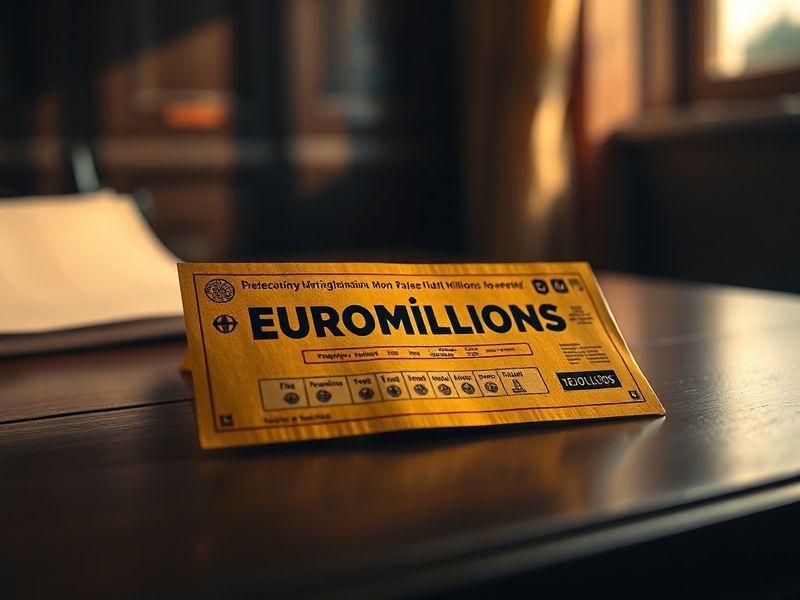
Every Tuesday and Friday at precisely 8:00 PM GMT, a ritual unfolds across Europe. From Lisbon to London, Dublin to Düsseldorf, millions pause to watch as 50 balls tumble through a machine, their fates sealed in a fleeting moment of chance. The EuroMillions lottery, launched in 2004 by a consortium of national lotteries, has become more than just a game—it’s a cultural touchstone, a financial phenomenon, and a subject of ongoing ethical debate.
The allure is simple: for as little as €2.50, players can dream of winning jackpots that have soared beyond €200 million, making it one of the largest transnational lottery prizes in the world. But beneath the glittering surface lie complex social, economic, and psychological realities that shape how people engage with chance, community, and hope.
The Mechanics Behind the Millions: How EuroMillions Works
EuroMillions operates on a straightforward premise with extraordinary scale. Players select five main numbers from a pool of 50, plus two “Lucky Stars” from a separate pool of 12. To win the jackpot—a prize that starts at €17 million and rolls over if unclaimed—all seven numbers must match the randomly drawn combination.
What sets EuroMillions apart is its pan-European reach. Operated by national lotteries in the UK, France, Spain, Ireland, Austria, Belgium, Luxembourg, Portugal, Switzerland, and more, it pools ticket sales across borders. This creates jackpots that dwarf those of single-country lotteries and amplifies the lottery’s visibility and appeal.
Winning odds are daunting: 1 in 139,838,160 for the jackpot. Yet, the lottery’s structure ensures smaller prizes are distributed regularly, keeping participation high. The rollover mechanism, where unclaimed prizes increase the next jackpot, creates a feedback loop of anticipation, drawing in more players with each draw.
The Cultural Weight: More Than Just a Game
EuroMillions is deeply embedded in European culture. It’s not just about the money—it’s about what that money represents: freedom, escape, and possibility. In countries like Spain and Italy, where economic uncertainty has lingered since the 2008 financial crisis, the lottery often symbolizes a lifeline—a way to imagine a different future.
Communities form around shared tickets and syndicate play. In the UK, workplace syndicates are a common sight, where colleagues pool funds to buy bulk tickets, increasing their chances while sharing the thrill. These syndicates foster camaraderie and collective dreaming, turning a solitary act of chance into a communal experience.
Yet, the lottery also reflects deeper societal attitudes toward risk and reward. In France, where state-run lotteries are tightly regulated, EuroMillions is marketed with a sense of civic responsibility—part of a broader system that funds public projects through gaming revenue. In contrast, the UK’s National Lottery distributes a percentage of proceeds to charitable causes, embedding the game in a web of social good.
Key Trends in EuroMillions Participation
- Digital Dominance: Online ticket sales have surged, with over 50% of entries now made via apps and websites, especially among younger players.
- Syndicate Culture: Group play accounts for up to 40% of ticket sales in some countries, particularly in Ireland and the UK.
- Jackpot Psychology: Studies show that higher jackpots correlate with increased sales, even among demographics not typically interested in lotteries.
- Cross-Border Play: Residents in non-participating countries (e.g., Germany, excluded due to legal restrictions) often use online services to join, blurring national boundaries.
- Secondary Markets: Resale platforms have emerged, where players buy or sell unclaimed tickets—a controversial practice that exploits desperation.
The Broader Implications: Ethics, Economics, and Social Impact
EuroMillions doesn’t exist in a vacuum. It’s part of a global lottery industry valued at over €300 billion annually, with profound implications for public policy and personal behavior.
Critics argue that lotteries disproportionately target low-income communities, exploiting financial vulnerability under the guise of entertainment. Research from the UK Gambling Commission shows that households in the lowest income brackets spend a higher proportion of their earnings on lottery tickets than wealthier ones—a phenomenon known as the “poverty premium” in gambling.
On the other hand, proponents highlight the funding generated for public services. Since its inception, EuroMillions has contributed billions to education, infrastructure, and arts across Europe. In Spain, for example, lottery proceeds support social programs for the elderly and disabled. This dual role—as both entertainment and de facto taxation—makes EuroMillions a uniquely contentious institution.
The rise of cryptocurrency lotteries and blockchain-based gaming has begun to challenge traditional models like EuroMillions. Some platforms now offer decentralized draws with transparent algorithms, appealing to a tech-savvy audience wary of centralized operators. Yet, these innovations also raise concerns about unregulated gambling and consumer protection.
What’s Next for EuroMillions?
As EuroMillions approaches its third decade, it faces both opportunity and scrutiny. The lottery’s organizers continue to innovate, introducing new game formats like “Millionaire Raffle” and expanding digital engagement through gamification and social features.
Yet, regulatory pressures are mounting. The European Union’s push for stricter gambling advertising rules could limit how EuroMillions markets itself, particularly to younger audiences. Meanwhile, environmental groups have criticized the paper waste generated by millions of losing tickets each year, prompting calls for digital-only participation.
One thing is certain: the dream of winning €200 million will persist. Whether that dream is a harmless fantasy or a societal blind spot remains a subject of fierce debate. What’s clear is that EuroMillions has evolved from a simple lottery into a mirror of Europe’s hopes, anxieties, and contradictions.
Final Thoughts
EuroMillions endures because it taps into something fundamental: the human desire to imagine a different life. It’s a reminder that even in an age of algorithmic precision and economic instability, chance still holds power. But as the lottery evolves, so too must our understanding of its role—not just as a game, but as a force that shapes economies, communities, and individual lives.
For those who play, the next draw is always a moment of possibility. For everyone else, it’s a fascinating case study in how society balances risk, reward, and responsibility.
To explore more on gaming trends and financial analysis, visit Dave’s Locker Trending or Finance sections for deeper insights.