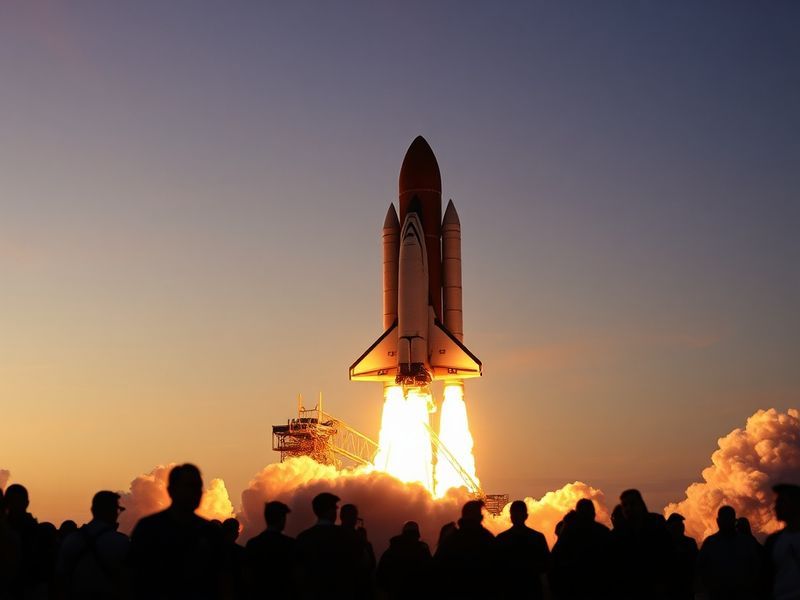
space exploration
“`html
Space Exploration: The Final Frontier of Human Ambition
Humanity’s relationship with space exploration has evolved from ancient stargazing to a sophisticated blend of science, engineering, and ambition. What began as philosophical curiosity has transformed into a critical endeavor shaping our future. The past century alone has delivered milestones that redefine our place in the universe—from landing on the Moon to deploying telescopes that peer into the dawn of time.
Today, space exploration is no longer the sole domain of superpowers. Private companies and international coalitions are driving innovation at an unprecedented pace. The implications stretch far beyond scientific discovery, touching economies, geopolitics, and even daily life. As we stand on the brink of commercial space travel and interplanetary colonization, understanding this field’s trajectory is essential—not just for scientists, but for anyone invested in humanity’s next chapter.
The Evolution of Space Exploration: From Sputnik to Mars
The journey began in 1957 when the Soviet Union launched Sputnik 1, the first artificial satellite to orbit Earth. This moment shattered expectations and ignited the Space Race, a geopolitical rivalry that accelerated technological progress. Within a decade, humans walked on the Moon during NASA’s Apollo missions, proving that the impossible could be achieved with relentless determination.
The focus then shifted to long-term presence in space. The International Space Station (ISS), a collaborative effort among 23 countries, became a symbol of what humanity can accomplish through shared vision. For over two decades, the ISS has served as a laboratory for studying microgravity’s effects on biology, physics, and human health—knowledge that will be vital for future deep-space missions.
Now, the horizon has expanded to Mars. NASA’s Perseverance rover, China’s Zhurong lander, and SpaceX’s Starship prototypes represent the cutting edge of interplanetary ambition. These missions aim not only to explore but to prepare for human settlement. The red planet is no longer a distant dream; it’s a tangible goal within reach, though fraught with challenges ranging from radiation exposure to life support systems.
Key Milestones in Modern Space Exploration
- 1998: Launch of the International Space Station (ISS), a symbol of global cooperation.
- 2004: NASA’s Mars rovers, Spirit and Opportunity, redefine robotic exploration of other planets.
- 2012: Curiosity rover lands on Mars, equipped with advanced instruments to search for signs of past life.
- 2015: SpaceX successfully lands a reusable rocket, reducing the cost of space travel.
- 2020: NASA’s Perseverance rover and Ingenuity helicopter demonstrate powered flight on another planet.
- 2022: James Webb Space Telescope launches, offering unprecedented views of the early universe.
The Economic and Geopolitical Impact of Space Exploration
Space exploration is no longer a zero-sum game reserved for nations. It has become a multi-billion-dollar industry with far-reaching economic implications. The global space economy is projected to exceed $1 trillion by 2040, driven by satellite communications, GPS technology, and emerging sectors like space tourism and asteroid mining.
Private companies such as SpaceX, Blue Origin, and Virgin Galactic are reshaping the industry by prioritizing cost efficiency and innovation. SpaceX’s reusable rockets, for example, have slashed launch costs from $10,000 per pound to under $1,000, democratizing access to space. This shift is fostering competition and accelerating progress in ways governments alone could not achieve.
Geopolitically, space has become a new frontier for influence. The United States, China, Russia, and even India are investing heavily in lunar bases, Mars missions, and military space capabilities. The Artemis Accords, led by NASA, aim to establish international guidelines for sustainable lunar exploration. Meanwhile, China’s Tiangong space station and lunar ambitions signal a new era of competition. These developments underscore space as a critical domain for national security and technological leadership.
Beyond Earth, the potential for resource extraction from asteroids or the Moon could alleviate resource scarcity on Earth while fueling further exploration. Companies like AstroForge and Planetary Resources are already exploring the feasibility of mining platinum, gold, and rare earth metals from near-Earth asteroids. The economic stakes are high, and the race to secure these resources is intensifying.
Technological Spin-offs: How Space Exploration Benefits Daily Life
Space exploration is often justified by its direct contributions to everyday technology. Innovations developed for space missions frequently find their way into consumer products, improving quality of life across the globe. For instance, memory foam mattresses, originally designed by NASA to improve aircraft safety, are now common in homes worldwide. Similarly, freeze-dried food, scratch-resistant lenses, and even baby formula owe their existence to space research.
Medical advancements are another critical spin-off. Techniques for telemedicine, remote surgery, and advanced imaging technologies have roots in space medicine. NASA’s research on bone density loss in astronauts has led to better treatments for osteoporosis. Meanwhile, the miniaturization of medical devices—accelerated by the need for lightweight, efficient tools in space—has revolutionized portable diagnostics.
Environmental monitoring is yet another area where space technology plays a pivotal role. Satellites like NASA’s Landsat and the European Space Agency’s Copernicus program provide real-time data on climate change, deforestation, and natural disasters. These tools empower scientists and policymakers to make informed decisions, bridging the gap between observation and action.
The internet itself owes a debt to space exploration. The development of satellite communication systems laid the foundation for global connectivity. Today, companies like SpaceX’s Starlink are deploying constellations of satellites to bring high-speed internet to remote and underserved regions, potentially connecting billions of people to the digital economy.
The Future of Space Exploration: Challenges and Ethical Considerations
Despite its promise, space exploration presents formidable challenges. The most immediate is the cost. While private companies have reduced expenses, deep-space missions remain prohibitively expensive. NASA’s Artemis program, for example, is estimated to cost $93 billion by 2025. Balancing fiscal responsibility with ambition will be a defining challenge for policymakers.
Ethical concerns also loom large. The potential contamination of other planets with Earth microbes raises questions about planetary protection. The Outer Space Treaty of 1967 prohibits nations from claiming celestial bodies, but as commercial interests grow, the need for updated regulations becomes urgent. Who governs space, and how do we ensure equitable access and use?
Human health is another critical issue. Long-duration spaceflight exposes astronauts to radiation, muscle atrophy, and psychological stress. Research is ongoing, but solutions such as advanced shielding, artificial gravity, and AI-assisted mental health monitoring are still in development. The journey to Mars, expected to take six to nine months one-way, will test the limits of human endurance.
Finally, the militarization of space poses a significant risk. While the Outer Space Treaty bans weapons of mass destruction in orbit, the development of anti-satellite technologies and space-based military assets complicates international relations. The creation of the U.S. Space Force in 2019 underscores the growing recognition of space as a potential battleground, raising concerns about an arms race beyond Earth’s atmosphere.
Opportunities and Challenges Ahead
- Sustainability: Developing closed-loop life support systems and reducing space debris are critical for long-term exploration.
- International Collaboration: Balancing competition with cooperation will determine whether space remains a unifying force or becomes a divided frontier.
- Public Engagement: Inspiring the next generation of scientists, engineers, and explorers is essential for maintaining momentum.
- Regulatory Frameworks: Updating international laws to address commercial and ethical concerns is a pressing need.
- Technological Breakthroughs: Advances in propulsion, AI, and robotics will shape the feasibility of interstellar travel.
Conclusion: Why Space Exploration Matters Now More Than Ever
Space exploration is more than a scientific endeavor; it is a reflection of human curiosity, resilience, and ambition. Each mission, whether robotic or crewed, pushes the boundaries of what we know and what we can achieve. The benefits—technological, economic, and philosophical—extend far beyond the confines of Earth, offering solutions to some of humanity’s most pressing challenges.
Yet, with these opportunities come responsibilities. The decisions we make today will determine whether space becomes a realm of cooperation and discovery or one of conflict and exploitation. As private companies and nations alike set their sights on the Moon, Mars, and beyond, the need for thoughtful leadership and ethical foresight has never been greater.
Ultimately, space exploration is a testament to our collective potential. It challenges us to dream bigger, work harder, and strive for a future where the stars are within reach. Whether for scientific discovery, economic gain, or the sheer thrill of exploration, humanity’s journey into the cosmos is far from over—it’s just beginning.
For those eager to follow the latest developments in space technology and exploration, stay tuned to Dave’s Locker Technology section and Science section for in-depth coverage and analysis.
—
METADATA
{
“title”: “Space Exploration: From Moon Landings to Mars Missions”,
“metaDescription”: “Explore the history, challenges, and future of space exploration from Sputnik to Mars missions and beyond.”,
“categories”: [“Science”, “Technology”],
“tags”: [“space exploration”, “NASA”, “Mars missions”, “space technology”, “private spaceflight”],
“imageDescription”: “A high-tech illustration of a futuristic Mars colony with astronauts, rovers, and spacecraft against a dusty red landscape under a twilight sky, conveying innovation and exploration.”
}
—END METADATA—
“`