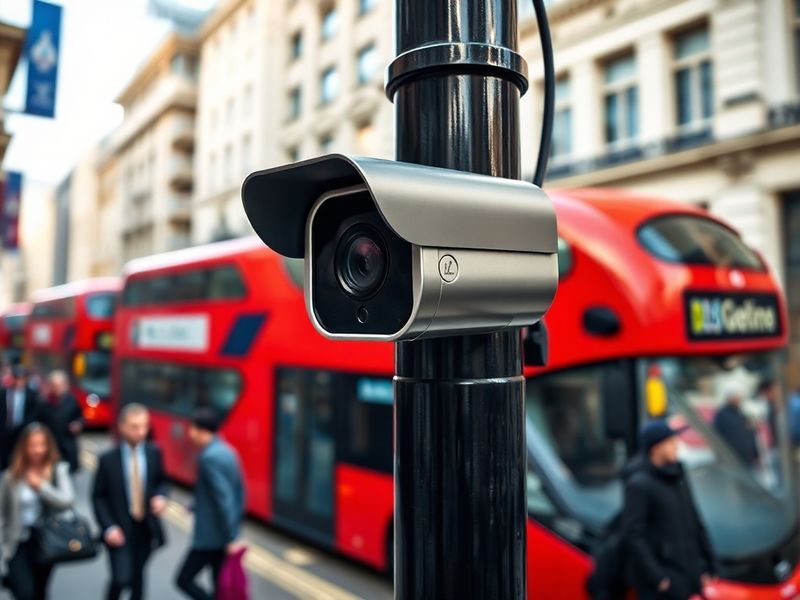
Across the United Kingdom, facial recognition technology has shifted from science fiction to everyday policing. High-street cameras now scan faces in real time, while police forces deploy mobile and fixed systems to identify suspects. The rapid expansion raises critical questions about effectiveness, ethics, and oversight.
As of 2024, over 30 police forces in the UK have tested or deployed live facial recognition (LFR), with South Wales Police and the Metropolitan Police leading large-scale trials. These systems compare live camera feeds against watchlists containing images of individuals wanted for arrest, missing persons, or persons of interest. But how well do they work, and at what cost?
The Current Landscape of Facial Recognition in the UK
Facial recognition technology in the UK operates under a patchwork of legal frameworks and ethical guidelines. Unlike some countries with unified national systems, the UK’s approach is decentralized—each force decides whether, when, and how to use it. This has led to inconsistent practices and public confusion.
Key areas of deployment include:
- Policing: Used at public events, transport hubs, and high-crime areas to identify suspects in real time.
- Private Sector: Shopping centres, stadiums, and even supermarkets have trialled or implemented facial recognition for security and customer analytics.
- Border Control: The Home Office uses facial recognition at airports and ports to verify identities against passports and visas.
In 2023, the Information Commissioner’s Office (ICO) reported that over 200 organizations in the UK were using or planning to use facial recognition. Yet only a fraction have undergone full public consultation or independent ethical review.
How Accurate Is It? Examining the Data
Accuracy rates for facial recognition systems vary widely depending on conditions. Under ideal lighting and with clear frontal images, some systems achieve over 99% accuracy. But real-world conditions tell a different story.
In 2019, a trial by South Wales Police found that its system flagged potential matches correctly only 92% of the time. More concerning, it generated false positives—incorrect matches—at a rate of 96%. These errors disproportionately affected people of colour and women, according to independent reviews by the University of Essex.
Factors such as poor lighting, partial faces, or facial coverings (such as masks or hoodies) significantly reduce reliability. In crowded urban environments, where faces are often partially obscured, the system’s performance drops dramatically.
Critics argue that even a small error rate can lead to wrongful stops, arrests, or surveillance of innocent people. In one documented case, a man in Cardiff was stopped by police after being misidentified by facial recognition. He was later cleared, but the incident highlighted the human cost of technological failure.
The Legal and Ethical Tightrope
Facial recognition sits at the intersection of security, privacy, and civil liberties. UK courts have yet to deliver a definitive ruling on its legality, leaving a legal grey area that police forces have exploited.
In 2021, the Court of Appeal ruled that South Wales Police’s use of facial recognition was unlawful because it failed to provide sufficient privacy safeguards. The judgment emphasized the need for clearer legal authority and public transparency. Yet, many forces continue to operate without updated legislation.
Public opinion remains deeply divided. A 2023 YouGov poll found that 54% of UK adults support the use of facial recognition in policing, while 31% oppose it. Concerns centre on:
- Mass Surveillance: The potential for continuous tracking of citizens without suspicion or warrant.
- Data Misuse: Fear that biometric data could be shared with third parties or used for purposes beyond crime prevention.
- Chilling Effects: The risk that people may alter their behaviour—avoiding protests, public gatherings, or even routine walks—due to the presence of surveillance.
- Lack of Consent: Unlike CCTV, facial recognition actively identifies individuals without their knowledge or agreement.
The UK’s approach contrasts with the European Union, which has moved toward stricter regulation under the AI Act. While the EU seeks to ban real-time biometric surveillance in public spaces, the UK remains a global outlier in its permissive stance.
What’s Next? Regulation, Reform, and Public Accountability
The future of facial recognition in the UK will likely be shaped by three key forces: technology, law, and public pressure.
On the technology front, improvements in AI and image processing may increase accuracy and reduce bias. However, these advances also make surveillance more powerful and harder to resist. Police forces are already testing next-generation systems that claim to operate in low light and at greater distances.
Legally, the UK government has signalled support for facial recognition as part of its crime-fighting strategy. In its 2023 Data Reform Bill, it proposed expanding police powers to use biometric data, raising concerns among privacy advocates. The bill is still under review, but its direction is clear: prioritize security over privacy.
Public pressure, however, may force change. Grassroots campaigns like Big Brother Watch and Liberty have taken legal action against police forces, demanding transparency and accountability. High-profile legal challenges, such as the one led by human rights group Liberty against the Metropolitan Police, could set new precedents.
Meanwhile, the tech industry itself is grappling with ethical dilemmas. Companies like Clearview AI, which scraped billions of facial images from social media without consent, have faced fines and bans. The UK’s data regulator has issued multiple warnings, but enforcement remains inconsistent.
Conclusion: A Technology at a Crossroads
Facial recognition cameras in the UK represent both a leap forward in law enforcement and a step closer to a surveillance society. While they offer potential benefits—such as faster identification of serious offenders—they also carry significant risks: wrongful accusations, systemic bias, and erosion of privacy.
Without stronger regulation, independent oversight, and meaningful public consultation, the UK risks normalising a surveillance-first approach. The challenge ahead is not just technological, but moral: how to balance security with fundamental rights in a digital age.
For now, the cameras keep scanning. The question is whether society will keep watching—and what it will do when it sees its own reflection.
To learn more about surveillance technology and its impact on society, visit our Technology and News sections for ongoing coverage and analysis.