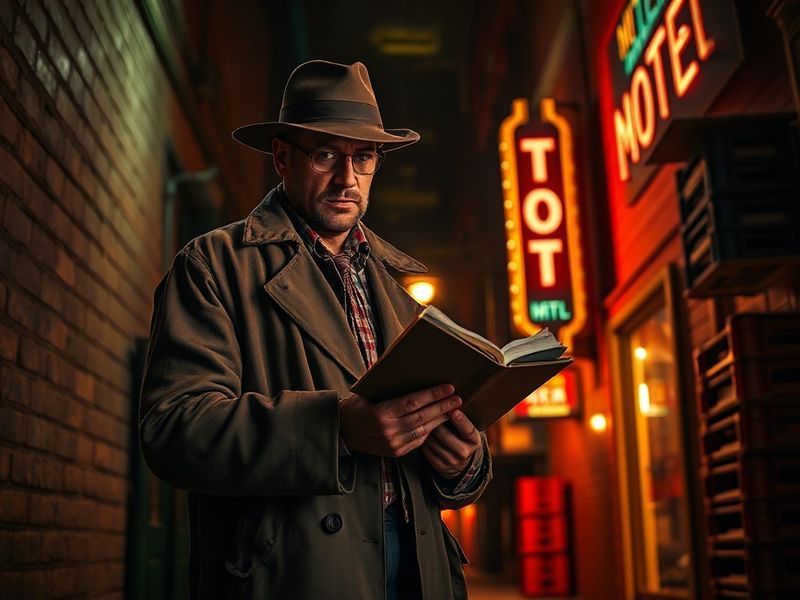
The figure of the detective has long captivated audiences across literature, film, and real life. From the shadowy figures of 19th-century penny dreadfuls to the forensic specialists of today, detectives embody the human fascination with uncovering hidden truths. Their role extends beyond mere crime-solving; they serve as mirrors reflecting societal anxieties, technological advancements, and moral ambiguities.
This evolution reflects broader changes in how justice is perceived and pursued. The detective archetype has adapted to new mediums and challenges, from the intuitive sleuths of classic whodunits to the data-driven investigators of the digital age. Understanding this progression offers insight into both cultural history and the practical realities of modern law enforcement.
The Origins: From Literary Invention to Social Necessity
The detective as a fictional construct emerged in the early 19th century, a response to urbanization and the growing complexity of urban life. Edgar Allan Poe’s C. Auguste Dupin in The Murders in the Rue Morgue (1841) is often credited as the first true detective in literature. Dupin’s method—rooted in observation and logical deduction—set the template for future investigators.
These early detectives were not just problem-solvers but social commentators. They operated in a world where industrialization and immigration were reshaping cities, creating new forms of crime and disorder. Sherlock Holmes, created by Arthur Conan Doyle in 1887, elevated the detective to a near-mythical status. Holmes’ reliance on science and reason mirrored the Victorian era’s faith in progress and empirical knowledge.
By the early 20th century, detectives had become fixtures of popular culture. Dashiell Hammett’s hardboiled detectives, such as Sam Spade in The Maltese Falcon, introduced a grittier, more cynical approach. These characters operated in a world where institutions were corrupt, and justice was often a matter of personal ethics rather than legal procedure. This shift reflected the disillusionment of the post-World War I era and the rise of organized crime.
The Detective in the Digital Age: Tools, Ethics, and Challenges
Today’s detectives navigate a landscape transformed by technology. Digital forensics, surveillance systems, and artificial intelligence have redefined investigative work. DNA analysis, once a futuristic concept, now routinely solves cold cases. Cybercrime units track digital footprints across global networks, a far cry from the footwork of Holmes or Spade.
Yet this technological advancement brings ethical dilemmas. The proliferation of surveillance cameras and facial recognition software raises concerns about privacy and civil liberties. Departments must balance the need for security with the risk of overreach. The detective’s role is no longer confined to solving crimes but also to navigating the moral implications of the tools at their disposal.
Consider the rise of predictive policing algorithms. These systems analyze crime data to forecast where offenses might occur, allowing law enforcement to allocate resources more efficiently. However, critics argue that such algorithms can perpetuate biases inherent in historical crime data, disproportionately targeting marginalized communities. The modern detective must be not only a solver of crimes but also a guardian of justice in an increasingly automated system.
Key Adaptations in Modern Detectives
The shift from analog to digital investigation has required detectives to develop new skills. Here are some of the most significant adaptations:
- Digital Forensics: Investigators now routinely recover data from hard drives, smartphones, and cloud storage. This requires expertise in cybersecurity and data recovery techniques.
- Data Analysis: The ability to interpret large datasets is crucial. Detectives use software to identify patterns, track suspects, and reconstruct timelines.
- Surveillance Technology: Drones, GPS tracking, and thermal imaging have expanded the scope of surveillance but also introduced legal and ethical questions.
- Collaboration Across Agencies: Modern cases often span jurisdictions, requiring detectives to work with international law enforcement, cybersecurity teams, and forensic experts.
- Public Engagement: Social media has become a tool for both solving crimes and spreading misinformation. Detectives must now manage public perception while gathering evidence.
Real-World Detectives vs. Their Fictional Counterparts
While fictional detectives like Hercule Poirot or Lisbeth Salander operate in exaggerated, high-stakes scenarios, real-life detectives face mundane challenges alongside the extraordinary. The reality of detective work is often less glamorous: long hours, bureaucratic hurdles, and the emotional toll of unsolved cases.
Forensic investigators, for example, spend weeks meticulously analyzing evidence, only to have their findings dismissed in court due to legal technicalities. Cold case detectives revisit decades-old crimes, hoping for a breakthrough that may never come. The pressure to deliver results can lead to burnout, a growing concern in law enforcement.
Yet, real detectives share some traits with their fictional counterparts. Persistence, intuition, and a willingness to challenge assumptions are as vital in the field as they are on the page. The best detectives, like the best fictional ones, combine rigorous methodology with a deep understanding of human nature.
The Cultural Impact: Why We Still Need Detectives
The detective endures in popular culture because they embody fundamental human desires: the need for order, the quest for justice, and the belief that truth can be uncovered. In an era of misinformation and deepfake videos, the detective’s role as a seeker of truth feels more relevant than ever.
Television series like True Detective and Mindhunter explore the psychological complexities of detective work, delving into the personal sacrifices and moral compromises that come with the job. These narratives resonate because they reflect real-world tensions between justice and expedience, individuality and systemic accountability.
The detective also serves as a symbol of resistance against chaos. In times of crisis—whether a pandemic, a terrorist attack, or a financial collapse—the public turns to investigators for answers. This was evident during the early days of the COVID-19 pandemic, when epidemiologists and law enforcement agencies worked tirelessly to trace outbreaks and enforce safety measures.
Moreover, the detective archetype has expanded beyond traditional crime-solving. Environmental detectives, for instance, investigate illegal dumping and wildlife trafficking, while financial detectives uncover fraud and corruption. The core principle remains the same: uncovering hidden truths to restore balance.
Why the Detective Will Always Matter
The detective’s enduring appeal lies in their dual nature—part hero, part flawed human. They are not infallible, nor are they always successful, but their persistence offers a form of hope. In a world where uncertainty often feels overwhelming, the detective represents the possibility of clarity and resolution.
As technology continues to evolve, so too will the methods of detection. Yet the fundamental question remains: How do we balance innovation with ethics? The detective, whether in fiction or reality, will always be at the heart of this debate.
For those fascinated by the art of investigation, the field offers endless opportunities for exploration—whether through classic literature, modern true crime podcasts, or the real-life work of forensic scientists. The detective’s journey is far from over; it is merely evolving.
Explore more about the intersection of technology and investigation on Dave’s Locker Technology or dive into the world of true crime on Dave’s Locker Entertainment.