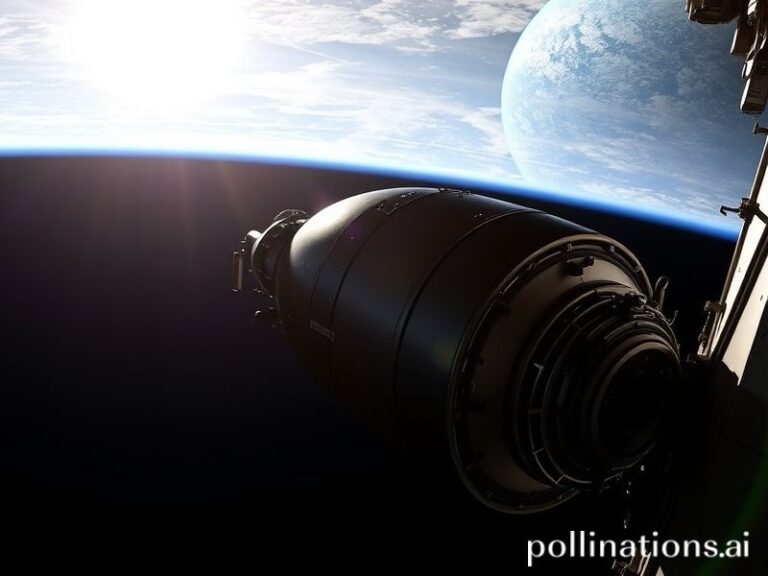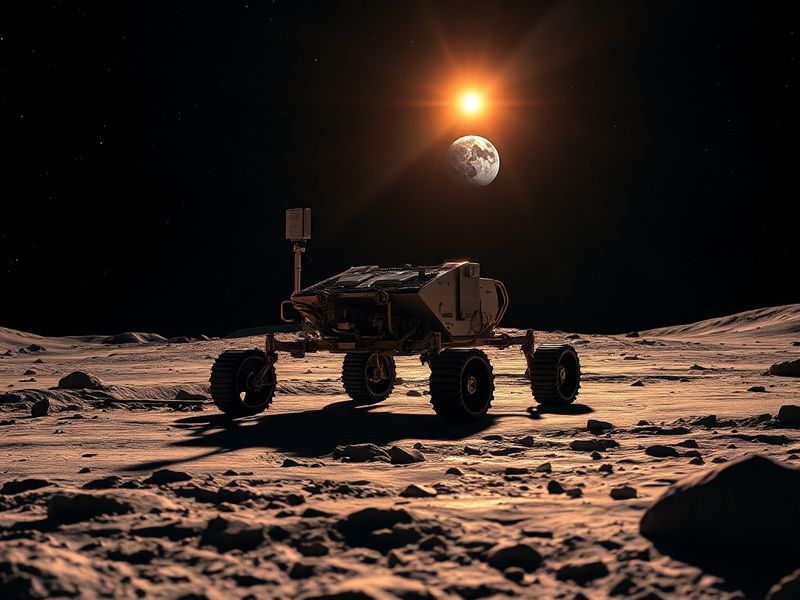
Space Exploration: The Next Frontier for Humanity
“`html
Space Exploration: The Final Frontier’s Next Chapter
The void of space has always beckoned humanity with promises of discovery, innovation, and existential reflection. From the earliest observations of celestial bodies to modern missions probing distant planets, space exploration remains one of the most ambitious and inspiring endeavors of our time. What began as a Cold War rivalry has evolved into a global collaboration, with governments, private companies, and international agencies pushing the boundaries of what is possible.
Today, space exploration is more than a scientific pursuit—it is a testament to human ingenuity and a critical frontier for addressing challenges on Earth. As technology advances and ambitions grow, the next decade promises missions that could redefine our understanding of the universe and our place within it.
The Evolution of Space Exploration
The journey of space exploration can be traced back to the mid-20th century, marked by the launch of Sputnik 1 in 1957, which heralded the beginning of the space age. The subsequent space race between the United States and the Soviet Union accelerated progress, culminating in the historic Apollo 11 moon landing in 1969. These early milestones were driven by geopolitical competition, but they laid the groundwork for scientific discovery and technological innovation.
By the 1980s and 1990s, space exploration began to shift toward international cooperation. The International Space Station (ISS), a collaborative effort involving NASA, Roscosmos, JAXA, ESA, and CSA, stands as a symbol of this new era. Since its first module was launched in 1998, the ISS has served as a microgravity laboratory for research in biology, physics, and astronomy, demonstrating the value of sustained human presence in space.
Private companies have since entered the fray, revolutionizing access to space. SpaceX, founded by Elon Musk in 2002, has become a leader in reusable rocket technology, significantly reducing the cost of launches. Meanwhile, companies like Blue Origin and Virgin Galactic are focusing on commercial spaceflight, aiming to make space tourism a reality. This shift from government-led to commercially driven space exploration has democratized access and spurred rapid advancements.
Key Milestones in Space Exploration
- 1957: Launch of Sputnik 1, the first artificial satellite to orbit Earth.
- 1961: Yuri Gagarin becomes the first human in space aboard Vostok 1.
- 1969: Apollo 11 mission successfully lands astronauts on the Moon.
- 1977: Launch of the Voyager probes, which continue to send data from interstellar space.
- 1998: Assembly begins on the International Space Station.
- 2012: Curiosity rover lands on Mars, providing unprecedented data on the Red Planet.
- 2020: SpaceX’s Crew Dragon becomes the first commercial spacecraft to carry astronauts to the ISS.
Why Space Exploration Matters Today
Space exploration is not merely an academic or adventurous pursuit—it addresses critical challenges facing humanity. One of its most immediate benefits is the development of technologies that improve life on Earth. For example, advancements in satellite technology have revolutionized global communications, weather forecasting, and GPS navigation. Medical research conducted in microgravity has led to breakthroughs in areas like cancer treatment and bone density studies.
Moreover, space exploration drives economic growth. The global space economy was valued at over $400 billion in 2022, with sectors like satellite services, launch vehicles, and remote sensing leading the way. Investments in space technology have created jobs, fostered innovation, and inspired new industries. As private companies continue to lower the cost of access to space, the economic potential will only expand.
There is also a profound philosophical dimension to space exploration. By venturing beyond Earth, we gain a broader perspective on our planet’s fragility and interconnectedness. Images of Earth from space, such as the iconic “Blue Marble” captured by Apollo 17, have underscored the need for environmental stewardship. Missions to other planets, like Mars, offer clues about the origins of life and the potential for humanity to become a multi-planetary species.
The Future of Space Exploration
The next decade of space exploration is poised to be the most transformative yet. NASA’s Artemis program aims to return humans to the Moon by 2025, with the goal of establishing a sustainable presence by the end of the decade. This lunar outpost will serve as a testing ground for technologies needed for Mars missions, including habitats, life support systems, and in-situ resource utilization.
Mars remains the ultimate destination for human exploration. NASA’s Perseverance rover, which landed in 2021, is already collecting samples and testing technologies for future crewed missions. SpaceX’s Starship, designed for interplanetary travel, could potentially transport humans to Mars within the next decade. Establishing a human settlement on Mars would not only be a monumental achievement but also a crucial step in ensuring the long-term survival of humanity.
Beyond the Moon and Mars, robotic missions are venturing deeper into the solar system. NASA’s James Webb Space Telescope, launched in December 2021, is peering into the early universe, revealing the formation of galaxies, stars, and planets. Missions to Europa, one of Jupiter’s moons, are being planned to search for signs of subsurface oceans that could harbor life. Even interstellar missions, like the Breakthrough Starshot initiative, are exploring the feasibility of sending tiny probes to nearby star systems.
Emerging Trends in Space Exploration
- Reusable Rockets: Companies like SpaceX and Blue Origin are developing rockets that can be launched, landed, and reused, drastically reducing costs.
- Lunar Gateway: A planned small space station orbiting the Moon will serve as a staging point for lunar landings and deep space missions.
- Space Tourism: Companies like Virgin Galactic and Blue Origin are offering suborbital flights, while SpaceX is planning orbital and lunar tourism missions.
- In-Situ Resource Utilization: Technologies to extract water, oxygen, and metals from lunar or Martian soil could enable sustainable off-world living.
- Asteroid Mining: Companies like Planetary Resources and AstroForge are exploring the potential to mine asteroids for valuable metals and water.
Challenges and Ethical Considerations
Despite the promise of space exploration, significant challenges remain. The cost of missions, while decreasing, is still prohibitive for many nations and organizations. Ensuring the safety of astronauts on long-duration missions, such as those to Mars, requires advances in life support systems, radiation shielding, and psychological support.
Ethical considerations also come into play. As humans venture further into space, questions about planetary protection arise. Missions to potentially habitable worlds, like Europa or Mars, must be carefully designed to avoid contaminating these environments with Earth microbes. There are also concerns about the militarization of space, as nations develop technologies that could be used for both exploration and conflict.
Another critical issue is the growing problem of space debris. With thousands of satellites and spent rocket stages orbiting Earth, the risk of collisions and the creation of hazardous debris fields is increasing. International efforts to track and mitigate space debris are essential to ensuring the sustainability of space activities.
The future of space exploration will depend on balancing ambition with responsibility. Collaboration among nations, transparency in mission planning, and adherence to ethical guidelines will be key to ensuring that space remains a domain for peaceful and beneficial exploration.
Conclusion: The Journey Ahead
Space exploration stands at a crossroads. The progress of the past six decades has been remarkable, but the challenges ahead are equally daunting. As we look to the Moon, Mars, and beyond, we are reminded of humanity’s relentless curiosity and our capacity for innovation. Space exploration is not just about reaching new worlds; it is about understanding our place in the universe and securing a better future for all.
The next chapter of space exploration will be written by a new generation of scientists, engineers, and explorers. With continued investment, collaboration, and vision, humanity’s journey into the cosmos will inspire and unite us, proving that the final frontier is not just a destination—it is an enduring testament to what we can achieve together.
For those interested in the latest developments in technology and innovation, visit our Technology category page for more insights. To explore the intersection of science and human ambition, check out our Science coverage.