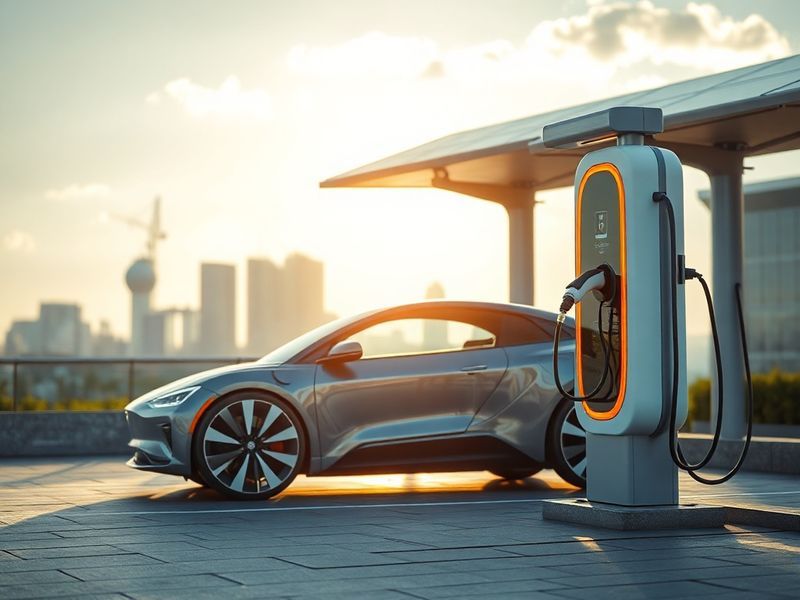
Electric Vehicles: How They’re Reshaping Our World
“`html
Electric Vehicles: The Quiet Revolution on Four Wheels
The automotive industry is undergoing its most significant transformation since the invention of the internal combustion engine. Electric vehicles (EVs) have moved from niche curiosity to mainstream necessity, reshaping how we think about transportation, energy, and even urban design. This shift isn’t happening in isolation—it’s part of a broader ecosystem of technological advancement, environmental urgency, and changing consumer expectations.
The journey of EVs began in the early 19th century, but their modern resurgence is powered by three critical factors: battery technology improvements, climate change imperatives, and the digital revolution. Today’s EVs offer ranges competitive with gasoline cars, charging infrastructure that’s expanding rapidly, and performance that often exceeds traditional vehicles. The question isn’t whether electric vehicles will dominate the roads, but how quickly this transition will occur and what unforeseen consequences it might bring.
The Technology Behind the Charge
Modern electric vehicles represent a convergence of multiple technological breakthroughs. At their core, EVs rely on lithium-ion battery packs that have seen dramatic improvements in energy density, cost reduction, and longevity. The average EV battery today stores nearly four times the energy per kilogram compared to models from just a decade ago, while prices have fallen from over $1,000 per kilowatt-hour in 2010 to around $130 in 2023.
This technological evolution extends beyond batteries:
- Electric motors: Unlike internal combustion engines with hundreds of moving parts, EVs use simple electric motors with just one moving component, reducing maintenance needs and increasing reliability.
- Regenerative braking: This system captures kinetic energy during deceleration, significantly improving overall efficiency and extending driving range.
- Software integration: EVs are essentially computers on wheels, with sophisticated software managing everything from battery temperature to autonomous driving features.
- Thermal management: Advanced cooling systems maintain optimal battery temperatures, crucial for both performance and safety.
The result is a vehicle that’s not just environmentally cleaner, but fundamentally different in how it operates and interacts with drivers. The immediate torque delivery, silent operation, and minimal vibration create an entirely new driving experience that’s redefining automotive expectations.
Environmental Impact: Beyond Tailpipe Emissions
While the most obvious benefit of electric vehicles is the elimination of tailpipe emissions, their environmental impact extends across multiple dimensions. The true environmental cost of an EV depends on three key factors: manufacturing emissions, electricity sources, and vehicle lifespan.
Manufacturing an EV typically generates higher upfront emissions than a comparable gasoline car, primarily due to battery production. However, research from the International Council on Clean Transportation shows that even with today’s electricity grids, most EVs achieve carbon parity with gasoline cars within 2-3 years of driving. As grids become cleaner with more renewable energy, this payback period continues to shrink.
The environmental benefits extend beyond carbon emissions:
- Air quality improvement: EVs eliminate local air pollution, which in urban areas translates to reduced respiratory illnesses and improved public health outcomes.
- Noise pollution reduction: The quiet operation of EVs makes cities noticeably quieter, particularly in dense urban environments.
- Resource efficiency: Electric motors use fewer rare earth metals than internal combustion engines, and battery recycling infrastructure is rapidly developing.
- Grid integration potential: EVs can serve as mobile energy storage units, helping to balance renewable energy supply and demand.
Critics often point to lithium mining and battery disposal as environmental concerns. While these issues require careful management, the automotive industry is investing heavily in sustainable mining practices and battery recycling programs. The environmental narrative around EVs is complex but increasingly positive as the technology matures.
The Economic Ripple Effect
The rise of electric vehicles is creating new economic realities across multiple sectors. Traditional automotive supply chains are being disrupted, while entirely new industries are emerging. The economic implications extend from individual consumers to global energy markets.
For consumers, the total cost of ownership for EVs is becoming increasingly competitive with gasoline cars. While purchase prices remain higher in many markets, lower fuel costs, reduced maintenance needs, and potential tax incentives often offset this difference within a few years. In some regions, EVs are already cheaper to own over a five-year period.
This economic shift is creating both opportunities and challenges:
- Energy sector transformation: Electric utilities are developing new rate structures and infrastructure to support vehicle charging, while oil companies face long-term demand uncertainty.
- Job market evolution: Traditional automotive jobs in internal combustion engine manufacturing are declining, while new opportunities emerge in battery production, software development, and charging infrastructure installation.
- New business models: The shift to EVs is enabling innovative approaches like vehicle-to-grid technology, where cars can supply power back to the grid during peak demand.
- Supply chain realignment: Countries and companies are racing to secure critical mineral supplies, with geopolitical implications for global trade relationships.
The economic implications extend beyond direct automotive industry effects. Cities are reimagining their infrastructure to accommodate electric vehicles, with some governments offering incentives for EV adoption while implementing restrictions on gasoline cars in city centers. This broader economic shift is creating both challenges and opportunities for urban planning and real estate development.
Challenges and Uncertain Futures
Despite the rapid progress, significant challenges remain in the widespread adoption of electric vehicles. These hurdles span technical, economic, and social dimensions, and their resolution will determine how quickly the transition occurs.
The most immediate challenge is charging infrastructure. While fast-charging networks are expanding, “range anxiety” persists as a psychological barrier for many potential buyers. The uneven distribution of charging stations creates particular challenges in rural areas and multi-unit dwellings where home charging isn’t possible.
Other critical challenges include:
- Battery recycling: Developing cost-effective, environmentally sound methods to recycle lithium-ion batteries at scale remains a work in progress.
- Grid capacity: Mass EV adoption could strain electrical grids, particularly during peak demand periods, requiring significant infrastructure investment.
- Critical minerals supply: The concentration of lithium, cobalt, and nickel production in a few countries creates potential supply chain vulnerabilities.
- Consumer behavior: Many drivers still have limited experience with EVs and may be hesitant to adopt new charging habits and vehicle ownership models.
The future of electric vehicles isn’t predetermined. Multiple pathways exist, each with different implications:
- Full electrification: The dominant narrative suggests most vehicles will eventually become fully electric, with hybrids serving as a transitional technology.
- Alternative technologies: Hydrogen fuel cells or synthetic fuels might find niches where battery electric vehicles face limitations.
- Shared mobility: The rise of autonomous vehicles could shift ownership models toward mobility services, potentially accelerating EV adoption.
- Regional variations: Different markets may follow distinct paths based on their energy resources, industrial capabilities, and policy approaches.
The next decade will be crucial in determining which of these pathways dominates. Government policies, technological breakthroughs, and consumer preferences will all play determining roles in shaping the automotive landscape of 2035 and beyond.
A Convergence of Forces
Electric vehicles represent more than just a technological shift—they embody a convergence of environmental necessity, economic opportunity, and societal change. The transition from internal combustion to electric propulsion isn’t happening in isolation but as part of a broader transformation in how we produce and consume energy, organize our cities, and interact with technology.
For some, this transition can’t happen fast enough, given the urgent need to address climate change and urban air pollution. For others, the pace of change feels uncomfortably rapid, threatening established industries and ways of life. These tensions create both challenges and opportunities for policymakers, businesses, and consumers alike.
One thing is clear: the electric vehicle revolution is well underway. The question is no longer whether this transition will occur, but how we navigate its complexities and maximize its potential benefits. The roads ahead are electric, and the journey promises to be transformative in ways we’re only beginning to understand.
For those interested in following this evolving story, Dave’s Locker Technology section provides ongoing coverage of automotive trends and technological innovations. For deeper analysis of economic implications, visit our Business category for expert insights on how EVs are reshaping industries.