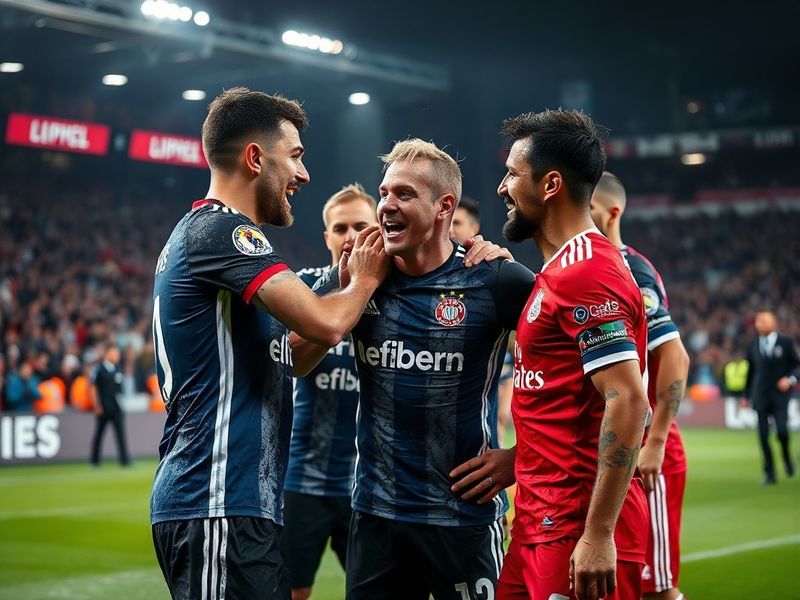
Leverkusen vs Bayern: How Leverkusen is Redefining German Football
“`html
Bayer Leverkusen vs Bayern Munich: A Rivalry Redefined
Football rivalries are often built on decades of history, tension, and drama. But the latest chapter in German football defies tradition. The matchup between Bayer Leverkusen and Bayern Munich, once a David vs Goliath narrative, has evolved into something far more intriguing. Leverkusen’s recent dominance over Bayern has shifted expectations, sparking debates about the future of the Bundesliga and the shifting balance of power in European football.
The Context: A Shift in German Football
For years, Bayern Munich stood as the unchallenged titan of German football. Their financial might, global brand, and relentless trophy haul made them nearly untouchable. Leverkusen, meanwhile, was the plucky underdog—a club with ambition but limited resources. That dynamic has flipped. Under Xabi Alonso’s leadership, Leverkusen has transformed from a mid-table side into a tactical powerhouse, blending youth development with astute signings.
Bayern’s struggles this season have been well-documented. Injuries, managerial instability, and a squad seemingly past its peak have left them vulnerable. Leverkusen, on the other hand, has played a brand of football that prioritizes pressing, positional play, and collective cohesion. Their back-to-back victories over Bayern in the league have not just been wins—they’ve been statements.
What’s Driving Leverkusen’s Rise?
Leverkusen’s success isn’t accidental. Several factors have converged to create this perfect storm:
- Tactical Brilliance: Alonso’s ability to instill a high-pressing, possession-based system has turned Leverkusen into a machine. Their 4-2-3-1 formation allows for fluid transitions and overloads in key areas.
- Squad Depth: Unlike Bayern’s aging stars, Leverkusen boasts a mix of homegrown talent (like Florian Wirtz) and shrewd acquisitions (such as Victor Boniface). Their bench is just as dangerous as their starting XI.
- Financial Prudence: Leverkusen operates on a far smaller budget than Bayern, proving that smart recruitment and development can outperform sheer spending.
- Defensive Solidity: Granit Xhaka and Jonathan Tah form a rock-solid midfield and defensive partnership, while Piero Hincapié marshals the backline with composure.
Bayern’s Crisis: A Symptom of a Larger Problem?
Bayern’s struggles extend beyond form. The club’s identity crisis has been years in the making. Their reliance on aging stars like Thomas Müller and Joshua Kimmich has left them exposed when fitness or form dips. Meanwhile, their transfer strategy has often prioritized big names over sustainable planning—a luxury no longer afforded in a league where Leverkusen and Eintracht Frankfurt are pushing boundaries.
Bayern’s recent Champions League exit at the hands of Real Madrid was a microcosm of their issues: a lack of cutting edge in attack, defensive vulnerabilities, and a failure to adapt. Their response to Leverkusen’s rise will be telling. Will they double down on star power, or finally embrace a rebuild?
Broader Implications for German Football
The Leverkusen vs Bayern dynamic isn’t just about one club’s resurgence—it’s a referendum on the future of the Bundesliga. For years, Bayern’s dominance stifled competition, but now, clubs like Leverkusen, Frankfurt, and even Union Berlin are forcing a reckoning. The league’s competitiveness is at its highest in decades, which could have ripple effects across Europe.
Financially, Bayern’s stranglehold on broadcasting revenue and sponsorship deals has long been a point of contention. If other clubs continue to close the gap on the pitch, the league’s financial model may face pressure to redistribute wealth more equitably. This could lead to a more level playing field—or, conversely, create a new hierarchy where the top clubs pull further ahead.
What’s Next for the Rivalry?
The upcoming fixtures between Leverkusen and Bayern promise to be must-watch affairs. Leverkusen will enter as favorites, but Bayern’s history of resilience means they can’t be written off. The psychological edge is now with Leverkusen, but Bayern’s experience could prove decisive in tight moments.
The broader question is whether this rivalry will become a staple of German football or remain a fleeting moment in Leverkusen’s ascent. If Alonso’s project continues to thrive, Leverkusen could establish themselves as Bayern’s equal—or even their superior. For Bayern, the pressure is on to respond, lest they become a relic of a bygone era.
The next chapter of this rivalry will be written on the pitch, but its implications stretch far beyond. It’s a test of whether football’s traditional power structures can adapt to a new reality, where innovation and ambition can topple even the mightiest dynasties.
Key Takeaways
- Leverkusen’s Rise: A masterclass in tactical evolution and squad building, proving that money isn’t everything in modern football.
- Bayern’s Crisis: A decline masked by past glory, forcing a reckoning with their aging squad and outdated strategies.
- League-Wide Impact: The Bundesliga’s competitiveness is at its highest, threatening Bayern’s long-held dominance.
- Future of the Rivalry: Will Leverkusen sustain their challenge, or will Bayern reclaim their throne? The answer could redefine German football.
For fans of the game, this rivalry is a reminder that football’s beauty lies in its unpredictability. The underdogs are no longer just dreaming—they’re delivering.
For more on the evolving landscape of European football, check out our News and Sports sections for deeper analysis and updates.