The Lyrid Meteors: A Global Skywatching Tradition
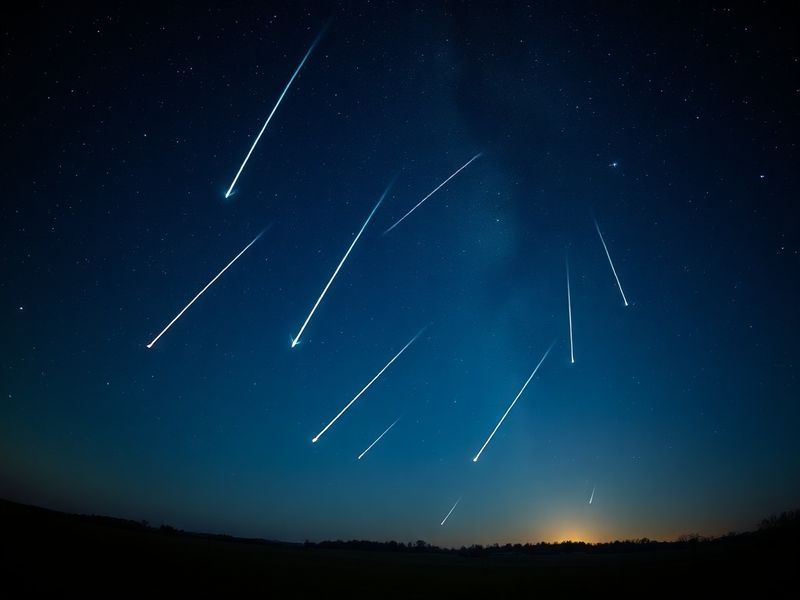
The annual Lyrid meteor shower arrives each April, offering stargazers around the world a fleeting but brilliant display of cosmic fireworks. Visible from both hemispheres, this celestial event has captivated human imagination for millennia, weaving through cultural myths and scientific discovery. Unlike more intense meteor showers, the Lyrids provide a subtle yet reliable spectacle—peaking with roughly 10 to 20 meteors per hour under ideal conditions.
This year’s Lyrids peak on April 22–23, coinciding with a waning crescent moon that will rise late in the night. Such conditions create darker skies, enhancing visibility for observers. While the Lyrids may not rival the Perseids or Geminids in sheer numbers, their historical significance and accessibility make them a cherished event for both amateur astronomers and cultural storytellers alike.
The Origins and Science Behind the Lyrids
The Lyrid meteor shower originates from debris left behind by Comet C/1861 G1 Thatcher, a long-period comet that last visited the inner solar system in 1861. Discovered by amateur astronomer A.E. Thatcher, the comet’s orbit intersects Earth’s path every April, creating a trail of dust and rock that burns up in our atmosphere as meteors. This annual intersection has occurred for centuries, with records dating back to ancient China in 687 BCE.
Astronomers classify the Lyrids as a medium-strength shower, characterized by their swift and bright meteors. Some Lyrids leave persistent trains—glowing ionized trails that linger for several seconds after the meteor’s passage. Occasionally, the shower produces outbursts, with rates exceeding 100 meteors per hour, as it did in 1803, 1922, and 1982. While such events are unpredictable, they add an element of surprise to the Lyrids’ annual performance.
For optimal viewing, astronomers recommend locations far from urban light pollution. Rural areas, mountains, and designated dark-sky parks provide the best conditions. The shower’s radiant point—near the constellation Lyra—rises in the northeast after midnight, making late-night and pre-dawn hours the prime time for observation.
A Celestial Phenomenon in Global Folklore
The Lyrids have left their mark on human storytelling across cultures. In ancient Chinese records, the shower was described as “stars falling like rain,” a phrase that reflects both awe and apprehension. Similarly, Korean and Japanese chronicles from the 8th to 10th centuries reference celestial events tied to the Lyrids’ peak, often interpreting them as omens or messages from the divine.
In Western astronomy, the Lyrids are tied to Vega, the brightest star in Lyra, which has held symbolic meaning in Greek and Roman mythology. Vega was associated with Orpheus’s lyre and the harp of King David in Christian tradition. Some indigenous cultures in North America, such as the Blackfoot and Lakota tribes, viewed meteor showers as the spirits of ancestors traveling across the sky—a belief that transformed a scientific event into a spiritual experience.
Even today, the Lyrids inspire festivals and gatherings. In India, the shower coincides with religious observances like Hanuman Jayanti, where devotees stay awake through the night in vigil. In Portugal, stargazing events are held in the Alentejo region, blending scientific observation with local traditions. These global connections highlight how a single astronomical event can unify diverse cultures under a shared sky.
How to Observe and Photograph the Lyrids
Observing the Lyrids requires minimal equipment—just clear skies, patience, and a comfortable spot to lie back. Unlike lunar eclipses or planetary transits, meteor showers demand no specialized gear. A reclining chair, blanket, and warm clothing are often all that’s needed. Avoiding screens and allowing your eyes to adjust to darkness for 20–30 minutes maximizes visibility.
For those interested in photography, capturing meteors can be rewarding yet challenging. A DSLR or mirrorless camera with a wide-angle lens (14–24mm) works best. Set the camera to manual mode, with an aperture of f/2.8 or wider, ISO between 1600 and 6400, and a shutter speed of 10–25 seconds. Use a sturdy tripod and a remote shutter release to minimize shake. While most frames will show only stars, a lucky shot may catch a brilliant Lyrid streaking across the frame.
Enthusiasts can also contribute to citizen science by reporting their observations to organizations like the American Meteor Society or the International Meteor Organization. These records help refine predictions and track changes in meteor shower activity over time. Whether for science, art, or personal wonder, the Lyrids offer a rare opportunity to witness the universe in motion.
A Lasting Legacy in the Night Sky
The Lyrids remind us that the cosmos is not a distant abstraction but a living, breathing part of human experience. From ancient annals to modern astrophotography, this annual event has bridged generations and cultures, offering both scientific insight and poetic inspiration. As light pollution continues to encroach on dark skies, the Lyrids also serve as a call to preserve our connection to the night.
This year, take a moment to step outside, look up, and join a tradition that spans millennia. The Lyrids may be fleeting, but their impact endures—across time, across cultures, and across the silent expanse of space.