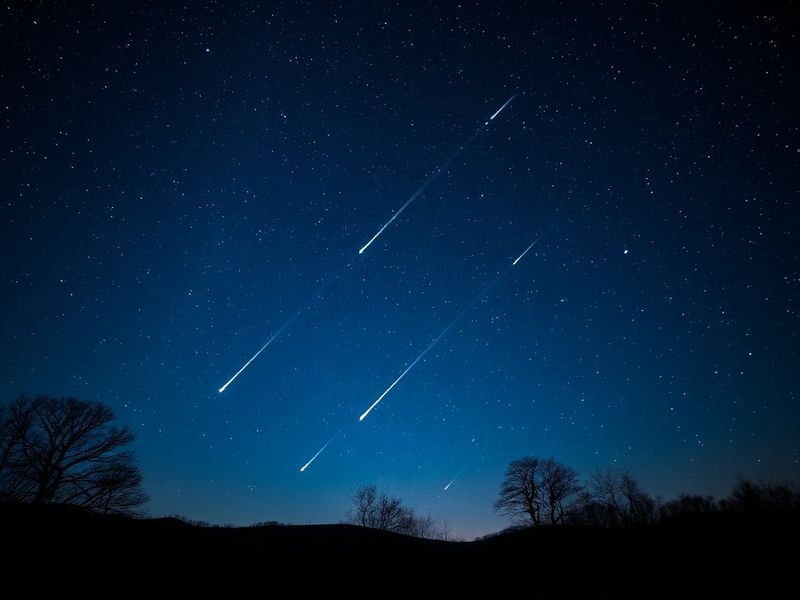
Lyrid Meteor Shower 2024: When and How to Watch the April Sky Show
“`html
Lyrid Meteor Shower: A Global Guide to April’s Celestial Show
The Lyrid meteor shower arrives every April like a reliable cosmic clock, offering skywatchers a predictable yet breathtaking spectacle. Unlike sudden astronomical events that dominate headlines, the Lyrids arrive with quiet consistency, tracing their path across the night sky with fleeting streaks of light. For millennia, humans have observed this annual phenomenon, weaving it into myths, calendars, and cultural traditions across the globe.
This year, the Lyrids peak between April 21 and 22, providing an accessible stargazing opportunity for both seasoned astronomers and casual observers. While not as intense as the Perseids or Geminids, the Lyrids compensate with historical significance and a touch of unpredictability—sometimes delivering surprise bursts of activity that keep even experts watching closely.
The Science Behind the Light Show
The Lyrids originate from the debris trail of Comet Thatcher (C/1861 G1), a long-period comet that last visited the inner solar system in 1861. As Earth passes through the comet’s dusty remnants each April, tiny particles—many no larger than a grain of sand—enter our atmosphere at speeds around 30 miles per second. The friction generates intense heat, creating the luminous trails we recognize as shooting stars.
Unlike meteor showers linked to comets with shorter orbits, the Lyrids have been observed for over 2,700 years, with Chinese records dating back to 687 BCE. Their radiant point, located near the constellation Lyra, gives the shower its name. While the Lyrids typically produce 10 to 20 meteors per hour under ideal conditions, historical outbursts have occasionally pushed rates above 100 per hour, as happened in 1803 and 1922. Scientists attribute these surges to denser filaments within Thatcher’s debris trail.
For observers, the Lyrids offer a unique window into the solar system’s ancient history. Each meteor represents a fragment of a comet that may have formed during the early days of our planetary system, making the annual display more than just a visual treat—it’s a tangible connection to the cosmos’s distant past.
A Global Skywatching Tradition
The Lyrids hold cultural significance in societies around the world, often woven into folklore and seasonal celebrations. In ancient China, astronomers recorded the shower’s appearance alongside imperial events, believing the meteors signaled heavenly omens. Medieval European texts sometimes associated the Lyrids with the feast days of saints, linking celestial events to religious observances.
In Japan, the Lyrids coincide with Hanami, the cherry blossom season. For centuries, poets and artists have drawn parallels between the fleeting meteor trails and the transient beauty of falling petals—a reminder of life’s impermanence. Meanwhile, in Hindu tradition, the shower aligns with festivals like Baisakhi, a harvest celebration that also marks the solar new year in some regions.
Indigenous communities in the Americas have their own interpretations. The Navajo, for instance, view meteor showers as the spirits of ancestors passing through the sky, while the Inuit of Alaska see them as the playful lights of celestial beings. These diverse perspectives highlight how a single astronomical event can inspire vastly different cultural narratives.
Modern Observational Practices
Today, the Lyrids attract not only traditional stargazers but also citizen scientists and astrophotographers. Organizations like the American Meteor Society encourage observers to report their sightings, contributing to a global database that helps refine predictions. Smartphone apps now guide novices through the process, making meteor tracking more accessible than ever.
For optimal viewing, experts recommend finding a dark location away from city lights, allowing at least 30 minutes for eyes to adjust. The best time is after midnight, when the radiant point in Lyra climbs higher in the sky. While the Lyrids don’t require telescopes or binoculars, a reclining chair and a thermos of hot coffee can enhance the experience.
Challenges and Future of the Lyrids
Despite their consistency, the Lyrids face challenges in the modern era. Light pollution from urban expansion dims the night sky for an estimated 80% of the global population. Artificial satellites and space debris also complicate observations, occasionally streaking across meteor trails in long-exposure photographs.
Climate change presents another obstacle. Increasing cloud cover in some regions and unpredictable weather patterns can obscure peak viewing nights. However, the Lyrids’ predictability offers a silver lining—astronomers can plan expeditions years in advance, selecting remote locations with historically clear skies.
Looking ahead, the Lyrids will continue their 415-year orbit alongside Comet Thatcher. The next close approach in 2276 may bring fresh debris, potentially enhancing future displays. Until then, the annual April shower remains a reminder of humanity’s enduring fascination with the night sky.
How to Make the Most of the Lyrids
Whether you’re a seasoned astronomer or a first-time observer, the Lyrids offer a chance to reconnect with the cosmos. Here’s how to prepare:
- Timing: Peak activity occurs pre-dawn on April 22, but meteors can appear from April 16 to 26.
- Location: Seek dark skies—state parks or designated dark-sky reserves work best.
- Equipment: No special tools needed, but a camera with a wide aperture can capture faint trails.
- Comfort: Dress warmly, bring a blanket, and avoid bright screens to preserve night vision.
- Patience: Allow at least an hour for your eyes to adapt; meteor showers come in waves.
The Lyrids remind us that even in an era dominated by digital screens, the universe still has the power to captivate. As ancient cultures once gathered to watch these fleeting lights, so too can we pause—and look up.
The next meteor shower, the Eta Aquarids, arrives in early May. But for now, the Lyrids invite us to celebrate the quiet majesty of the night sky, one streak of light at a time.