Exploring the Timeless Legacy of the Three Musketeers
The Legacy of the Three Musketeers
The tale of the Three Musketeers, originally penned by Alexandre Dumas in 1844, remains a cornerstone of literature and popular culture. This novel not only introduced readers to the valor and camaraderie of Athos, Porthos, and Aramis but also provided a vivid glimpse into the historical context of 17th-century France. The story, centered around themes of loyalty, friendship, and adventure, has transcended generations, inspiring countless adaptations in various media.
Historical Context and Cultural Significance
The setting of Dumas’s narrative is crucial for understanding its impact. The novel unfolds during the reign of Louis XIII, a time marked by political intrigue and social upheaval. The musketeers, as part of the King’s guard, embody the values of honor and duty. Their adventures reflect the complexities of loyalty amidst the chaos of court politics.
From a cultural perspective, the Three Musketeers have been embraced worldwide. The story resonates with themes of heroism that are universally appealing. In countries like Japan, adaptations have taken on a unique flavor, blending local storytelling traditions with Dumas’s original narrative. This cross-cultural exchange enriches the story, allowing it to find new life in different contexts.
Adaptations Across Media
The enduring popularity of the Three Musketeers has led to numerous adaptations in film, television, and theater. Each rendition brings its own interpretation, often reflecting the societal values of the time. For instance, the 1993 Disney film offered a family-friendly take, while more recent adaptations have aimed for darker, grittier interpretations.
Here are some notable adaptations:
- 1911 Silent Film: The first film adaptation, showcasing the early cinematic interpretation of Dumas’s work.
- 1973 Film: This version featured a star-studded cast and aimed for a more comedic tone.
- 1993 Disney Film: A blend of action and humor, making the story accessible to younger audiences.
- 2011 Film: A modern retelling that incorporated steampunk elements, showcasing the musketeers in a fantastical light.
Each adaptation highlights the versatility of Dumas’s characters and themes, allowing them to remain relevant in contemporary storytelling.
The Musketeers in Today’s Society
In modern times, the ideals represented by the Three Musketeers—friendship, loyalty, and bravery—continue to resonate. These themes are often cited in discussions of teamwork and collaboration, particularly in fields such as business and sports. The phrase “All for one and one for all” has become a rallying cry for unity, serving as a reminder of the importance of solidarity in achieving common goals.
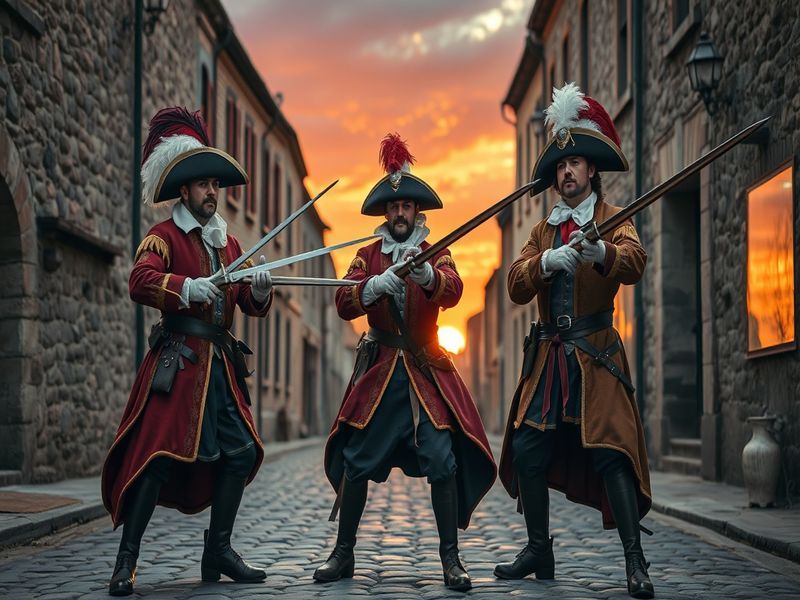
Moreover, the musketeers have influenced various aspects of popular culture, from fashion to music. Contemporary artists often draw inspiration from the characters’ distinctive style, particularly the iconic musketeer hat and attire, which symbolize adventure and romance. The musketeers have also appeared in video games and graphic novels, further solidifying their presence in the cultural zeitgeist.
As we reflect on the legacy of the Three Musketeers, it is evident that Dumas’s work is more than just a tale of swashbuckling adventure. It serves as a mirror, reflecting the values and challenges of society throughout history. Whether through literature, film, or other forms of media, the musketeers remind us of the importance of camaraderie and honor.
Conclusion
The Three Musketeers remain an influential narrative that spans cultures and generations. Their adventures and the principles they uphold continue to inspire audiences worldwide. As adaptations evolve, the core message of friendship and loyalty endures, proving that the spirit of the musketeers will always have a place in our collective imagination.