Neverland Ranch: Michael Jackson’s Dream and Its Lasting Legacy
“`html
Neverland Ranch: From Michael Jackson’s Dream to a Symbol of His Legacy
Nestled in the rolling hills of Santa Ynez Valley, California, Neverland Ranch was more than just a home—it was a physical manifestation of Michael Jackson’s imagination. Purchased in 1988 for $19.5 million, the 2,700-acre estate became a private sanctuary where the King of Pop could escape the pressures of fame and indulge his love for fantasy and childhood wonder. The ranch, named after the fictional island in Peter Pan, was designed to be a literal and figurative playground, complete with a private zoo, amusement park rides, and a 50-seat theater.
Jackson’s vision for Neverland extended far beyond its opulent architecture. The estate reflected his desire to create a world where he could relive the magic of his own childhood while shielding his children—Prince, Paris, and Blanket—and himself from the relentless scrutiny of the public eye. Yet, despite its intended purpose as a personal retreat, Neverland Ranch would become inextricably linked to Jackson’s public persona, his legal battles, and ultimately, his legacy.
The Vision Behind Neverland: A Childhood Paradise
Neverland Ranch was Jackson’s attempt to construct a place where time stood still. The estate included a 13,000-square-foot main house, a guest house, a movie theater, and a collection of exotic animals that Jackson housed in a private zoo. The centerpiece of Neverland was its amusement park, featuring a Ferris wheel, a carousel, and a roller coaster. These attractions were not just for show; Jackson genuinely wanted to share the joy of childhood with others, hosting children’s parties and inviting disadvantaged kids to experience the wonders of Neverland.
The ranch’s design was meticulous, with every detail intended to evoke a sense of magic. Jackson even installed a train set that wound through the property, a nod to his lifelong fascination with locomotives. The estate’s name was a deliberate choice, referencing Peter Pan, the story of a boy who never grows up—a theme that resonated deeply with Jackson, who often expressed a desire to preserve his innocence.
“Neverland is about never growing up. It’s about being happy and carefree.” — Michael Jackson
Jackson’s commitment to his vision was unwavering. He spared no expense in outfitting Neverland with the finest amenities, from a four-story slide to a private amusement park. The ranch was not just a home; it was a testament to Jackson’s belief in the power of imagination and the importance of childhood joy.
Legal Battles and Financial Struggles: The Decline of Neverland
Despite its idyllic beginnings, Neverland Ranch became entangled in the controversies that plagued Jackson’s later years. In 2003, the estate gained infamy when Jackson was accused of child molestation. The subsequent legal battle, which culminated in a highly publicized trial in 2005, cast a shadow over Neverland. The ranch, once a symbol of Jackson’s generosity, was now scrutinized as investigators combed through its grounds for evidence.
Financially, Neverland was a burden. Jackson’s lavish lifestyle, coupled with his mounting legal fees, left him struggling to maintain the estate. By 2008, he had defaulted on loans totaling $24.5 million, forcing a public auction of Neverland’s contents. The sale, which included memorabilia, furniture, and even the ranch’s iconic train set, drew crowds eager to own a piece of Jackson’s world. The auction raised $5.3 million, a fraction of the estate’s original value, highlighting the financial toll of Jackson’s legal troubles and extravagant spending.
The ranch itself was not sold during this period, but its fate was uncertain. Jackson’s health was declining, and his ability to maintain the property was diminishing. In 2009, just months after his death, Neverland Ranch was finally put on the market for $100 million, a price that reflected both its historical significance and its dilapidated condition.
Key Financial and Legal Challenges Facing Neverland Ranch
- Legal Fees: Jackson’s child molestation trial in 2005 cost millions, draining his finances.
- Loan Default: By 2008, Jackson defaulted on $24.5 million in loans, leading to the auction of Neverland’s contents.
- Declining Maintenance: The estate fell into disrepair as Jackson’s health worsened, making upkeep nearly impossible.
- Market Challenges: Even after Jackson’s death, selling the ranch proved difficult due to its controversial history and high asking price.
From Auction Block to New Owners: The Ranch’s Changing Fate
In 2015, Neverland Ranch was sold to billionaire Ron Burkle for $22 million, a far cry from its original $100 million asking price. Burkle, a co-founder of the Yucaipa Companies, purchased the estate with plans to restore it and potentially open it to the public. However, progress was slow. The property remained largely unused, and its future was shrouded in uncertainty.
In 2017, Burkle sold Neverland to Colony NorthStar, a real estate investment firm, for $29 million. Colony NorthStar expressed interest in developing the property, though no concrete plans were announced. The firm’s ownership marked another chapter in Neverland’s tumultuous history, as the estate transitioned from a personal retreat to a speculative investment.
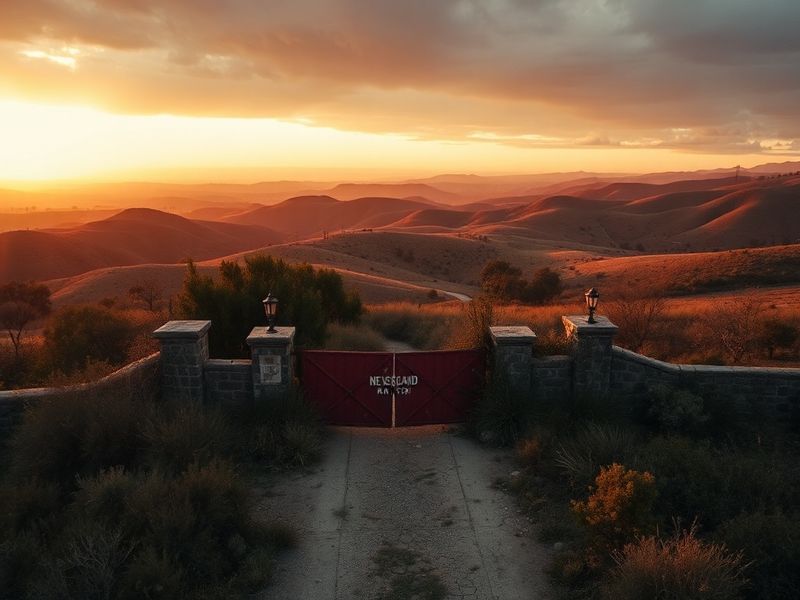
Despite these changes, Neverland’s connection to Jackson’s legacy never faded. Fans continued to visit the property, leaving tributes and mementos at its gates. The ranch’s iconic train set, once a symbol of Jackson’s love for children, became a poignant reminder of the estate’s past. In 2019, Colony NorthStar announced plans to demolish the main house, citing safety concerns and the high cost of restoration. The decision sparked outrage among Jackson’s fans, who saw it as an erasure of his memory.
Today, Neverland Ranch stands as a shell of its former self. The main house is gone, and the property’s future remains uncertain. Yet, its legacy endures, not just as a symbol of Jackson’s life and career, but as a cautionary tale about the costs of fame, the burden of wealth, and the fragility of dreams.
Neverland’s Cultural Legacy: More Than Just a Ranch
Neverland Ranch transcended its role as a physical location. It became a cultural touchstone, representing both the heights of Jackson’s creativity and the depths of his personal struggles. The estate embodied his desire to create a world untouched by the harsh realities of life, a place where fantasy and reality blurred. For many fans, Neverland was a sanctuary, a reminder of the magic Jackson brought into the world through his music and performances.
Yet, the ranch’s legacy is complicated. It is impossible to separate Neverland from the controversies that surrounded Jackson in his later years. The child molestation allegations, the financial mismanagement, and the eventual decline of the estate all contribute to its complex narrative. For some, Neverland is a symbol of Jackson’s generosity and his commitment to making the world a happier place. For others, it is a reminder of the darker aspects of his life and career.
Regardless of one’s perspective, Neverland Ranch remains an indelible part of Jackson’s story. It is a physical manifestation of his dreams, his flaws, and his enduring impact on popular culture. As fans continue to grapple with Jackson’s legacy, Neverland stands as a testament to the power of imagination—and the inevitable passage of time.
The estate may no longer be the vibrant playground Jackson envisioned, but its story is far from over. Whether it will be redeveloped, preserved, or left to fade into history remains to be seen. What is certain, however, is that Neverland Ranch will forever be tied to the legacy of Michael Jackson, a man who dreamed of a place where time stood still.
For those interested in exploring more about Michael Jackson’s cultural impact, visit our Entertainment category for additional articles and insights.