National Security in 2024: How Nations Protect Themselves Today
“`html
National Security in the 21st Century: Balancing Protection and Privacy
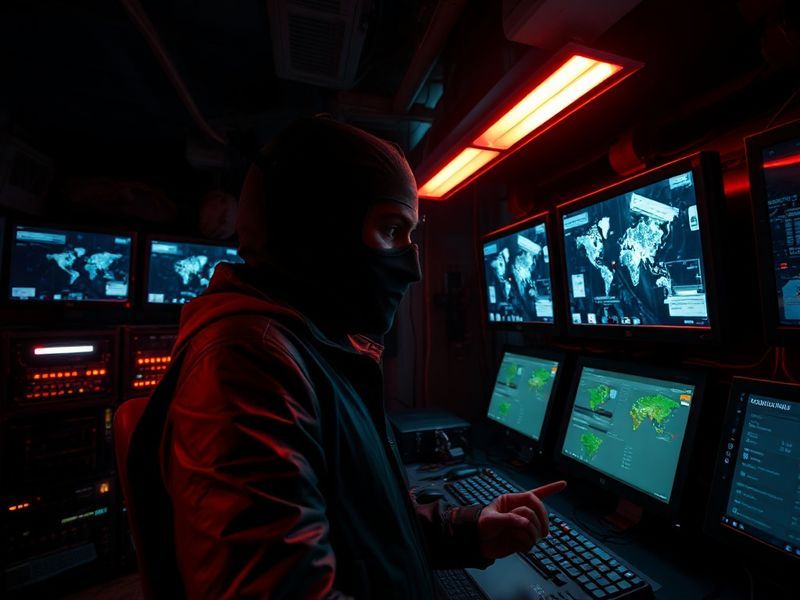
National security remains one of the most complex challenges facing governments worldwide. As threats evolve from traditional warfare to cyberattacks and disinformation campaigns, the strategies nations use to protect their citizens must adapt just as quickly. The balance between robust defense and individual freedoms has become a defining debate of our time.
This tension is not new, but its stakes have grown exponentially. In the past, national security primarily meant maintaining military strength and deterring foreign aggression. Today, it encompasses safeguarding critical infrastructure, countering terrorism, and protecting digital networks. The tools used to achieve these goals—from surveillance technology to artificial intelligence—are reshaping how societies function.
The Shifting Landscape of Threats
Modern threats are often invisible to the naked eye but devastating in impact. Cyberattacks on power grids, financial systems, or government databases can cripple a nation overnight. According to a 2023 report by the Center for Strategic and International Studies, state-sponsored hacking groups have targeted over 100 countries in the past five years. These attacks are not limited to major powers; smaller nations and private companies are equally vulnerable.
Terrorism remains a persistent concern, though its methods have shifted. Lone-wolf attacks and online radicalization have replaced large-scale coordinated plots in many regions. Meanwhile, disinformation campaigns—spread through social media—undermine public trust in institutions. Russia’s 2016 interference in the U.S. presidential election demonstrated how foreign actors can manipulate democratic processes without firing a single bullet.
The rise of artificial intelligence adds another layer of complexity. While AI can enhance security by detecting anomalies in real time, it also enables more sophisticated cyber threats. Deepfake technology, for example, can be used to fabricate evidence or impersonate leaders, creating chaos in political and economic spheres.
Global Responses and Diverging Priorities
No single approach to national security exists. Countries tailor their strategies to their unique threats, resources, and cultural values. The United States, for instance, prioritizes technological innovation and military dominance, investing heavily in cyber defense and space-based surveillance. Its 2023 National Cybersecurity Strategy outlines plans to shift more responsibility to private companies for protecting critical infrastructure.
In contrast, the European Union emphasizes privacy and human rights. The General Data Protection Regulation (GDPR) imposes strict limits on surveillance and data collection, even if it means sacrificing some security capabilities. This reflects Europe’s historical sensitivity to government overreach, rooted in experiences with authoritarian regimes. Meanwhile, nations like Israel and South Korea take a more aggressive stance, using preemptive strikes and extensive intelligence networks to neutralize threats before they materialize.
Asia presents another model. China’s approach combines mass surveillance with social credit systems, aiming to preemptively identify and suppress dissent. While effective in maintaining control, this system raises ethical questions about individual freedoms. Japan, on the other hand, focuses on resilience, investing in disaster preparedness and cyber hygiene to minimize damage from inevitable attacks.
The Role of Technology and Innovation
Technology is both a weapon and a shield in modern national security. On one hand, advancements in AI, quantum computing, and biometrics offer unprecedented tools for defense. Drones equipped with facial recognition can monitor borders, while blockchain technology secures supply chains against tampering. On the other hand, these same innovations can be turned against nations by adversaries.
One of the most controversial tools is mass surveillance. Programs like the U.S. National Security Agency’s PRISM have sparked global debates about privacy versus security. Revelations by whistleblowers such as Edward Snowden exposed the extent to which governments collect and analyze personal data. Supporters argue that such measures are necessary to prevent attacks, while critics warn of a slippery slope toward authoritarianism.
In response, some countries are exploring decentralized alternatives. Estonia, for example, uses blockchain to secure its digital infrastructure, ensuring that no single entity can monopolize control over sensitive data. Others are turning to ethical hacking, where governments collaborate with cybersecurity experts to identify vulnerabilities before they are exploited by malicious actors.
The Human Factor: Trust and Public Support
No security strategy can succeed without public trust. When governments overstep their bounds—whether through excessive surveillance or biased enforcement—they risk eroding the very social cohesion they seek to protect. The 2013 Snowden leaks led to widespread outrage in the U.S. and Europe, prompting legislative reforms. Similarly, France’s 2015 state of emergency laws faced criticism for disproportionately targeting minority communities.
Cultural attitudes toward security vary widely. In countries like Singapore, where communal harmony is prioritized over individual freedoms, surveillance is often accepted as a necessary trade-off. In the U.S., debates over gun control and police reform show how deeply divided public opinion can be on security measures. These differences highlight the need for tailored approaches that respect local values while addressing global threats.
Education also plays a critical role. By fostering a culture of security awareness—such as recognizing phishing scams or reporting suspicious activity—governments can reduce reliance on heavy-handed tactics. Initiatives like Finland’s cybersecurity training program, which begins in primary schools, demonstrate how proactive education can strengthen national resilience.
Looking Ahead: The Path Forward
The future of national security will be shaped by three key factors: technological advancement, geopolitical shifts, and societal values. As AI and quantum computing mature, nations will need to establish international norms to prevent an arms race in cyberspace. The United Nations has already begun discussions on a Digital Geneva Convention, aiming to set rules for state behavior in cyber conflicts.
Geopolitical tensions will also play a role. The rivalry between the U.S. and China, for example, is driving a decoupling of technology supply chains, with both nations seeking to reduce dependence on foreign components. This fragmentation could lead to a more multipolar world, where security strategies are increasingly localized rather than global.
Ultimately, the most effective national security policies will be those that balance protection with transparency. Citizens must have faith that their governments are not overstepping their mandates, while still feeling safe from external threats. This requires not only robust legal frameworks but also public dialogue and accountability.
As we navigate an era of uncertainty, one thing is clear: national security is no longer just about armies and borders. It is about safeguarding the very fabric of society—its data, its trust, and its future. The challenge ahead is to build defenses that are as adaptable and ethical as the threats they seek to counter.