NHL Playoff Overtime Rules Explained: Sudden Death Secrets
“`html
NHL Playoff Overtime Rules: How Sudden Death Works
The National Hockey League’s postseason is where legends are made—and where overtime becomes an endurance test. Unlike the regular season’s three-on-three format, NHL playoff overtime is a grueling, full-strength sudden-death battle. Every shift matters, every save counts, and the pressure is relentless. Understanding these rules isn’t just for hardcore fans; it’s essential knowledge for anyone watching the playoffs. What makes playoff overtime different? And how has it shaped some of the most iconic moments in hockey history?
The Core Rules of Playoff Overtime
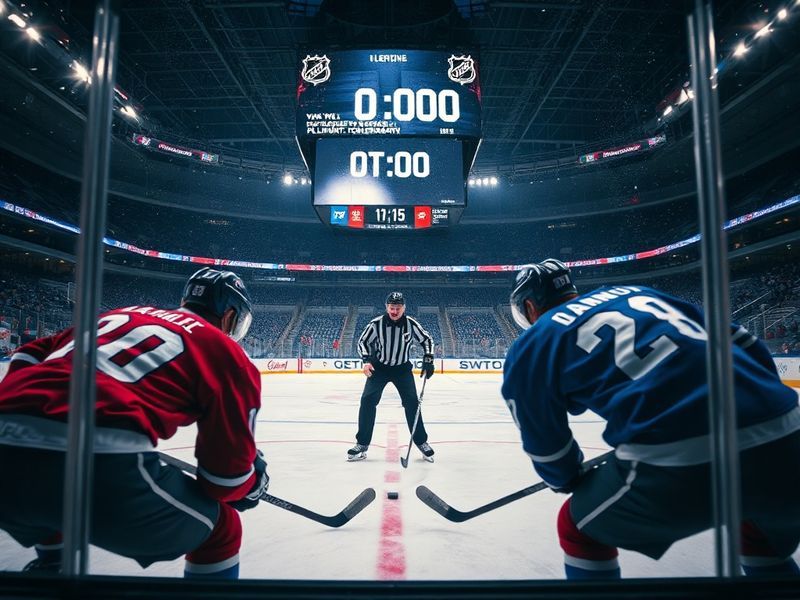
In the NHL playoffs, overtime isn’t a quick five-minute sprint. It’s an open-ended sudden-death period where the first team to score wins the game. Unlike the regular season, where teams play three-on-three hockey in a five-minute overtime, the postseason returns to full strength: five skaters per side plus a goalie. The ice remains at regulation size, and no shootouts are involved—just pure, unrelenting hockey.
Overtime periods can stretch indefinitely until a goal is scored. This has led to legendary marathon games, such as the 1936 Detroit Red Wings vs. Montreal Maroons contest that lasted six full overtimes before a winner emerged. Modern playoff overtimes, while typically shorter, still test the limits of stamina, strategy, and nerves. Coaches must carefully manage their lines, knowing that a misstep in fatigue could cost the game.
Key Differences from Regular Season Overtime
- Full-strength play: No three-on-three hockey; teams skate five-on-five.
- No shootouts: If no goal is scored, another full period begins.
- Longer duration: Playoff overtimes can last far beyond the five-minute regular-season limit.
- Tighter officiating: Referees tend to call penalties more strictly in high-stakes moments.
These differences elevate playoff overtime from a quick bonus period to a defining moment in a team’s postseason journey. The stakes are too high for anything less than total commitment.
Why Full-Strength Overtime Creates Dramatic Moments
Full-strength overtime forces teams to rely on skill, structure, and goaltending rather than the chaos and open ice of three-on-three hockey. In the regular season, three-on-three play often leads to high-scoring, unpredictable outcomes. But in the playoffs, coaches must balance aggression with discipline. A single mistake—a missed assignment, a bad pinch, a lazy recovery—can end a season.
Goaltenders become the most critical players. Even a slight misread of a rebound or a hesitation in positioning can change the course of a series. Consider Henrik Lundqvist’s legendary playoff performances, where his calm under pressure repeatedly bailed out the New York Rangers. Or Patrick Roy, whose butterfly style and mental resilience made him nearly unbeatable in sudden-death situations.
Teams with strong defensive structures and elite goaltending often thrive in these situations. The 2014 Los Angeles Kings, for example, rode Jonathan Quick’s heroics and a disciplined system to the Stanley Cup, including multiple overtime wins. Their ability to control the game’s flow in high-pressure moments was a hallmark of their championship run.
Historical Overtime Moments That Defined Eras
The NHL playoffs have produced some of the most unforgettable overtime goals in sports history. These moments aren’t just highlights; they’re turning points that shape legacies, dynasties, and fan memories. One of the most iconic occurred in 1994, when the New York Rangers’ Mark Messier scored in the second overtime of Game 7 against the New Jersey Devils, capping off a 45-year championship drought. The goal wasn’t just a win—it was a statement that the Rangers were destined for greatness.
Another unforgettable sequence came in 2010, when the Philadelphia Flyers rallied from a 3-0 series deficit against the Boston Bruins, winning multiple games in overtime—including a triple-overtime thriller in Game 7. Goaltender Michael Leighton’s standout performance and the Flyers’ never-say-die attitude became a rallying cry for underdogs everywhere.
These games aren’t just about scoring; they’re about resilience. Teams that can dig deep in overtime often carry that momentum into future games, proving that mental toughness is as important as physical skill in the playoffs.
Notable Playoff Overtime Games
- 1975: Game 3, Buffalo Sabres vs. Vancouver Canucks – The Sabres’ Jim Lorentz scored the fastest overtime goal in NHL history, just 11 seconds into the period.
- 1993: Game 7, Montreal Canadiens vs. Los Angeles Kings – Wayne Gretzky’s hat trick and the Kings’ dramatic comeback forced overtime, though Montreal ultimately prevailed.
- 2000: Game 1, Philadelphia Flyers vs. Pittsburgh Penguins – Keith Primeau’s goal ended a 92-minute, 58-second marathon, the longest NHL playoff game in 44 years.
- 2014: Game 5, Los Angeles Kings vs. San Jose Sharks – Anze Kopitar’s goal in double overtime kept the Kings’ Cup hopes alive in a tightly contested series.
These games remind us why playoff hockey is unlike any other sport. The tension, the strategy, and the sheer willpower required make overtime a microcosm of what makes the NHL postseason so special.
Coaching Strategies for Overtime Success
In playoff overtime, coaches face a unique challenge: balance aggression with caution. Too much risk can lead to breakdowns; too little can result in stagnant play. Most teams adopt a controlled offensive approach, using their best offensive forwards to create chances while relying on their top defensemen to limit mistakes. Power plays become even more critical, as a single power-play goal can end the game instantly.
Line changes are meticulously planned. Coaches often shorten shifts to maintain energy levels, knowing that fatigue can lead to costly errors. The goal is to keep the puck in the offensive zone without overcommitting, forcing the opponent to make the first mistake. This strategy was evident in the Tampa Bay Lightning’s 2020 and 2021 Cup runs, where their relentless forechecking and structured power play paid dividends in overtime situations.
Goaltending is another area where strategy plays a huge role. Some goalies excel in reacting to breakaways or deflections, while others thrive in shootout-style scenarios. Teams often tailor their systems based on their goaltender’s strengths, whether it’s a butterfly goalie like Andrei Vasilevskiy or a hybrid-style netminder like Jacob Markström.
Ultimately, playoff overtime is as much a mental battle as it is a physical one. Coaches who can adapt their systems on the fly, manage their players’ energy, and make bold decisions at critical moments often find themselves celebrating victory when the final buzzer sounds.
How Overtime Rules Influence Playoff Series Outcomes
The impact of overtime rules on playoff series cannot be overstated. A single overtime win can shift momentum, demoralize an opponent, and change the trajectory of a series. Teams that win in overtime often carry that confidence into the next game, while teams that lose may struggle with the psychological weight of falling short in sudden death.
Statistically, teams that win the first game of a series often go on to win the series. Overtime victories can reinforce this trend, giving a team an early lead and the psychological edge. Conversely, a team that loses a close overtime game may find themselves playing with doubt, questioning their ability to finish games.
This psychological aspect is why some coaches prioritize defensive structure in overtime, even at the risk of being less aggressive. The fear of losing can paralyze, while a disciplined approach can force the opponent into making mistakes. It’s a high-stakes chess match where every decision carries immense weight.
For fans, these moments are what make playoff hockey unforgettable. The tension, the suspense, and the sheer unpredictability of overtime create memories that last a lifetime. Whether it’s a last-second deflection or a goaltender robbing a sure goal, playoff overtime is where heroes are made—and legends are born.
As the NHL continues to evolve, one thing remains constant: in the playoffs, overtime is not just a bonus period. It’s the ultimate test of skill, will, and heart. And for the players who rise to the occasion, it’s where championships are decided.