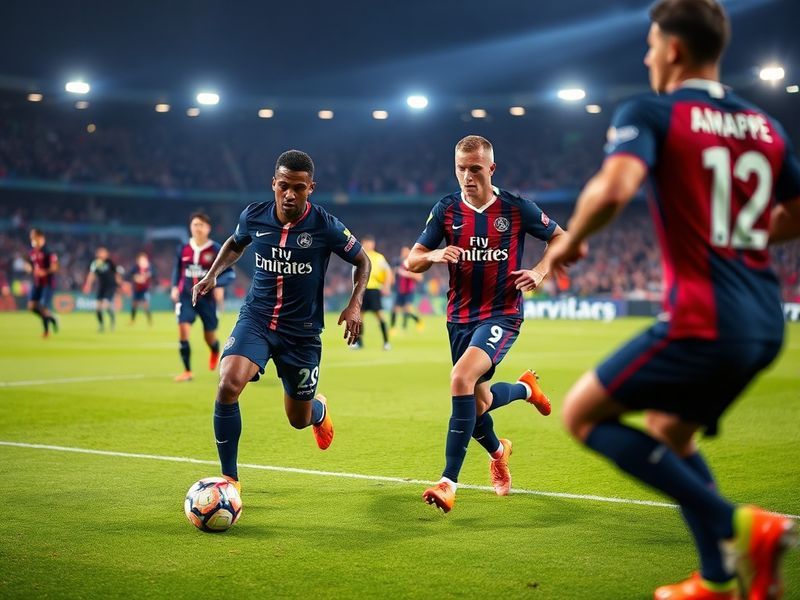
Paris Saint-Germain’s clash with FC Nantes isn’t just another Ligue 1 fixture. It’s a recurring chess match that reveals the evolving dynamics of French football, where tactical innovation often clashes with resilient pragmatism. The capital club’s dominance has been challenged in recent years by clubs like Nantes, who have shown they can disrupt even the most star-studded lineups through disciplined organization and occasional moments of brilliance.
The matchup carries particular significance in 2024, as PSG navigates a transitional period while Nantes defies expectations as one of Ligue 1’s most consistent performers. Beyond the immediate standings implications, this rivalry reflects broader trends in European football, where financial disparity collides with tactical ingenuity.
The Tactical Evolution of PSG vs. Nantes
When these two sides meet, spectators witness a fascinating tactical contrast. PSG under Luis Enrique has prioritized positional play, emphasizing patient build-up play and positional rotations to break down stubborn defenses. Their approach mirrors modern top-flight football, where technical superiority often dictates proceedings.
Nantes, under the steady guidance of Pierre Aristouy, presents a different philosophy. Their 4-4-2 diamond formation has become their trademark, a system that prioritizes compactness and direct transitions. This structure allows them to neutralize superior opponents while capitalizing on set-piece situations, where they’ve developed a reputation for excellence.
Recent encounters have highlighted these tactical clashes. In the 2023-24 season, Nantes secured a memorable 1-0 victory at Parc des Princes, demonstrating how structured defending can frustrate even the most attacking sides. The game plan was clear: absorb pressure, exploit wide areas, and punish any defensive lapses with rapid counterattacks.
Key Tactical Battles to Watch
- Midfield Control: PSG’s Vitinha and Warren Zaïre-Emery will face Nantes’ trio of Moussa Sissoko, Samuel Moutoussamy, and Pedro Chirivella. The battle for midfield dominance could determine whether PSG can impose their rhythm or if Nantes can stifle their creativity.
- Wing Play: Ousmane Dembélé and Nuno Mendes on PSG’s left flank will test Nantes’ defensive resolve. Their ability to stretch play could create crucial spaces for PSG’s forwards.
- Set-Piece Threat: Both teams possess aerial quality. PSG’s Gianluigi Donnarumma in goal faces a formidable challenge from Nantes’ towering defenders like Nicolas Pallois and Jean-Charles Castelletto.
Cultural Significance Beyond the Pitch
This fixture transcends mere sporting competition. It represents the broader narrative of French football’s stratification. PSG’s Qatari ownership has transformed them into a global brand, while Nantes embodies the traditional French club model—one rooted in local identity and sustainable development.
Nantes’ recent performances have become a source of pride for French football purists. Their consistent European campaigns, particularly in the Europa League, have showcased Ligue 1’s depth beyond the capital. Meanwhile, PSG’s struggles in the Champions League have led to soul-searching about the limitations of financial investment without tactical coherence.
The cultural divide extends to the fan experience. PSG’s Parc des Princes has become a global tourist destination, while Nantes’ Stade de la Beaujoire maintains a more intimate, community-focused atmosphere. This contrast highlights how modern football’s commercialization affects traditional matchday experiences across Europe.
Global Perspectives on the Rivalry
From an international standpoint, this matchup reflects broader trends in European football. Clubs like PSG represent the new football economy, where ownership models from the Middle East and United States reshape traditional power structures. Nantes, meanwhile, demonstrates how smaller clubs can compete through smart recruitment and tactical innovation.
European football’s governing bodies have taken note. The introduction of financial fair play regulations aims to bridge this gap, though its effectiveness remains debated. Meanwhile, clubs like Nantes prove that success doesn’t always require massive financial outlay—proper squad management and tactical discipline can level the playing field.
The global football community watches these encounters closely. They serve as case studies for how different football philosophies can coexist in an increasingly commercialized sport. For developing football nations, Nantes’ model offers a blueprint for sustainable success, while PSG represents both the allure and challenges of rapid financial investment.
Statistical Analysis: What the Numbers Reveal
Examining recent statistics provides valuable context for this rivalry. In the past five meetings between the sides, PSG has won three times, with Nantes securing two victories and one draw. However, the margins have been slim—average goal difference across these matches is just 0.8 goals per game.
Nantes’ defensive record against top-half sides has been particularly impressive. They’ve conceded just 0.6 goals per game in their last 10 league matches against teams ranked in the top six. Their ability to limit high-profile attackers like Mbappé and Dembélé has been a key factor in their recent successes.
Possession statistics tell another story. PSG typically dominates possession (62% average in recent meetings), but Nantes’ defensive structure has limited their conversion rate to just 1.8 goals per game in these fixtures. This suggests that while PSG controls proceedings, Nantes’ compactness makes them difficult to break down.
Key Statistical Matchups
- Possession vs. Efficiency: PSG averages 65% possession in home games against Nantes but converts just 15% of their shots on target.
- Set-Piece Impact: Nantes scores 40% of their goals from set-pieces in league matches, compared to PSG’s 25%.
- Counterattacking Threat: Nantes records 12.5 counterattacks per game in matches against top opposition, nearly double PSG’s average.
- Pressing Intensity: PSG’s high press forces errors at a rate of 18.7 per game, but Nantes’ quick transitions punish these mistakes effectively.
Looking Ahead: What This Rivalry Tells Us About Ligue 1’s Future
The PSG-Nantes dynamic offers valuable insights into Ligue 1’s evolving landscape. While PSG’s financial dominance continues, Nantes and other mid-table sides demonstrate that tactical organization and smart recruitment can bridge the gap. This balance makes French football particularly interesting in the European context.
For PSG, consistent performances against sides like Nantes are crucial for their Champions League ambitions. Their ability to break down stubborn defenses will determine whether they can finally overcome their European shortcomings. Meanwhile, Nantes’ steady progress shows that Ligue 1 can produce competitive sides capable of punching above their weight in European competitions.
The rivalry also highlights the importance of youth development in modern football. PSG’s reliance on academy graduates like Warren Zaïre-Emery contrasts with Nantes’ blend of experienced professionals and promising youngsters. Both approaches have merit, and their success in this fixture often depends on which development model proves more effective on the day.
As French football navigates its identity crisis—balancing global ambitions with local traditions—the PSG-Nantes rivalry serves as a microcosm of these broader challenges. It’s not just about individual matches but about what they represent in the grander scheme of European football’s evolution.
The next chapter in this rivalry will be written in the coming months. Whether it’s a tactical masterclass from PSG or another display of Nantes’ defensive resilience, one thing is certain: this fixture will continue to offer compelling narratives that extend far beyond the pitch.