When Southdale Center opened its doors in Edina, Minnesota, on October 8, 1956, it didn’t just introduce a new building—it launched an entirely new way of shopping. Designed by Austrian-American architect Victor Gruen, Southdale was the first fully enclosed, climate-controlled shopping mall in the United States. It wasn’t merely a commercial space; it was a social experiment, a suburban sanctuary, and a blueprint for the future of retail.
The idea behind Southdale was born from Gruen’s vision of creating a European-style town center adapted for American car culture. He imagined a place where people could shop, dine, and socialize under one roof, sheltered from Minnesota’s harsh winters. What began as a radical concept soon became the standard. Within a decade, covered malls proliferated across the country, reshaping consumer behavior and urban development. Today, as malls face decline and reinvention, Southdale remains a vital case study in retail evolution.
The Architectural Vision Behind America’s First Enclosed Mall
Victor Gruen was a man of contradictions. Born in Vienna in 1903, he fled Nazi-occupied Austria in 1938 and settled in the United States, where he became a leading figure in modernist architecture. Gruen disliked the sprawling, car-dependent commercial strips that were becoming common in post-war America. He longed for the walkable, community-centered plazas of his youth. Southdale was his attempt to recreate that sense of place—but with ample parking.
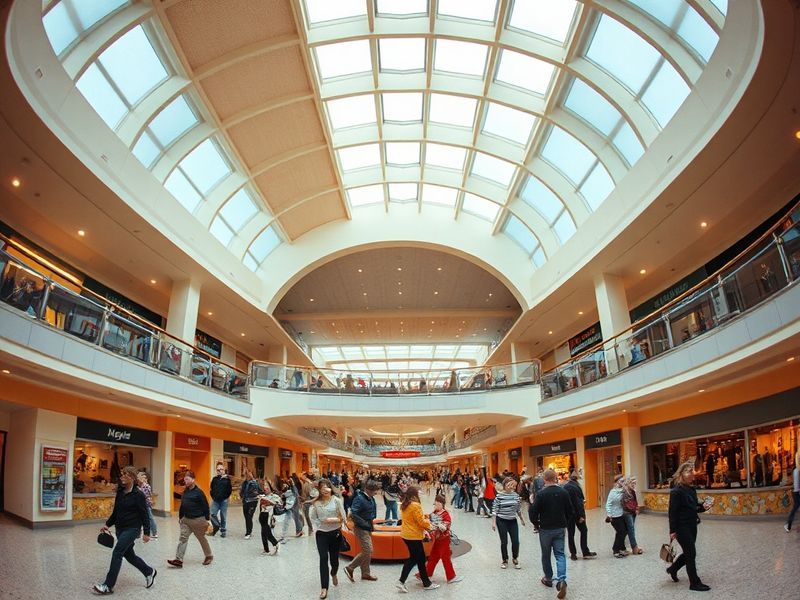
The mall’s design was revolutionary. Two parallel anchor department stores—Dayton’s and Donaldson’s—were connected by a two-story concourse lined with over 70 shops. A central courtyard featured a glass-roofed atrium with trees, plants, and a goldfish pond. The interior was bright, air-conditioned, and meticulously landscaped. Gruen even included artwork and fountains to encourage lingering. He called it a “shopping town,” not just a shopping center.
Gruen’s vision extended beyond commerce. He designed Southdale to be a civic space, complete with a library, medical clinic, and auditorium. These community features were rarely replicated, however. By the 1960s, developers prioritized retail over public life, transforming malls into purely transactional environments. Yet, Gruen’s original intentions are still visible in Southdale’s layout and aesthetic choices, which blend functionality with a touch of grandeur.
From Radical Innovation to Retail Staple: The Rise of the American Mall
Southdale’s success was immediate. Over 40,000 visitors came on opening day, and by 1960, it was generating $100 million annually (about $1 billion today). Its design inspired developers nationwide to build enclosed malls, leading to a boom in suburban retail. By the 1980s, there were over 2,500 malls in the U.S., each modeled after Gruen’s creation.
But Southdale’s influence went beyond numbers. It redefined how Americans shopped. Before malls, most retail took place in downtown districts. Southdale shifted the focus to the suburbs, accelerating the decline of urban cores. It also normalized the idea of one-stop shopping—where consumers could buy groceries, clothes, and gifts without leaving the same building. This convenience came at a cost, however. Small local businesses struggled to compete, and the mall’s rise coincided with the homogenization of retail culture.
Despite its cultural impact, Southdale faced challenges from the start. The mall’s original plans included housing and offices, but these were scrapped due to zoning issues. Gruen later expressed disappointment, calling Southdale a “bland commercial machine” that strayed from his holistic vision. Still, the mall adapted. In the 1970s, it expanded to include a movie theater and additional stores. By the 1990s, it underwent a major renovation to modernize its look and tenant mix.
Southdale in the 21st Century: Reinvention in the Age of E-Commerce
Like many traditional malls, Southdale has had to evolve to survive. The rise of online shopping and changing consumer habits have forced malls to rethink their purpose. Southdale has responded by blending retail with entertainment, dining, and experiential offerings. Today, it features a mix of legacy stores like Macy’s and new additions such as a revitalized food hall and seasonal events like holiday markets.
One of Southdale’s most notable recent updates was the 2018 addition of a luxury cinema, dining complex, and upscale retail spaces. This shift reflects a broader trend in mall redevelopment: transforming spaces into destinations rather than just shopping centers. The mall now hosts yoga classes, pop-up shops, and even a rooftop terrace in some configurations. These changes aim to draw visitors who aren’t necessarily there to shop but to experience something unique.
Yet, Southdale’s biggest challenge remains foot traffic. Like many malls built in the 1950s and 1960s, it faces competition from newer, open-air lifestyle centers and the unrelenting growth of e-commerce. To combat this, Southdale has leaned into nostalgia. It markets itself as a historic landmark, offering guided tours that explore its architectural significance and role in retail history. The mall also partners with local schools and organizations, reinforcing its place in the community.
Why Southdale Still Matters: Lessons for Retail and Urban Design
Southdale’s story is one of adaptation and resilience. It was built for a world that no longer exists, yet it continues to thrive by redefining itself. Its legacy offers valuable lessons for anyone interested in architecture, urban planning, or retail strategy.
For one, Southdale demonstrates the importance of community in commercial spaces. While many malls have become sterile and transactional, Southdale has attempted to reintroduce elements of social gathering. Whether through events, art installations, or dining experiences, it reminds us that shopping centers can be more than just places to buy things—they can be places to connect.
The mall also highlights the tension between innovation and nostalgia. Gruen’s original vision was forward-thinking, but it was quickly co-opted by developers prioritizing profit over people. Today, Southdale balances modernity with tradition, preserving its historic charm while embracing contemporary trends. This duality is key to its survival.
Finally, Southdale underscores the need for flexibility in design. The mall’s ability to adapt—adding new amenities, reconfiguring spaces, and appealing to younger generations—has kept it relevant. In an era where many malls are shuttering, Southdale’s story is a testament to the power of reinvention.
The Future of Southdale and the Mall as a Concept
Looking ahead, Southdale’s future likely hinges on its ability to blend commerce with culture. The mall’s management has hinted at further expansions, potentially including co-working spaces, fitness centers, or even residential units. These ideas echo Gruen’s original vision of a mixed-use community hub.
For now, Southdale remains a vital part of Edina’s identity. It’s a place where history and modernity coexist, where shoppers can trace the evolution of retail from the 1950s to today. Whether it continues to thrive may depend on its willingness to stay ahead of the curve—without losing sight of what made it special in the first place.
As we navigate an increasingly digital world, places like Southdale remind us of the enduring appeal of physical spaces. They are not just relics of the past; they are laboratories for the future of community and commerce.
For those interested in exploring more about the evolution of retail spaces, check out our News section or dive into our Culture archives for deeper analysis on urban trends.