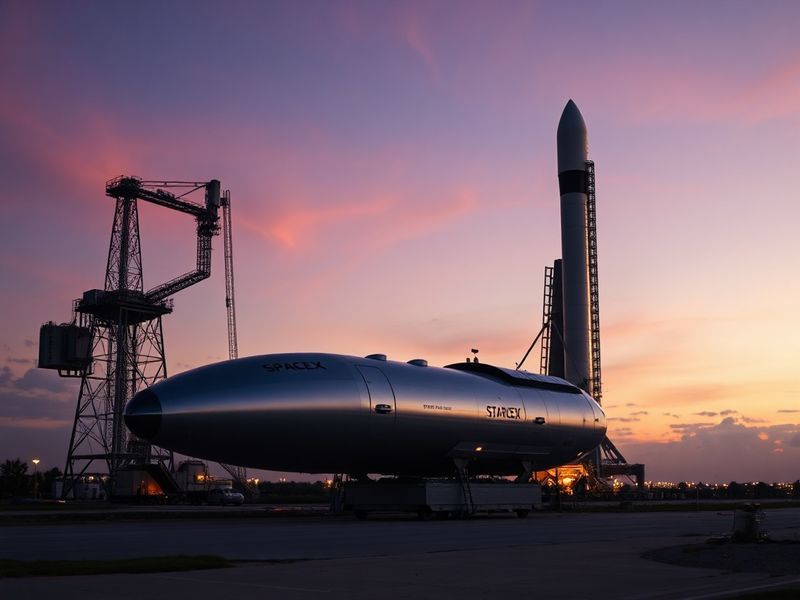
Space Exploration: From Cold War Rivalry to Global Collaboration
“`html
From Sputnik to SpaceX: The Evolution of Space Exploration
Space exploration has transformed from a Cold War rivalry into a global endeavor driven by science, commerce, and human ambition. What began as a two-nation contest between the United States and the Soviet Union has evolved into a collaborative effort involving over 70 countries, private corporations, and international agencies. The journey—marked by milestones like the first human in space, the moon landing, and the International Space Station—reflects both technological progress and shifting geopolitical priorities.
The launch of Sputnik 1 by the Soviet Union in 1957 marked the dawn of the space age. The beach-ball-sized satellite, orbiting Earth every 96 minutes, sent shockwaves through the American scientific community and political establishment. It wasn’t just a technological achievement; it was a cultural moment that redefined global power dynamics. Within months, the U.S. responded with the creation of NASA, setting the stage for a decades-long space race that would push the boundaries of human ingenuity.
By the 1960s, the focus shifted from mere orbit to human spaceflight. The Soviet Union again led with Yuri Gagarin becoming the first person in space in 1961. Twelve years later, the United States landed astronauts on the moon with Apollo 11, a triumph broadcast live to 600 million people worldwide. These events transcended national pride; they became shared human achievements, symbolizing what collective ambition could accomplish.
The Rise of International Collaboration and Commercial Spaceflight
By the 1980s and 1990s, space exploration began to shed its purely competitive roots. The International Space Station (ISS), launched in 1998, stands as a testament to global cooperation. Built and operated by the U.S., Russia, Japan, Canada, and the European Space Agency, the ISS has hosted over 240 astronauts from 19 countries. It’s more than a laboratory—it’s a symbol of what humanity can achieve when borders blur in the pursuit of knowledge.
Yet, the 21st century has also seen the rise of private enterprise in space. Companies like SpaceX, Blue Origin, and Virgin Galactic are redefining access to orbit. SpaceX’s reusable rockets, for instance, have slashed the cost of launches by nearly 90%, making space more accessible than ever. In 2020, SpaceX’s Crew Dragon became the first commercial spacecraft to carry astronauts to the ISS, marking a new era where government agencies are no longer the sole gatekeepers of space travel.
This shift has cultural implications. Space is no longer the exclusive domain of superpowers or elite astronauts. It’s becoming a frontier for tourism, research, and even resource extraction. The idea of civilians journeying to space—once confined to science fiction—is now a reality. In 2021, billionaire Jared Isaacman funded the first all-civilian orbital mission, Inspiration4, while Amazon’s Jeff Bezos and Virgin’s Richard Branson took suborbital flights. These journeys blur the line between exploration and spectacle, raising questions about who gets to be a spacefarer and why.
Space Exploration in Popular Culture: From Myth to Mainstream
Space has always captivated the human imagination. Ancient civilizations mapped the stars and told stories of gods and heroes among the cosmos. Modern popular culture has continued that tradition, turning space into a canvas for storytelling. From Stanley Kubrick’s 2001: A Space Odyssey to George Lucas’s Star Wars, cinema has shaped how societies perceive the final frontier.
These narratives do more than entertain. They influence public perception and policy. Films like Apollo 13 and The Right Stuff romanticized the early days of spaceflight, fostering a sense of nostalgia for a time when space was a unifying dream. Meanwhile, science fiction like The Martian and Interstellar explore the ethical dilemmas and existential questions tied to long-term space habitation. These stories don’t just reflect reality—they shape it, inspiring new generations of scientists, engineers, and dreamers.
Television has also played a role. Shows like Star Trek and The Expanse have cultivated dedicated fanbases that celebrate diversity, cooperation, and innovation. They’ve even influenced real-world technology. The flip phone, tablet computers, and voice-activated AI assistants all trace their conceptual roots to Star Trek. The line between fiction and reality continues to blur as space agencies and private companies adopt ideas once deemed fantastical.
Challenges and Ethical Considerations in the New Space Age
Despite its progress, space exploration faces significant challenges. One of the most pressing is the issue of space debris. Over 30,000 objects larger than a softball currently orbit Earth, remnants of decades of launches. These fragments pose a collision risk to satellites and spacecraft, threatening the infrastructure that powers global communications, weather monitoring, and GPS systems. The Kessler Syndrome—a scenario where collisions create a cascade of debris—could render certain orbits unusable, crippling modern life as we know it.
Another concern is the militarization of space. While the Outer Space Treaty of 1967 prohibits the placement of nuclear weapons in orbit, the development of anti-satellite weapons by countries like the U.S., Russia, and China has raised tensions. Space is increasingly seen as a strategic domain, not just for exploration but for national security. This shift risks turning the cosmos into another battleground, mirroring the early days of the Cold War.
There are also ethical questions about resource exploitation. The moon and asteroids hold vast reserves of rare minerals, helium-3, and water ice. Companies like Planetary Resources and AstroForge have emerged to mine these celestial bodies, aiming to fuel a new economy beyond Earth. But who owns these resources? Who regulates their extraction? The absence of clear international law leaves these questions unanswered, raising fears of a “space gold rush” where the richest nations and corporations dominate.
The environmental impact of space launches is another growing concern. Rocket engines emit soot and alumina particles into the stratosphere, potentially altering atmospheric chemistry. Studies suggest that frequent launches could contribute to ozone depletion and climate change. As the number of launches increases—SpaceX alone conducted 96 missions in 2023—the need for sustainable propulsion systems becomes urgent.
A Global Perspective: Who Leads in Space Today?
Space exploration is no longer dominated by two superpowers. While the U.S. and Russia remain major players, new entrants are reshaping the landscape.
- China has emerged as a formidable force. Its Chang’e lunar program successfully landed rovers on the moon’s far side in 2019 and 2020. The Tiangong space station, completed in 2022, is a rival to the ISS and a platform for future deep-space missions. China’s ambitions extend to Mars, with its Tianwen-1 mission achieving a successful landing in 2021.
- India has also made remarkable strides. The Indian Space Research Organisation (ISRO) achieved a historic soft landing near the moon’s south pole with Chandrayaan-3 in 2023. This mission made India the fourth country to land on the moon and the first to reach the lunar south pole, a region rich in water ice.
- Europe maintains a strong presence through the European Space Agency (ESA). While individual European nations have limited budgets, the ESA pools resources to fund missions like the Rosetta comet probe and the Gaia star-mapping observatory. Europe is also a key partner in NASA’s Artemis program, which aims to return humans to the moon by 2026.
- Japan and South Korea are carving out niches in robotic exploration and satellite technology. Japan’s Hayabusa2 mission returned samples from the asteroid Ryugu, while South Korea’s Danuri lunar orbiter has provided unprecedented data on the moon’s magnetic fields.
These developments reflect a broader trend: space is no longer a two-player game. The democratization of access has allowed smaller nations to contribute meaningfully, fostering innovation and reducing the dominance of traditional spacefaring powers.
Looking Ahead: The Future of Humanity Among the Stars
The next decade promises to be transformative. NASA’s Artemis program aims to establish a sustainable human presence on the moon, with the goal of using it as a stepping stone for Mars. Private companies are eyeing lunar bases, space hotels, and even asteroid mining operations. The dream of a self-sustaining colony on Mars, once confined to the pages of science fiction, is inching closer to reality.
Yet, the path forward is fraught with uncertainty. The cost of space exploration remains prohibitive for many nations. The environmental impact of launches must be addressed. And the ethical frameworks governing space must evolve to prevent exploitation and conflict. As humanity ventures further into the cosmos, it must do so with caution, foresight, and a commitment to equity.
One thing is clear: space exploration is no longer about flags and footprints. It’s about survival, discovery, and the enduring human desire to push beyond known limits. Whether it’s unlocking the mysteries of the universe, securing resources for future generations, or simply inspiring awe, space remains the ultimate frontier. The question isn’t whether we will explore it further—it’s how, and for whose benefit.
Conclusion
From the first tentative steps into orbit to the lofty goals of interplanetary colonization, space exploration has always been as much about human ambition as it is about science. It reflects our collective hopes, fears, and ingenuity. As nations and corporations race toward the stars, the challenge will be to ensure that this new era is marked by cooperation rather than competition, sustainability rather than exploitation, and inclusivity rather than dominance. The cosmos awaits—but the journey must be one we take together.