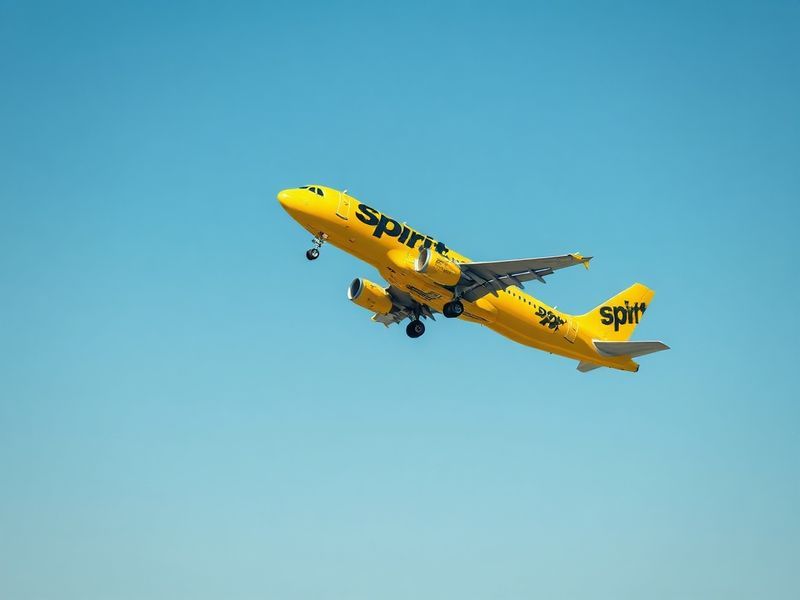
Spirit Airlines Stock: A High-Risk, High-Reward Play for Investors
Spirit Airlines has long been a polarizing figure in the airline industry. Known for its ultra-low-cost model, the carrier has carved out a niche by offering bare-bones fares that appeal to budget-conscious travelers. However, for investors, Spirit’s stock has been a rollercoaster ride—volatile, unpredictable, and often tied to broader economic and industry trends. With fluctuating fuel costs, shifting consumer demand, and intense competition, the airline’s stock performance reflects the broader challenges and opportunities in the global aviation sector.
While Spirit Airlines has faced criticism for its customer service and operational hiccups, its financial strategy has kept it afloat in a notoriously cutthroat industry. The company’s stock, traded under the ticker SAVE on the Nasdaq, has seen dramatic swings over the past decade. For some investors, it represents a speculative bet on the resilience of ultra-low-cost carriers. For others, it’s a cautionary tale about the risks of investing in an industry prone to external shocks. To understand where Spirit Airlines stock might be headed, it’s essential to examine its recent performance, the factors driving its volatility, and its long-term prospects.
The Recent Performance of Spirit Airlines Stock
Spirit Airlines’ stock has experienced significant volatility in recent years, influenced by a mix of internal decisions and external pressures. In 2023, the company’s stock price fluctuated between $15 and $30, reflecting investor uncertainty about its ability to balance growth with profitability. One of the most notable events was the airline’s acquisition by JetBlue in a $3.8 billion deal, which was ultimately blocked by a U.S. federal judge in January 2024. The failed merger sent shockwaves through the market, causing Spirit’s stock to dip temporarily before stabilizing.
Despite these setbacks, Spirit has shown resilience. The airline reported a net profit in the first quarter of 2024, driven by strong demand for leisure travel and cost-cutting measures. However, its stock remains sensitive to fuel price fluctuations and labor disputes. For example, when oil prices surged in mid-2022, Spirit’s operational costs rose sharply, squeezing profit margins. Conversely, when fuel prices stabilized in late 2023, the airline’s stock rebounded modestly. This pattern underscores the airline’s dependence on external factors that are largely beyond its control.
Key Factors Influencing Spirit Airlines Stock
Investing in Spirit Airlines stock requires a deep understanding of the factors that can sway its performance. Below are the primary drivers that investors should monitor:
- Fuel Costs: Fuel is one of the largest expenses for any airline, and Spirit is no exception. The airline’s ultra-low-cost model relies on keeping operational costs minimal, but rising fuel prices can quickly erode profitability. In 2022, fuel costs accounted for nearly 30% of Spirit’s total operating expenses, according to its annual report. Any unexpected spikes in oil prices can lead to a sharp decline in stock value.
- Consumer Demand: Spirit Airlines primarily serves leisure travelers, who are more sensitive to economic conditions than business flyers. During economic downturns, discretionary spending on travel often declines, which can hurt the airline’s revenue. However, during periods of economic recovery or pent-up demand—like the post-pandemic travel boom—Spirit has benefited from increased bookings.
- Competition: The airline industry is fiercely competitive, with major players like Southwest, Frontier, and Allegiant vying for the same budget-conscious customers. Spirit’s ability to maintain its market share depends on its pricing strategy and route expansion. In recent years, Spirit has expanded its international routes, particularly to Latin America, to diversify its revenue streams.
- Regulatory and Labor Issues: Like many airlines, Spirit has faced labor disputes and regulatory scrutiny. In 2023, the airline reached a tentative agreement with its pilots’ union, avoiding a potential strike that could have disrupted operations. Labor strikes or unresolved disputes can lead to operational disruptions, which in turn can negatively impact stock performance.
- Mergers and Acquisitions: Spirit’s attempted merger with JetBlue was a defining moment for its stock. While the deal fell through, the mere possibility of a merger created volatility. Investors closely watch for potential buyout offers or partnerships that could reshape the airline’s future.
A Global Perspective: Spirit Airlines in the Broader Aviation Market
Spirit Airlines’ stock performance cannot be viewed in isolation. The airline operates in a global market where regional trends and economic conditions play a significant role. For instance, the rise of ultra-low-cost carriers (ULCCs) in Europe and Asia has intensified competition, forcing Spirit to adapt its business model. In Latin America, Spirit has found a growing market for affordable travel, particularly in countries like Colombia and Peru, where middle-class travel demand is rising.
Culturally, Spirit Airlines has become synonymous with no-frills, budget-friendly travel—a reflection of shifting consumer priorities in an era of economic uncertainty. The airline’s marketing strategy, which emphasizes low base fares with optional add-ons, resonates with travelers who prioritize affordability over comfort. This approach has made Spirit a favorite among backpackers, students, and budget-conscious families, particularly in the United States.
However, the airline’s reputation for poor customer service and hidden fees has also drawn criticism. In a 2023 survey by Travel + Leisure, Spirit was ranked among the worst airlines in the U.S. for customer satisfaction. While this hasn’t significantly deterred its core customer base, it does pose long-term risks to its brand value and investor confidence. For Spirit to thrive, it must strike a balance between maintaining its low-cost appeal and improving its customer experience.
What’s Next for Spirit Airlines Stock?
The future of Spirit Airlines stock hinges on several critical developments. First, the airline must navigate the ongoing challenges of fuel price volatility. While hedging strategies can mitigate some risks, unpredictable oil prices remain a wildcard. Second, Spirit’s expansion into new markets, particularly in Latin America and the Caribbean, could drive revenue growth. However, this expansion requires significant capital investment, which could strain its balance sheet.
Investors should also keep an eye on the airline’s debt levels. As of early 2024, Spirit reported long-term debt of approximately $2.5 billion. While the company has managed its debt burden thus far, rising interest rates could increase its borrowing costs, further squeezing profitability. Additionally, the airline’s ability to secure favorable labor agreements will be crucial in avoiding costly disruptions.
For those considering Spirit Airlines stock, the outlook is cautiously optimistic. The airline’s strong demand for leisure travel and strategic route expansions provide reasons for hope. However, its high-risk, high-reward profile means that investors must be prepared for volatility. As with any speculative investment, diversification and a long-term perspective are key.
For further reading on the airline industry and investment trends, explore our Business and Finance sections. Staying informed about global economic trends and industry shifts will be essential for anyone looking to capitalize on Spirit Airlines’ potential.
Conclusion
Spirit Airlines stock remains a high-stakes gamble for investors. While the airline’s ultra-low-cost model has secured its place in the market, its financial performance is highly sensitive to external factors like fuel prices, consumer demand, and regulatory changes. The failed JetBlue merger and ongoing labor negotiations add layers of uncertainty to its future. Yet, for investors willing to tolerate volatility, Spirit Airlines offers the potential for substantial returns, particularly if the airline can successfully expand its international footprint and improve its operational efficiency.
The airline’s story is a microcosm of the broader aviation industry—a sector defined by resilience, adaptability, and relentless competition. As global travel continues to rebound from the pandemic, Spirit Airlines’ ability to capitalize on this momentum will determine whether its stock can soar or remains mired in uncertainty. For now, the skies—and the stock market—remain unpredictable for Spirit Airlines.