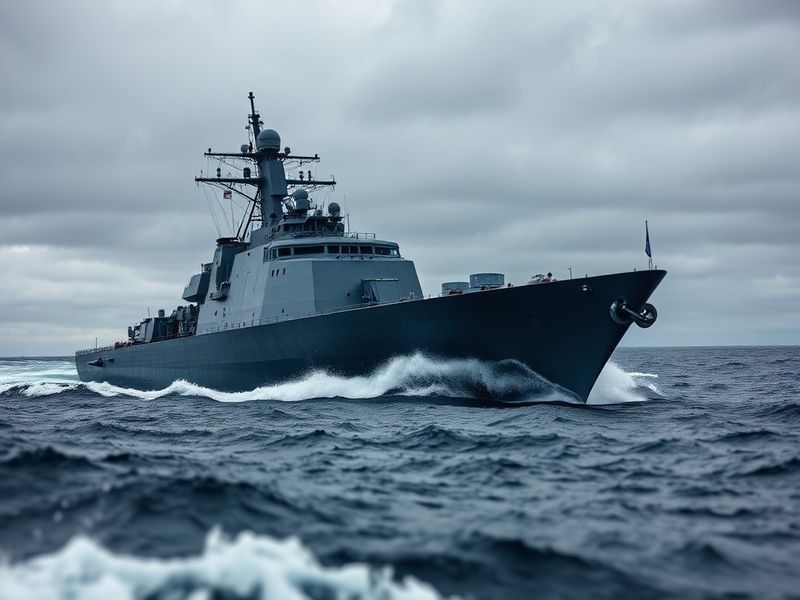
The Role and Evolution of Warships in Modern Naval Power
“`html
Understanding Warships: Types, Roles, and Modern Innovations
Warships have been the backbone of naval power for centuries, evolving from wooden sailing vessels to today’s high-tech steel giants. These ships are purpose-built for combat, defense, and strategic dominance on the world’s oceans. Their designs reflect the changing nature of warfare, technological advancements, and geopolitical priorities.
Their roles extend beyond traditional battles. Modern warships serve as floating command centers, medical facilities, and even platforms for projecting soft power. Understanding their classifications, capabilities, and strategic importance provides insight into how nations maintain maritime security and project influence across global waters.
The Evolution of Warship Design: From Triremes to Aircraft Carriers
Early naval warfare relied on oar-powered vessels like the Greek trireme, which dominated the Mediterranean around the 5th century BCE. These ships were fast, maneuverable, and equipped with bronze rams to sink enemy vessels. Over time, the introduction of gunpowder transformed naval combat, leading to the development of sailing ships armed with cannons.
The 19th century marked a pivotal shift with the advent of steam power and ironclad warships. The Industrial Revolution enabled the construction of armored battleships like HMS Dreadnought, which rendered older ships obsolete overnight. This innovation triggered a global arms race, reshaping naval doctrine worldwide.
World War II accelerated the evolution further. Aircraft carriers emerged as decisive weapons, allowing nations to project air power across vast distances. The Battle of Midway in 1942 demonstrated how carriers could shift the balance of naval warfare without direct ship-to-ship engagement. Today, supercarriers like the USS Gerald R. Ford represent the pinnacle of naval engineering, combining nuclear propulsion, advanced radar systems, and a full fleet of combat aircraft.
Classifications and Roles: What Defines a Modern Warship?
Modern warships are categorized based on their primary mission and capabilities. Each class is designed to fulfill specific roles within a naval fleet, ensuring balanced operational effectiveness. Here’s a breakdown of the most common types:
- Aircraft Carriers: Serve as mobile airbases, capable of launching and recovering fixed-wing aircraft and helicopters. They enable power projection thousands of miles from a nation’s shores.
- Destroyers: Fast, multi-role vessels equipped with advanced radar, anti-air, anti-ship, and anti-submarine systems. They often act as escorts for larger ships like carriers or amphibious assault ships.
- Cruisers: Larger than destroyers, cruisers combine long-range strike capabilities with robust defensive systems. They are often used for fleet defense and power projection.
- Frigates: Smaller than destroyers but highly versatile, frigates excel in anti-submarine warfare and maritime security. They are cost-effective platforms for smaller navies.
- Submarines: Silent and stealthy, submarines can operate undetected for months. Nuclear-powered submarines offer unmatched endurance and firepower, while diesel-electric models are ideal for coastal defense.
- Amphibious Assault Ships: These vessels transport and land Marines, helicopters, and vehicles during expeditionary operations. They function as mini-aircraft carriers and command centers.
The choice of ship class often reflects a nation’s strategic priorities. For example, the United States Navy emphasizes carrier strike groups and large-deck amphibious ships to maintain global reach. In contrast, smaller navies like those of Japan or South Korea focus on destroyers and submarines to counter regional threats.
Technology and Innovation: The Future of Naval Warfare
Today’s warships are marvels of engineering, integrating cutting-edge technology to enhance lethality, survivability, and operational flexibility. One of the most significant advancements is the development of stealth technology. Ships like the U.S. Navy’s Zumwalt-class destroyers feature angular designs and radar-absorbent materials to reduce their signature, making them harder to detect.
Electromagnetic Aircraft Launch Systems (EMALS) are replacing traditional steam catapults on modern carriers. EMALS offers greater reliability, reduced maintenance, and the ability to launch a wider range of aircraft, including heavier drones and unmanned combat systems. This technology is a game-changer for naval aviation.
Unmanned systems are also reshaping naval operations. The U.S. Navy’s Large Unmanned Surface Vessel (LUSV) program aims to deploy drone ships that can serve as missile magazines, scouts, or decoys. These systems reduce risk to personnel while extending the fleet’s operational reach. Additionally, artificial intelligence is being integrated into shipboard systems for threat detection, navigation, and even autonomous decision-making in combat scenarios.
Energy efficiency and sustainability are becoming priorities as well. Hybrid propulsion systems and biofuels are being tested to reduce the environmental impact of naval operations. The Royal Navy’s Type 26 frigates, for instance, are designed to be quieter and more fuel-efficient, aligning with modern environmental standards without compromising performance.
Geopolitical Significance: How Warships Shape Global Power
Warships are not merely tools of war; they are instruments of diplomacy and deterrence. The presence of a naval task force in international waters can signal political resolve, protect trade routes, or deter aggression. For example, during the 2021 crisis in the South China Sea, the U.S. deployed Carrier Strike Group 5 to reinforce its commitment to freedom of navigation and regional stability.
Naval diplomacy often involves port visits, joint exercises, and humanitarian missions. These activities build alliances and demonstrate a nation’s commitment to global security. The Royal Navy’s Queen Elizabeth carrier’s deployment to the Indo-Pacific in 2021 included joint exercises with Japan, India, and Australia, signaling a united front against regional assertiveness.
Warships also play a critical role in counter-piracy and maritime security. The Gulf of Aden, a hotspot for piracy, has seen a significant reduction in attacks thanks to coordinated naval patrols by international forces. Ships like the USS Arleigh Burke and the HMS Sutherland have been instrumental in these efforts, escorting merchant vessels and disrupting pirate operations.
However, the proliferation of advanced warships has also fueled regional tensions. China’s rapid expansion of its navy, including the commissioning of its third aircraft carrier in 2024, has raised concerns among its neighbors. Nations like India, Japan, and Australia are responding by increasing their naval budgets and developing indigenous shipbuilding capabilities to maintain a strategic balance.
Conclusion: The Enduring Relevance of Warships
From ancient triremes to next-generation stealth destroyers, warships have continually adapted to meet the demands of evolving warfare. Their roles have expanded beyond combat to include humanitarian assistance, disaster relief, and diplomatic engagement. As technology advances, the future of naval power will likely be shaped by unmanned systems, artificial intelligence, and sustainable energy solutions.
Yet, the core mission of warships remains unchanged: to project power, protect national interests, and ensure the free flow of global commerce. In an era of rising geopolitical tensions and technological disruption, the strategic importance of a strong navy has never been more evident. As nations invest in modern fleets, the warship will continue to be a symbol of strength, innovation, and resilience on the high seas.