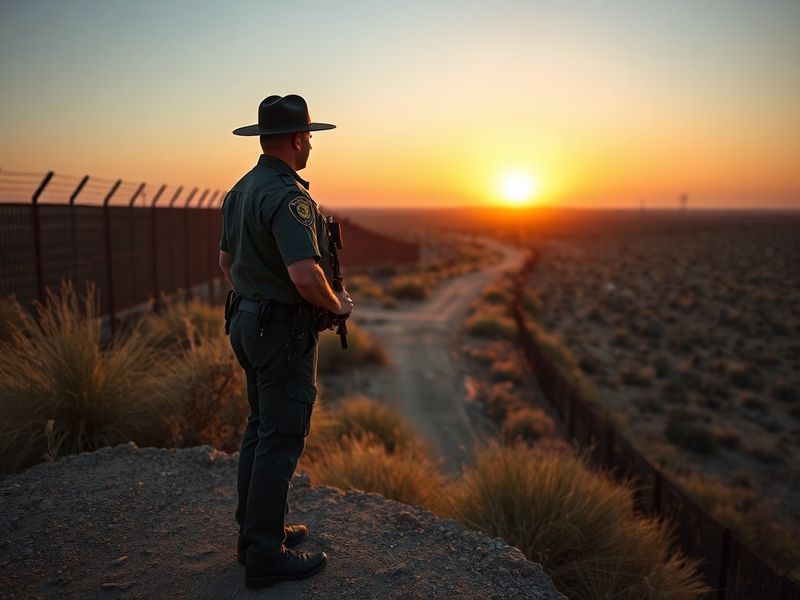
U.S. Border Patrol Explained: Roles, Challenges, and Global Impact
“`html
Understanding U.S. Border Patrol: Roles, Challenges, and Global Context
The United States Border Patrol has long been a focal point in discussions about immigration, national security, and humanitarian efforts. As a federal law enforcement agency within U.S. Customs and Border Protection (CBP), its mission extends far beyond simply monitoring borders. Instead, it operates at the intersection of law enforcement, diplomacy, and humanitarian aid, shaping policies that resonate globally.
With over 19,000 agents stationed primarily along the U.S.-Mexico and U.S.-Canada borders, the Border Patrol plays a critical role in enforcing immigration laws, preventing illegal entry, and safeguarding the nation’s security. Yet, its work is often scrutinized through political, social, and economic lenses, making it one of the most debated agencies in the country. This article explores the multifaceted responsibilities of the Border Patrol, the challenges it faces, and its broader implications in a world grappling with migration crises.
The Core Responsibilities of the Border Patrol
The primary mission of the U.S. Border Patrol is to prevent illegal entry into the United States while facilitating lawful trade and travel. This dual mandate requires balancing enforcement with humanitarian considerations, particularly in regions where migration flows intersect with geopolitical instability.
Agents are tasked with patrolling nearly 6,000 miles of land borders and 2,000 miles of coastal waters. Their duties include:
- Interdicting illegal entries: Detecting and apprehending individuals attempting to cross the border without authorization.
- Enforcing immigration laws: Processing and detaining those who violate U.S. immigration statutes.
- Preventing smuggling operations: Disrupting human trafficking and drug smuggling networks that exploit border vulnerabilities.
- Humanitarian efforts: Assisting migrants in distress, particularly in remote or hazardous areas.
These responsibilities are not confined to the southwestern border. The Northern Border, stretching between the U.S. and Canada, presents its own set of challenges, including the need to monitor vast, sparsely populated regions. Meanwhile, coastal operations address maritime threats, from drug trafficking to potential security risks.
The Humanitarian Paradox: Security vs. Compassion
One of the most complex aspects of Border Patrol operations is the tension between enforcement and humanitarian aid. The agency often finds itself at the forefront of crises involving vulnerable populations, including families fleeing violence, unaccompanied minors, and individuals seeking asylum.
In recent years, record numbers of migrants have arrived at the southern border, overwhelming processing centers and prompting debates about the U.S. immigration system’s capacity to handle such influxes. Border Patrol agents frequently serve as first responders in life-threatening situations, from rescuing migrants stranded in the desert to providing medical assistance to those suffering from heat exhaustion.
This dual role has led to criticism from both sides of the political spectrum. Advocacy groups argue that the agency’s enforcement-first approach exacerbates suffering, while opponents claim that lax policies encourage illegal crossings. The reality is more nuanced: Border Patrol agents operate under directives that prioritize both security and humanitarian concerns, even as they navigate a system often criticized for its inefficiencies.
Global Migration Trends and the Border Patrol’s Evolving Role
The challenges faced by the U.S. Border Patrol cannot be understood in isolation. They are part of a broader global phenomenon driven by economic disparities, climate change, and geopolitical conflicts. According to the United Nations High Commissioner for Refugees (UNHCR), over 100 million people were forcibly displaced worldwide in 2022—a number that continues to rise.
Many of these displaced individuals seek refuge in neighboring countries or, in some cases, travel thousands of miles to reach the U.S. This trend has forced the Border Patrol to adapt to new migration patterns, including the rise of travel routes from Central America, Haiti, and even distant regions like Africa and Asia. The agency has also had to contend with the growing influence of transnational criminal organizations that facilitate smuggling operations, often with brutal methods.
In response, the U.S. has implemented a range of strategies, from technological upgrades like surveillance drones and sensors to partnerships with foreign governments aimed at addressing root causes of migration. These efforts reflect a broader shift in border security paradigms, where prevention and deterrence are balanced with international cooperation.
The Border Patrol in the Public Eye: Controversies and Reforms
Few agencies in the U.S. are as polarizing as the Border Patrol. Its operations have been scrutinized for alleged human rights abuses, including reports of mistreatment in detention facilities. Investigations by media outlets and government watchdogs have highlighted issues such as overcrowding, inadequate medical care, and the separation of families—a practice that drew international condemnation during the 2018 “zero tolerance” policy era.
Reform advocates argue that the agency needs greater accountability, transparency, and investment in alternatives to detention. Meanwhile, supporters emphasize the need for strong border enforcement to maintain national security and uphold the rule of law. The Biden administration has sought to address some of these concerns by rolling back certain policies while increasing funding for border infrastructure and technology.
Yet, reform remains a contentious issue. The U.S. Congress has struggled to pass comprehensive immigration legislation, leaving the Border Patrol to operate under a patchwork of policies that often shift with each administration. This uncertainty complicates long-term planning and strains the agency’s resources.
Looking Ahead: The Future of Border Security
The U.S. Border Patrol stands at a crossroads. As global migration patterns evolve and technological advancements reshape enforcement capabilities, the agency must adapt to meet future challenges. This includes leveraging artificial intelligence for threat detection, expanding partnerships with international organizations, and addressing the humanitarian dimensions of border security.
For policymakers, the task is to strike a balance between security and compassion—a challenge that extends far beyond U.S. borders. The solutions will require not only robust enforcement but also addressing the root causes of migration, from economic inequality to climate-induced displacement.
For the Border Patrol itself, the path forward demands resilience, adaptability, and a commitment to upholding both the law and human dignity. In an era where borders are increasingly porous yet fiercely contested, the agency’s role will remain as critical as it is complex.
As debates over immigration continue to dominate headlines, the U.S. Border Patrol serves as a reminder of the delicate interplay between sovereignty, security, and humanity. Its work is not just about controlling borders; it is about navigating the tensions of a world in motion.