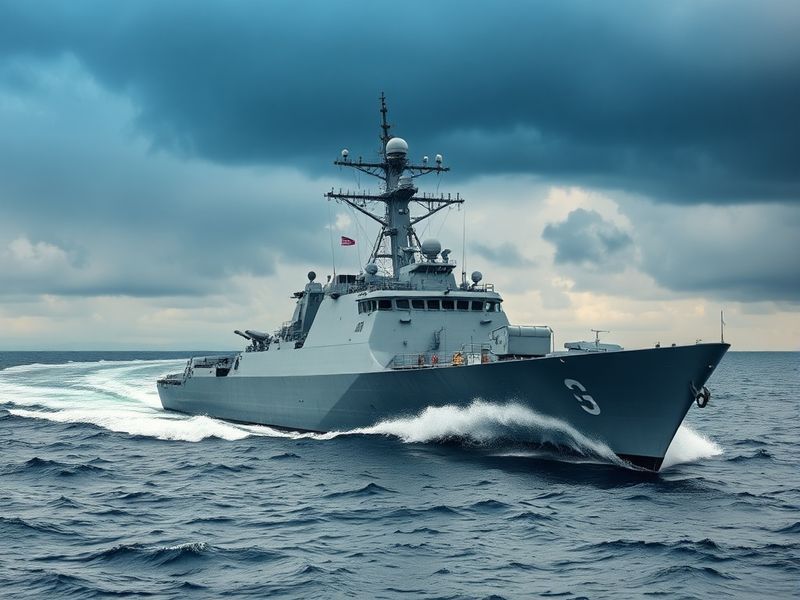
warship
“`html
Warship Evolution: From Ancient Vessels to Modern Naval Power
The warship has been a cornerstone of military strategy and technological advancement for millennia. From the triremes of ancient Greece to the nuclear-powered aircraft carriers of today, these vessels have shaped the course of history, enabling empires to project power across vast distances. Their evolution reflects not only advancements in engineering and materials but also shifts in global politics, warfare tactics, and economic priorities.
Modern warships are marvels of precision engineering, equipped with advanced weaponry, radar systems, and propulsion technologies that make them formidable forces on the high seas. Yet, their development is not without controversy. Environmental concerns, escalating costs, and ethical debates surrounding autonomous naval systems continue to challenge defense planners. This article explores the history, current state, and future of warships, examining how they remain indispensable in an era of rapid technological change.
The Ancient Origins of Naval Warfare
The earliest warships emerged in the Mediterranean around 3000 BCE, when civilizations such as the Egyptians and Phoenicians began outfitting merchant vessels with weapons. By 700 BCE, the Greeks had perfected the trireme, a sleek, oar-powered vessel designed for speed and agility. These ships, with their bronze rams and disciplined rowers, allowed Athens to dominate the Aegean during the Persian Wars.
Naval warfare took a dramatic turn in 260 BCE during the First Punic War, when Rome built its first major fleet to challenge Carthage. The Romans learned to adapt their land-based tactics to the sea, developing the corvus, a boarding bridge that turned naval battles into land battles at sea. This innovation secured Rome’s dominance over the Mediterranean for centuries.
By the Middle Ages, warships had evolved into the iconic longships of the Vikings and the cogs of the Hanseatic League. These vessels were not just tools of war but symbols of cultural exchange, trade, and exploration. The introduction of gunpowder in the 14th century transformed naval combat once again, leading to the development of the carrack and, later, the galleon—ships designed to carry cannons and withstand prolonged engagements.
The Age of Sail and Industrial Revolution
The 16th to 19th centuries marked the Age of Sail, a period when wooden warships reached their peak in both size and complexity. Ships like HMS Victory, launched in 1765, became floating fortresses, with multiple decks of cannons capable of unleashing devastating broadsides. The Napoleonic Wars demonstrated the strategic importance of naval power, with battles like Trafalgar (1805) reshaping Europe’s political landscape.
The Industrial Revolution brought about a seismic shift in warship design. The introduction of steam engines in the mid-1800s allowed ships to operate independently of wind conditions, while ironclad vessels like the USS Monitor and CSS Virginia revolutionized naval combat during the American Civil War. These ironclads, clad in thick armor, rendered wooden ships obsolete almost overnight.
By the late 19th century, the battleship had become the pinnacle of naval power. Ships like HMS Dreadnought (1906) introduced all-big-gun armaments and steam turbine propulsion, rendering older battleships instantly obsolete. The naval arms race leading up to World War I saw nations like Britain and Germany compete to build the most powerful fleets, culminating in battles such as Jutland (1916), the largest naval engagement in history at the time.
Key Innovations of the Industrial Era
- Steam Propulsion: Enabled ships to operate without relying on wind, increasing operational flexibility and speed.
- Ironclad Armor: Rendered wooden hulls vulnerable, leading to the development of fully armored warships.
- Torpedoes and Mines: Introduced new threats, forcing navies to adapt with faster, more maneuverable vessels.
- Wireless Communication: Allowed ships to coordinate across vast distances, improving tactical decision-making.
World War II and the Rise of Aircraft Carriers
World War II marked a turning point in naval warfare, as the aircraft carrier emerged as the dominant capital ship. The attack on Pearl Harbor (1941) demonstrated the vulnerability of battleships to aerial assault, while battles like Midway (1942) proved that carriers could project power across entire oceans. The USS Enterprise and other carriers became the backbone of the U.S. Pacific Fleet, enabling the island-hopping campaign that led to Japan’s surrender.
Submarines also played a critical role during the war, particularly in the Battle of the Atlantic, where German U-boats nearly strangled Britain’s supply lines. The development of sonar and depth charges helped counter this threat, but the submarine’s ability to remain hidden underwater made it a persistent challenge for naval strategists.
By the war’s end, the battleship’s reign was over. The USS Missouri, where Japan formally surrendered, was one of the last battleships built, while newer vessels like the USS Midway carrier exemplified the future of naval power. The war also highlighted the importance of logistics, as massive convoys and supply chains became as critical as firepower in determining naval superiority.
Modern Warships: Technology and Controversy
Today’s warships are a far cry from their wooden predecessors. Nuclear-powered aircraft carriers like the USS Gerald R. Ford can operate for decades without refueling, while guided-missile destroyers like the Arleigh Burke class combine stealth, speed, and firepower in a single hull. These vessels are designed to project power globally, whether through air strikes, anti-submarine warfare, or ballistic missile defense.
However, the cost of these technological marvels is staggering. The Ford-class carrier, for example, has faced repeated delays and cost overruns, with the first ship projected to cost over $13 billion. Critics argue that such expenses are unsustainable, particularly as nations like China and Russia develop hypersonic missiles that could render these carriers obsolete. Meanwhile, unmanned surface vessels and autonomous submarines are beginning to supplement traditional fleets, raising questions about the future role of crewed warships.
Environmental concerns also loom large. Warships consume vast quantities of fossil fuels, and their operations can have significant ecological impacts, from oil spills to underwater noise pollution that disrupts marine life. The U.S. Navy, for instance, has committed to reducing its carbon footprint, but achieving this goal remains a challenge given the energy demands of modern naval operations.
The Future of Naval Warfare
- Unmanned Vessels: Autonomous ships equipped with AI could perform surveillance, mine clearance, and even combat roles, reducing risks to human crews.
- Directed Energy Weapons: Lasers and railguns are being tested as alternatives to traditional projectile weapons, offering lower costs per shot and greater precision.
- Hypersonic Missiles: These weapons, capable of traveling at speeds over Mach 5, pose a significant threat to traditional naval defenses and may force a rethink of ship design.
- Stealth and Hypersonic Propulsion: New materials and propulsion systems aim to make warships harder to detect and faster to deploy.
As geopolitical tensions rise in the South China Sea and other flashpoints, the role of warships in maintaining global stability has never been more critical. Yet, the challenges they face—cost, technology, and ethics—demand innovative solutions. The next chapter of naval warfare will likely be written not just by engineers and admirals but by policymakers grappling with the moral and strategic implications of these floating fortresses.
For those interested in exploring broader trends in military technology, Dave’s Locker’s Technology section offers in-depth analysis of emerging innovations. Meanwhile, the Politics category provides context on how these advancements intersect with global power dynamics.
Conclusion
The warship has evolved from a simple ram-equipped vessel to a high-tech platform capable of projecting power across the globe. Its history is a testament to human ingenuity, ambition, and the relentless pursuit of strategic advantage. Yet, as the world changes, so too must the warship. Whether through unmanned systems, sustainable energy, or entirely new forms of propulsion, the next generation of naval vessels will need to adapt to meet the challenges of the 21st century.
One thing is certain: the warship will remain a symbol of national power and a tool of both defense and deterrence. How nations choose to wield this power will shape the future of global security in ways we are only beginning to understand.
—
METADATA
{
“title”: “Warship Evolution: From Ancient Triremes to Modern Naval Power”,
“metaDescription”: “Explore the history and future of warships from ancient triremes to modern aircraft carriers and stealth destroyers.”,
“categories”: [“Technology”, “Politics”],
“tags”: [“naval warfare”, “warship history”, “modern navy ships”, “military technology”, “aircraft carriers”],
“imageDescription”: “A split-image showing the USS Gerald R. Ford aircraft carrier on the left and an ancient Greek trireme on the right, with a modern guided-missile destroyer in the background. The setting is a naval museum dock, with overcast skies and calm waters, highlighting the contrast between ancient and modern naval power.”
}
—END METADATA—
“`