<!DOCTYPE html>
<html lang="en">
<head>
    <meta charset="UTF-8">
    <meta name="viewport" content="width=device-width, initial-scale=1.0">
    <title>The Complex Reality of Impeachment: A Global Perspective</title>
</head>
<body>
    <article>
        <h1>The Complex Reality of Impeachment: A Global Perspective</h1>

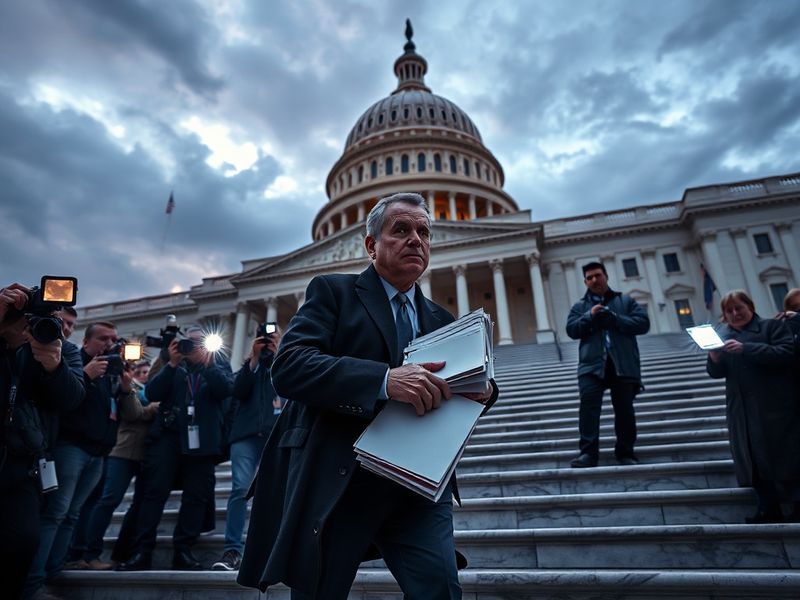
        <p>Impeachment occupies a unique space in political systems worldwide. It serves as a constitutional safeguard against abuse of power, yet its application varies dramatically from one country to another. Unlike routine legislative processes, impeachment carries immense symbolic weight, often becoming a focal point for national debates about governance, legitimacy, and democracy itself.</p>

        <p>The concept traces its roots to the 14th century, emerging in England as a mechanism to hold royal officials accountable. When the framers of the U.S. Constitution adopted the idea in 1787, they transformed it into a tool for checking executive overreach—a design that would later inspire constitutional frameworks in nations from Brazil to South Korea. Yet despite its shared origins, impeachment has evolved into a distinctly cultural and political phenomenon, reflecting each nation’s values and fragilities.</p>

        <h2>The Mechanics of Impeachment Across Different Systems</h2>

        <p>Not all impeachment processes are created equal. While some countries model their systems after the U.S. model—featuring a legislative vote and judicial oversight—others integrate unique cultural and legal elements. For instance, in Brazil, impeachment proceedings are led by the lower house of Congress, with the Senate acting as the trial body. The process is explicitly political, often hinging on charges of fiscal irresponsibility rather than criminal acts.</p>

        <p>In contrast, South Korea’s constitution allows for impeachment on broader grounds, including violations of laws or the constitution. The impeachment of President Park Geun-hye in 2017 demonstrated how rapidly public sentiment can shift the process from legal formality to national reckoning. Her removal followed massive street protests, illustrating how impeachment can become intertwined with mass civic action.</p>

        <p>Meanwhile, in countries like Germany and India, impeachment remains a largely ceremonial process reserved for judges rather than heads of state. This reflects a philosophical preference for stability over accountability—a stark contrast to the more adversarial models used in the Americas and parts of Africa.</p>

        <h3>Key Differences in Global Impeachment Frameworks</h3>
        <ul>
            <li><strong>United States:</strong> Requires “high crimes and misdemeanors,” with the House initiating and the Senate conducting the trial. A two-thirds majority is needed for conviction.</li>
            <li><strong>Brazil:</strong> Focuses on budgetary violations and administrative misconduct. The process is initiated by the Chamber of Deputies and decided by the Senate.</li>
            <li><strong>South Korea:</strong> Allows impeachment for constitutional violations. The Constitutional Court ultimately decides, with public opinion playing a decisive role.</li>
            <li><strong>Russia:</strong> The State Duma can impeach the president, but the process is heavily controlled by the ruling party, making it largely symbolic.</li>
        </ul>

        <h2>The Cultural Weight of Impeachment: Symbolism and Public Trust</h2>

        <p>The act of impeachment carries profound cultural symbolism. In nations with fragile democratic traditions, such as Pakistan or the Philippines, impeachment attempts often reflect deeper struggles between institutions and personalities. In Pakistan, the repeated impeachment efforts against leaders like Asif Ali Zardari have become part of a cyclical drama, reinforcing perceptions of political instability rather than serving as a corrective mechanism.</p>

        <p>In contrast, in countries with strong legal cultures—such as Germany or Canada—impeachment remains a rare and solemn event. When it does occur, it is treated with gravitas, signaling a breakdown in institutional trust rather than a political maneuver. This contrast highlights how legal systems shape public expectations: in some societies, impeachment is seen as a last resort; in others, it is normalized as part of political competition.</p>

        <p>Public perception is often the deciding factor. When impeachment proceedings unfold in real time through social media, as they did during the impeachment of Dilma Rousseff in Brazil, they become cultural touchstones. Protests, memes, and hashtags amplify the stakes, turning legal procedures into national conversations about justice and representation.</p>

        <h2>Impeachment in the Digital Age: Speed, Scrutiny, and Consequence</h2>

        <p>The digital revolution has transformed impeachment into a 24-hour spectacle. Unlike the drawn-out proceedings of the 1990s, modern impeachments unfold under the glare of global attention. Every tweet, leak, and testimony is dissected in real time, accelerating both accountability and polarization.</p>

        <p>This immediacy has benefits. It exposes corruption faster and allows citizens to witness the process directly. However, it also risks turning impeachment into performance theater, where legal substance is overshadowed by viral moments. The impeachment of Donald Trump in 2019, broadcast on cable news and livestreamed worldwide, became a masterclass in how spectacle can eclipse substance.</p>

        <p>Around the world, similar dynamics play out. In Peru, the rapid impeachment of President Martín Vizcarra in 2020—driven largely by social media outrage—sparked protests and accusations of a legislative coup. The episode underscored how digital amplification can compress complex legal debates into digestible, often divisive narratives.</p>

        <h3>How Digital Platforms Shape Impeachment Narratives</h3>
        <ol>
            <li><strong>Speed:</strong> Information spreads instantly, compressing weeks of testimony into hours of viral content.</li>
            <li><strong>Participation:</strong> Citizens become co-authors of the narrative through hashtags, memes, and livestreams.</li>
            <li><strong>Polarization:</strong> Algorithmic feeds amplify partisan reactions, deepening divisions over guilt and legitimacy.</li>
            <li><strong>Accountability:</strong> Digital evidence—emails, videos, and documents—can accelerate investigations but also risk distortion through selective editing.</li>
        </ol>

        <h2>Can Impeachment Rebuild Trust—or Does It Deepen Division?</h2>

        <p>Ultimately, the effectiveness of impeachment depends on its ability to restore faith in institutions. When used judiciously and transparently, it can reinforce democratic norms. The impeachment of South African President Jacob Zuma in 2018, though delayed, signaled a potential turning point in holding leaders accountable.</p>

        <p>Yet too often, impeachment becomes another chapter in a cycle of distrust. In nations like Venezuela or Nicaragua, impeachment attempts are weaponized by ruling parties, eroding public confidence in the very institutions meant to protect democracy. When the process is perceived as political theater rather than legal accountability, it does more harm than good.</p>

        <p>Perhaps the most enduring lesson from global impeachment practices is this: the procedure’s strength lies not in its legal precision, but in its cultural resonance. A nation that values impeachment as a tool of last resort—and not a first resort—is one that understands democracy as a daily practice, not a series of crises.</p>

        <p>As technology continues to reshape politics, and as new generations redefine accountability, the impeachment process will evolve further. Whether it becomes a beacon of democratic resilience or a casualty of institutional fatigue may well depend on how seriously societies take the ideals behind it.</p>

        <p>One thing remains clear: impeachment is not just a legal mechanism. It is a mirror held up to society, reflecting our deepest fears, highest ideals, and most urgent questions about power and justice.</p>
    </article>

    <!-- Metadata -->