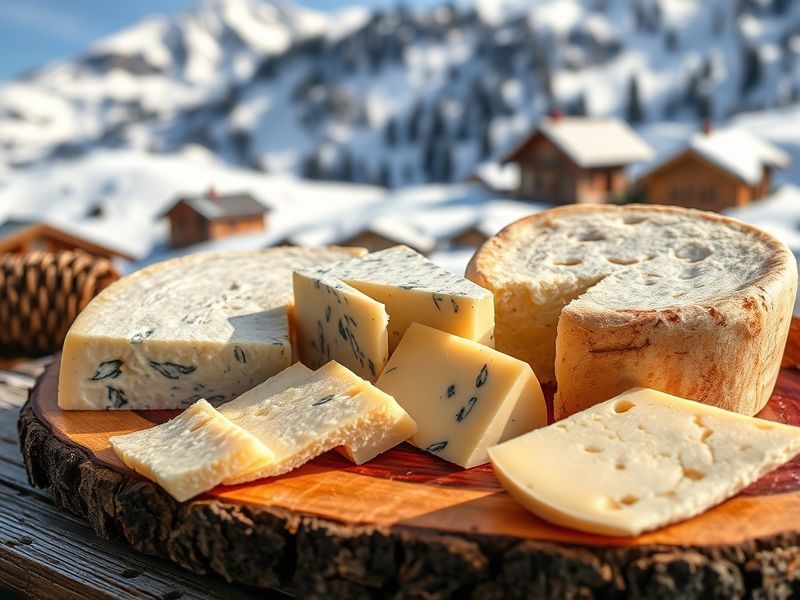
Asiago Cheese: Italy’s Alpine Treasure and Global Favorite
“`html
Asiago Cheese: Italy’s Alpine Treasure
Nestled in the northeastern corner of Italy, the Asiago plateau has long been celebrated for its breathtaking landscapes and rich agricultural traditions. For centuries, the local dairy farmers of this region have crafted a cheese that now bears the name of the land itself—Asiago. This versatile cheese has journeyed from a humble mountain staple to a globally recognized ingredient, appearing in kitchens from Venice to Tokyo.
The story of Asiago begins in the 10th century, when shepherds in the Veneto and Trentino regions began producing cheese to preserve surplus milk during the summer months. These early wheels were simple, rustic, and designed to age well, a necessity in an era without refrigeration. Over time, the cheese evolved, adopting a more refined texture and flavor profile as techniques improved. By the 15th century, Asiago had become a prized commodity, traded across northern Italy and even exported to neighboring countries.
The Making of Asiago: Tradition Meets Modernity
Authentic Asiago is made exclusively from the milk of cows grazing on the lush pastures of the Asiago plateau. The milk is collected twice daily and transported to local dairies, where it is heated and mixed with natural rennet to form curds. The curds are then pressed into wheels, each weighing between 8 and 10 kilograms, and aged for a minimum of three months. During this time, the wheels are washed, brushed, and turned regularly to ensure even maturation.
There are two primary types of Asiago: Asiago Pressato and Asiago d’Allevio. Pressato, the younger variety, is aged for just three to ten weeks. It has a smooth, creamy texture and a mild, slightly tangy flavor. D’Allevio, on the other hand, is aged for a minimum of three months and can develop a harder texture and a more complex, nutty taste. Some wheels are aged for up to a year or more, yielding a sharp, crystalline cheese that crumbles beautifully over pasta or salads.
In 1979, Asiago was granted Protected Designation of Origin (PDO) status, ensuring that only cheese produced in the designated regions using traditional methods can bear the name. This certification has helped preserve the authenticity of Asiago while allowing it to maintain its cultural significance in Italy.
Asiago’s Global Journey: From Alpine Pastures to International Tables
The 20th century marked a turning point for Asiago, as improved transportation and global trade expanded its reach. Italian immigrants, particularly those settling in the United States, brought their love for Asiago with them, introducing it to new audiences. Today, Asiago is a staple in American supermarkets, often grated over pasta dishes or melted into sandwiches. Its popularity has spread to other corners of the world, including Australia, Japan, and the United Kingdom, where it is prized for its versatility and rich flavor.
Asiago’s adaptability has made it a favorite among chefs and home cooks alike. Its younger varieties work beautifully in creamy sauces, risottos, and gratins, while aged Asiago adds depth to soups, salads, and charcuterie boards. In Italy, Asiago is often enjoyed on its own, paired with a drizzle of honey or a glass of Prosecco. Abroad, it has become a key ingredient in fusion dishes, such as Asiago-stuffed burgers or gourmet mac and cheese.
Despite its global success, Asiago remains deeply rooted in its place of origin. The Asiago plateau is dotted with family-owned dairies that continue to produce cheese using methods passed down through generations. Many of these producers are small-scale operations, relying on sustainable practices and seasonal milk production to maintain quality. Visitors to the region can tour these dairies, witnessing firsthand the craftsmanship behind each wheel of Asiago.
Cultural Significance: More Than Just a Cheese
Asiago is more than an ingredient; it is a symbol of community and tradition. In the Veneto region, cheese-making is a social activity, with neighbors often gathering to help one another press and age their wheels. Festivals celebrating Asiago, such as the Fiera del Formaggio in Asiago, draw thousands of visitors each year, offering tastings, cooking demonstrations, and cultural performances. These events highlight the cheese’s role in local cuisine, from traditional dishes like risotto al Asiago to modern interpretations by young chefs.
Asiago also plays a role in Italy’s culinary identity. It is featured prominently in regional dishes such as polenta e formaggio, where aged Asiago is melted into creamy polenta, and in the classic Venetian dish, bigoli in salsa, where grated Asiago is sprinkled over the top. The cheese’s versatility has allowed it to adapt to contemporary tastes, appearing in everything from artisanal ice cream to craft beer pairings.
Globally, Asiago has become a bridge between cultures. In the United States, it is often used in Italian-American cuisine, while in Japan, it is incorporated into Western-inspired dishes like cheesecake and croquettes. This cross-cultural exchange has introduced new audiences to the rich history of Asiago, fostering appreciation for both the cheese and the traditions behind it.
The Future of Asiago: Preserving Tradition in a Changing World
The global demand for Asiago presents both opportunities and challenges. While its popularity has opened new markets, it has also raised concerns about maintaining quality and authenticity. Small-scale producers face competition from industrial dairies that mass-produce cheese using cheaper methods. To combat this, organizations like the Consorzio Tutela Formaggio Asiago have worked to educate consumers about the importance of PDO certification and traditional production methods.
Innovation is also playing a role in Asiago’s future. Some producers are experimenting with organic milk, plant-based rennet, and aging techniques to create new varieties of the cheese. These efforts aim to appeal to health-conscious consumers and those seeking sustainable food options. Meanwhile, chefs around the world continue to find creative ways to incorporate Asiago into their menus, ensuring that the cheese remains relevant in a rapidly evolving culinary landscape.
Asiago’s journey from a mountain staple to a global phenomenon is a testament to the power of tradition and craftsmanship. It serves as a reminder of how food can connect people across cultures and generations. Whether enjoyed in a rustic Italian trattoria or a high-end restaurant in Tokyo, Asiago carries with it the flavors and stories of the Asiago plateau, making each bite a taste of history.
For those eager to explore Asiago further, visiting the region offers an unparalleled experience. The rolling hills, crisp mountain air, and warm hospitality of the locals create an unforgettable backdrop for tasting some of the world’s finest cheese. And for those unable to make the trip, bringing a wheel of Asiago into the kitchen is a simple way to connect with a centuries-old tradition.