British Indians: A Global Cultural Bridge
The story of British Indians is one of migration, adaptation, and the creation of a unique cultural identity. Their presence in the UK spans over four centuries, from the first recorded arrivals in the 17th century to the waves of immigration after World War II. Today, they represent one of the most influential diaspora communities globally, shaping British society while maintaining strong ties to their ancestral roots.
This community’s journey reflects broader patterns of colonial history, post-war labor needs, and the globalization of culture. British Indians have not only integrated into British life but have also reshaped it, contributing to politics, business, arts, and cuisine. Their dual identity offers insights into the complexities of multicultural societies in the 21st century.
The Historical Roots of British Indians
The earliest recorded Indians in Britain arrived as sailors, servants, and scholars during the 1600s. However, large-scale migration began in the 19th century, when British colonial rule in India created opportunities for travel and employment. By the early 20th century, Indian students and professionals began settling in cities like London and Liverpool, forming small but tight-knit communities.
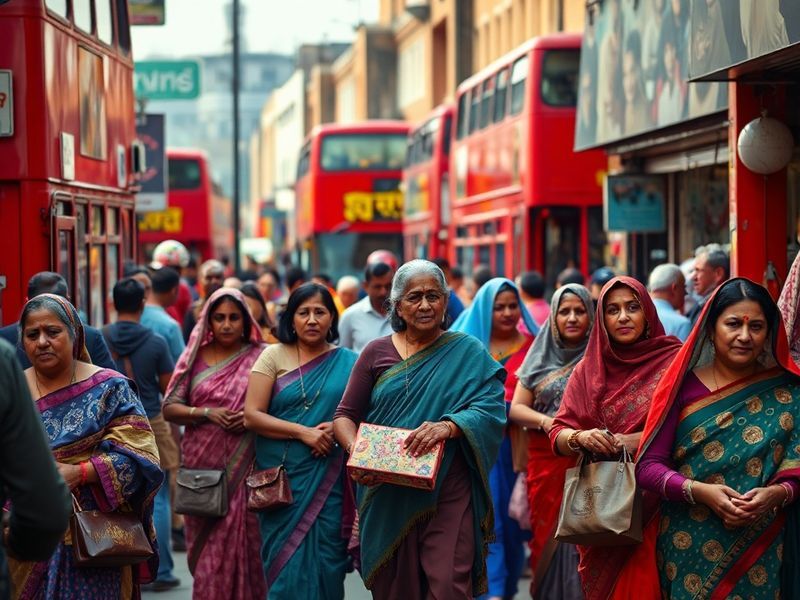
The post-World War II era marked a turning point. The British Nationality Act of 1948 allowed unrestricted entry from Commonwealth countries, including India. Many Indians arrived as part of labor recruitment programs, filling gaps in the National Health Service, transportation, and manufacturing sectors. This wave of migration transformed British cities, particularly in the Midlands and North West, where South Asian communities became integral to local economies.
By the 1970s, British Indians had established cultural institutions—temples, community centers, and media outlets—to preserve their heritage. The Immigration Act of 1971 introduced restrictions, but the community continued to grow through family reunification and natural population increase. Today, British Indians are the largest ethnic minority group in the UK, numbering over 3.5 million.
The Cultural Impact of British Indians
British Indians have left an indelible mark on the UK’s cultural landscape. Their influence is visible in music, literature, fashion, and food. The rise of British Asian music in the 1980s and 1990s, for example, gave the world artists like Apache Indian and Cornershop, blending traditional Indian sounds with Western genres. More recently, artists like M.I.A. and Rina Sawayama have redefined global pop and hip-hop.
In literature, British Indian writers such as Salman Rushdie, Monica Ali, and Nikesh Shukla have challenged narratives about identity and belonging. Their works explore themes of displacement, hybridity, and the search for home. Rushdie’s Midnight’s Children, in particular, became a landmark in postcolonial literature, winning the Booker Prize in 1981.
The culinary world has also been transformed by British Indians. Dishes like chicken tikka masala—often called “Britain’s national dish”—have become staples of British cuisine. The UK now has more Indian restaurants than Italy and France combined, with regional specialties from Punjab, Gujarat, and South India finding dedicated followings.
Fashion is another arena where British Indians have made their mark. Designers like Roksana Parvin and Manish Arora have showcased their work in London Fashion Week, blending Indian craftsmanship with contemporary styles. Meanwhile, high-street brands like Zara and H&M frequently collaborate with South Asian designers to cater to diverse consumer tastes.
The Political and Economic Role
British Indians have increasingly made their presence felt in politics and business. The 2019 UK general election saw a record number of British Indian MPs elected, including Priti Patel, who served as Home Secretary, and Rishi Sunak, who became the UK’s first British Asian Prime Minister in 2022. Their rise reflects broader shifts in British politics, where representation of ethnic minorities is gradually improving.
In business, British Indians have founded some of the UK’s most successful companies. The pharmaceutical giant Cipla UK, the steel magnate Lakshmi Mittal, and tech entrepreneur Suneet Tuli are just a few examples. The community’s entrepreneurial spirit is also evident in the growth of Indian-owned businesses in sectors like retail, hospitality, and technology.
Education is another area of strength. British Indians are among the most highly educated ethnic groups in the UK, with higher-than-average university attendance rates. This has translated into professional success, particularly in fields like medicine, law, and engineering.
Challenges and Opportunities
Despite their successes, British Indians face challenges. Discrimination, both overt and subtle, remains an issue in employment, housing, and policing. The 2020 news of increased hate crimes against South Asians following the COVID-19 pandemic highlighted ongoing tensions. Meanwhile, intergenerational conflicts between traditional values and Western lifestyles continue to create friction within families.
Yet, the community’s resilience is undeniable. British Indians have leveraged their dual identity to build bridges between cultures. Organizations like the Culture Trust and the Hindu Council UK work to promote understanding while advocating for minority rights. Meanwhile, festivals like Diwali and Holi have become major public events, celebrated by people of all backgrounds.
The future of British Indians will likely be shaped by two key forces: globalization and technology. The rise of remote work and digital nomadism has made it easier for young British Indians to reconnect with their ancestral homelands. At the same time, social media platforms allow them to share their stories with a global audience, challenging stereotypes and fostering cross-cultural dialogue.
A Community Shaping the Future
British Indians exemplify the possibilities—and complexities—of multicultural societies. Their journey from colonial subjects to influential citizens reflects broader trends in global migration and cultural exchange. As the UK continues to grapple with issues of identity and belonging, the British Indian experience offers valuable lessons in integration, resilience, and the power of dual heritage.
Their story is far from over. With each generation, British Indians are redefining what it means to be both Indian and British, creating a legacy that extends far beyond the shores of the UK. In an increasingly interconnected world, their experiences serve as a model for diaspora communities everywhere.
Their contributions to British life—whether in the boardroom, the kitchen, or the concert hall—are a testament to the enduring power of culture to transcend borders. As the world grows more diverse, the British Indian experience will continue to inspire and challenge us all.