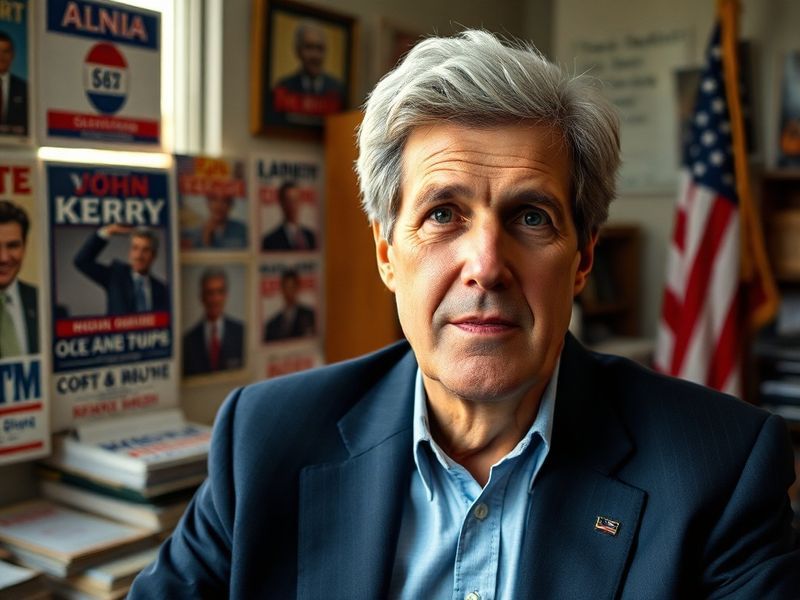
John Kerry: A Lifetime of Diplomacy and Global Influence
“`html
John Kerry: A Lifetime of Public Service and Global Diplomacy
John Kerry’s name has been synonymous with American diplomacy for nearly half a century. From his early days as a decorated naval officer to his tenure as Secretary of State under President Barack Obama, Kerry’s career reflects the evolution of U.S. foreign policy in an increasingly interconnected world. His influence extends beyond politics, shaping international climate agreements, nuclear negotiations, and humanitarian efforts. This is the story of a man who has spent decades at the heart of global decision-making.
Early Life and the Roots of a Public Servant
Born on December 11, 1943, in Aurora, Colorado, John Forbes Kerry grew up in a family with deep roots in public service. His father, Richard Kerry, was a Foreign Service officer, exposing young John to the complexities of international relations from an early age. After attending elite preparatory schools, Kerry enrolled at Yale University, where he studied political science and became active in student government. His time at Yale also saw the beginning of his lifelong commitment to activism, particularly in opposition to the Vietnam War.
Kerry’s opposition to the war was not merely academic. In 1966, he enlisted in the U.S. Naval Reserve, serving two tours in Vietnam as a swift boat commander. His experiences in the conflict shaped his perspective on war, diplomacy, and the role of the United States in global affairs. These formative years laid the groundwork for his future political career, instilling in him a belief in the power of dialogue over conflict.
The Senate Years: A Voice for Diplomacy and Reform
Kerry’s political career began in earnest in 1984 when he was elected to the U.S. Senate as a Democrat from Massachusetts. Over the next 28 years, he became one of the most recognizable figures in American politics, known for his sharp intellect, eloquence, and willingness to challenge the status quo. His Senate tenure was marked by several key areas of focus:
- Veterans’ Affairs: Kerry’s firsthand experience in Vietnam drove his advocacy for veterans’ rights, leading to reforms in healthcare and benefits.
- Foreign Relations: As chairman of the Senate Foreign Relations Committee, he played a pivotal role in shaping U.S. policy toward Iraq, Afghanistan, and the broader Middle East.
- Environmental Policy: Long before climate change dominated the global agenda, Kerry championed environmental protections, co-authoring the Clean Energy Act of 2009.
- Human Rights: His work on the Senate Select Committee on POW/MIA Affairs highlighted his commitment to justice and accountability in international conflicts.
Kerry’s Senate years were not without controversy. His opposition to the 2003 Iraq War, for instance, placed him at odds with the Bush administration but solidified his reputation as a thoughtful and independent voice in foreign policy. These debates foreshadowed the diplomatic challenges he would later face as Secretary of State.
Secretary of State: Navigating a World in Transition
When Barack Obama nominated John Kerry for Secretary of State in 2013, it was seen as a nod to both experience and pragmatism. Kerry took office during a period of profound global upheaval: the Arab Spring, the rise of ISIS, the annexation of Crimea by Russia, and the looming threat of climate change. His tenure was defined by efforts to restore America’s global standing while addressing these crises with a mix of diplomacy and firmness.
One of Kerry’s most significant achievements during this time was his role in negotiating the 2015 Iran nuclear deal, formally known as the Joint Comprehensive Plan of Action (JCPOA). The agreement, which lifted economic sanctions on Iran in exchange for strict limits on its nuclear program, was a landmark moment in non-proliferation efforts. Critics argued that the deal did not go far enough, while supporters praised it as a historic step toward preventing a nuclear-armed Iran. Kerry’s personal investment in the negotiations—spending countless hours in Vienna and other global capitals—underscored his belief in diplomacy as a tool for peace.
Kerry also prioritized climate change during his tenure, culminating in the landmark Paris Agreement of 2015. The accord, which brought together nearly 200 countries to commit to reducing greenhouse gas emissions, was a testament to Kerry’s ability to bridge divides and rally global action. His impassioned speeches on the issue, both in the U.S. and abroad, helped elevate climate change from a niche concern to a mainstream priority for world leaders.
Post-Secretary Life: Advocacy and Legacy
Kerry’s departure from the State Department in 2017 did not mark the end of his public service. Instead, he transitioned into a role as a global envoy for climate, appointed by President Joe Biden in 2021. In this capacity, Kerry has continued to advocate for urgent action on climate change, traveling the world to secure commitments from governments, corporations, and international organizations. His work has taken him to conferences in Glasgow, Sharm El Sheikh, and beyond, where his diplomatic skills and deep institutional knowledge remain invaluable.
Beyond climate, Kerry has also been a vocal critic of Russia’s invasion of Ukraine, framing it as an existential threat not just to Europe but to the global order. His warnings about the dangers of authoritarianism and his calls for unity among democratic nations have resonated in an era of rising geopolitical tensions.
Kerry’s legacy is multifaceted. To some, he is a pragmatic diplomat who navigated crises with patience and foresight. To others, he is a flawed figure whose policies, such as the Iran deal, have faced significant backlash. What is undeniable, however, is his enduring influence on American foreign policy and his role in shaping the country’s approach to some of the most pressing challenges of the 21st century.
The Cultural Impact of John Kerry
Kerry’s public persona extends beyond politics. His distinctive voice, tall frame, and signature head of silver hair have made him a recognizable figure in popular culture. He has been parodied in entertainment media, referenced in music, and even immortalized in memes. Yet, his cultural footprint is more than just visual. Kerry’s speeches, particularly his address to the 2004 Democratic National Convention—where he famously declared, “I’m reporting for duty”—have entered the lexicon of American political rhetoric.
His personal life has also been a subject of interest. Kerry’s marriage to Teresa Heinz, a philanthropist and heiress to the Heinz ketchup fortune, has been a fixture of political and social circles. The couple’s international lifestyle, blending American politics with European sophistication, has added a layer of intrigue to Kerry’s public image.
Conclusion: A Diplomat for the Ages
John Kerry’s career is a study in the power of persistence, adaptability, and belief in the potential of diplomacy. Whether as a young veteran turned activist, a senator shaping foreign policy, or a secretary of state navigating a fractured world, Kerry has remained steadfast in his conviction that dialogue and cooperation can overcome even the most intractable challenges. His work on climate change, nuclear non-proliferation, and global stability ensures that his influence will be felt for decades to come.
As the world grapples with new crises—from the war in Ukraine to the accelerating climate emergency—Kerry’s approach offers a reminder of the value of experience, patience, and moral clarity. In an era where diplomacy is often overshadowed by conflict, his legacy stands as a testament to what can be achieved when nations choose to talk rather than fight.