The clash between Club Necaxa and Club Deportivo Guadalajara, known locally as Chivas, transcends the boundaries of a typical football match. It represents a collision of philosophies, histories, and cultural identities that have shaped Mexican football for generations. While Guadalajara is celebrated for its commitment to Mexican players, Necaxa has carved its niche through resilience and tactical evolution. This fixture, often understated on the global stage, carries immense weight in domestic competitions and reflects broader societal shifts within the sport.
Football in Mexico is more than entertainment; it is a reflection of national pride and regional identity. The rivalry between Necaxa and Guadalajara is emblematic of this, where each match becomes a narrative of ambition, tradition, and the relentless pursuit of excellence. Understanding this fixture requires examining the clubs’ histories, their playing styles, and the cultural contexts that influence their legacies.
The Origins and Evolution of Two Iconic Clubs
Club Deportivo Guadalajara, founded in 1906, is one of Mexico’s most storied institutions. Known affectionately as Chivas, the team has built its reputation on a strict policy of fielding only Mexican players—a principle that has made it a symbol of national identity. This philosophy has earned Guadalajara a passionate fanbase, particularly in regions where Mexican heritage is fiercely protected. The club’s dominance in the early 20th century laid the foundation for its status as a cultural institution.
Necaxa, on the other hand, emerged in 1923 in Mexico City under the sponsorship of the Mexican Light and Power Company. The team quickly became a powerhouse in the amateur era, winning multiple titles before transitioning to professional football. Unlike Guadalajara, Necaxa has not shied away from international recruitment, embracing a more cosmopolitan approach. This difference in philosophy has often placed Necaxa in the role of the underdog, challenging Guadalajara’s dominance while appealing to a broader, more diverse fanbase.
Historically, the two clubs have met in pivotal moments of Mexican football. Necaxa’s golden era in the 1990s, marked by league titles and international success, provided a counterpoint to Guadalajara’s traditional dominance. These encounters were not merely sporting events; they were cultural dialogues where different visions of Mexican football collided.
The Playing Styles: Tradition vs. Innovation
The tactical approaches of Necaxa and Guadalajara offer a fascinating study in contrast. Guadalajara’s style is deeply rooted in its philosophy of homegrown talent. The team’s emphasis on technical skill, teamwork, and a collective ethos reflects its commitment to developing Mexican players. This approach often results in a fluid, possession-based style of play, where individual brilliance is secondary to team cohesion. The club’s success in the Liga MX and its historic runs in the CONCACAF Champions League underscore the effectiveness of this philosophy.
Necaxa, in contrast, has often adopted a more pragmatic and adaptive approach. The team’s history of recruiting international players has allowed it to blend technical precision with tactical flexibility. Necaxa’s playing style can vary from high-pressing systems to counterattacking strategies, depending on the opponent and the resources available. This adaptability has made Necaxa a formidable adversary, capable of disrupting even the most disciplined teams.
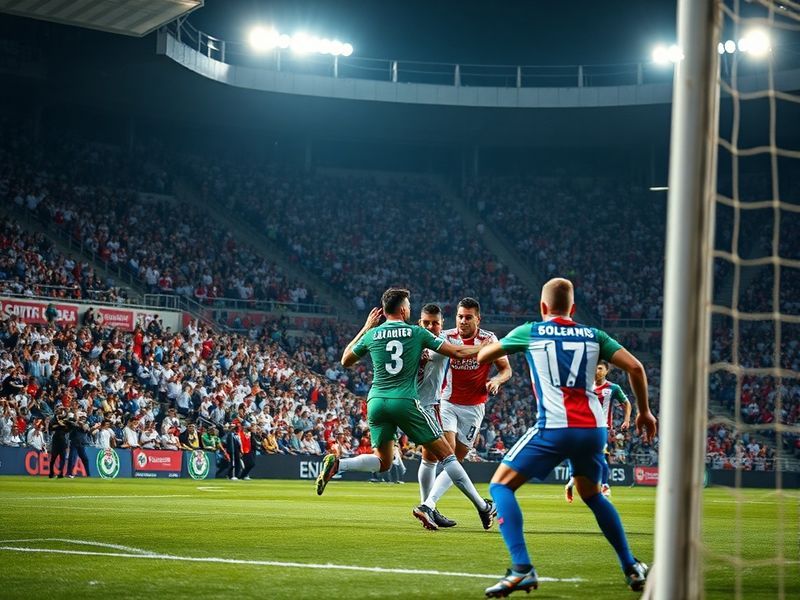
When these two styles collide, the result is a tactical chess match. Guadalajara’s structured play often tests Necaxa’s defensive organization, while Necaxa’s dynamic attacks force Guadalajara to adapt quickly. These matches are a testament to the diversity of Mexican football, where tradition and innovation coexist and challenge each other.
Cultural Impact and Fan Engagement
The rivalry between Necaxa and Guadalajara extends beyond the pitch, embedding itself in the cultural fabric of Mexico. Guadalajara’s fanbase, known for its unwavering loyalty, often fills stadiums with a sea of red and white, creating an atmosphere that is both electric and intimidating. The club’s emphasis on Mexican identity resonates deeply with its supporters, many of whom see the team as a representation of their heritage.
Necaxa’s fanbase, while smaller in comparison, is equally passionate. The team’s history and its role as a disruptor in Mexican football have fostered a dedicated following. Necaxa’s matches often attract a diverse crowd, reflecting the team’s broad appeal and its connection to Mexico City’s multicultural identity. The club’s ability to attract international players has also broadened its fanbase, creating a global community of supporters who appreciate the team’s dynamic style of play.
In recent years, the rivalry has gained visibility through social media and streaming platforms, attracting attention from football enthusiasts worldwide. Matches between Necaxa and Guadalajara are no longer confined to Mexican audiences; they are now accessible to a global fanbase that appreciates the tactical nuances and cultural significance of the fixture. This growing international interest has elevated the stature of the rivalry, positioning it as a must-watch event in the Liga MX calendar.
Key Matches and Memorable Encounters
Over the decades, Necaxa and Guadalajara have produced several iconic matches that have left indelible marks on Mexican football history. One such encounter took place in the 1998 Verano championship final, where Necaxa secured a dramatic victory over Guadalajara in a penalty shootout. The match, played in front of a packed Estadio Azteca, was a testament to Necaxa’s resilience and tactical acumen. The victory not only cemented Necaxa’s place in football history but also highlighted the unpredictability of the rivalry.
Another memorable match occurred in the 2016 Clausura tournament, where Guadalajara faced Necaxa in a high-stakes quarterfinal. Guadalajara, riding a wave of momentum, dominated possession but struggled to break down Necaxa’s disciplined defense. The match ended in a 0-0 draw, with Necaxa advancing on penalties. The result sparked debates about Guadalajara’s ability to handle pressure in knockout stages, adding another layer to the rivalry’s narrative.
The following season, Guadalajara exacted revenge in the Apertura tournament, defeating Necaxa 2-0 in a tightly contested match. The victory was significant not only for its outcome but also for the statement it made about Guadalajara’s dominance in the league. These matches, among others, illustrate the ebb and flow of the rivalry, where fortunes can change in an instant.
For fans of Mexican football, these encounters are more than just games; they are chapters in a larger story of competition, rivalry, and mutual respect. Each match adds a new layer to the narrative, ensuring that the legacy of Necaxa vs. Guadalajara continues to evolve.
The Global Perspective: How the Rivalry Fits into World Football
While the Necaxa vs. Guadalajara rivalry is deeply rooted in Mexican football, its significance extends beyond domestic borders. In an era where football is increasingly globalized, the rivalry offers a unique perspective on how tradition and innovation intersect. Guadalajara’s commitment to Mexican players aligns with the growing trend of clubs emphasizing local talent as a core value. This approach resonates with clubs worldwide, from Barcelona’s La Masia to Ajax’s youth academy, where developing homegrown players is a priority.
Necaxa’s embrace of international recruitment, meanwhile, reflects a more cosmopolitan approach to football. This strategy is not unique to Necaxa; many top European clubs have adopted similar models to enhance their competitiveness. The clash between these philosophies in the Necaxa vs. Guadalajara rivalry provides a microcosm of the broader debates happening in world football, where clubs grapple with balancing tradition and modernity.
The rivalry also highlights the importance of cultural identity in football. In an era where clubs are often seen as commercial entities, Guadalajara’s commitment to Mexican heritage serves as a reminder of the sport’s power to reflect and shape cultural narratives. Conversely, Necaxa’s global appeal underscores the diversity of football culture, where success is not confined to a single identity but is instead celebrated in its many forms.
For international fans, the Necaxa vs. Guadalajara rivalry offers a glimpse into the passion and intensity of Mexican football. It is a reminder that football is more than just a game; it is a cultural phenomenon that transcends borders and unites people through shared experiences and emotions.
Conclusion: A Rivalry That Defines an Era
The Necaxa vs. Guadalajara rivalry is a testament to the richness and diversity of Mexican football. It is a story of tradition and innovation, of underdogs and champions, and of cultures colliding on the pitch. While Guadalajara’s commitment to Mexican players has made it a symbol of national pride, Necaxa’s adaptability and global appeal have broadened the horizons of the rivalry. Together, these two clubs represent the best of Mexican football, where history, culture, and competition intertwine.
As football continues to evolve, the Necaxa vs. Guadalajara rivalry will undoubtedly remain a cornerstone of the Liga MX. Whether through historic victories, tactical masterclasses, or cultural milestones, this fixture will continue to captivate fans and define an era of Mexican football. For those who appreciate the nuances of the sport, the rivalry is not just a spectacle; it is a celebration of football’s enduring power to inspire, challenge, and unite.