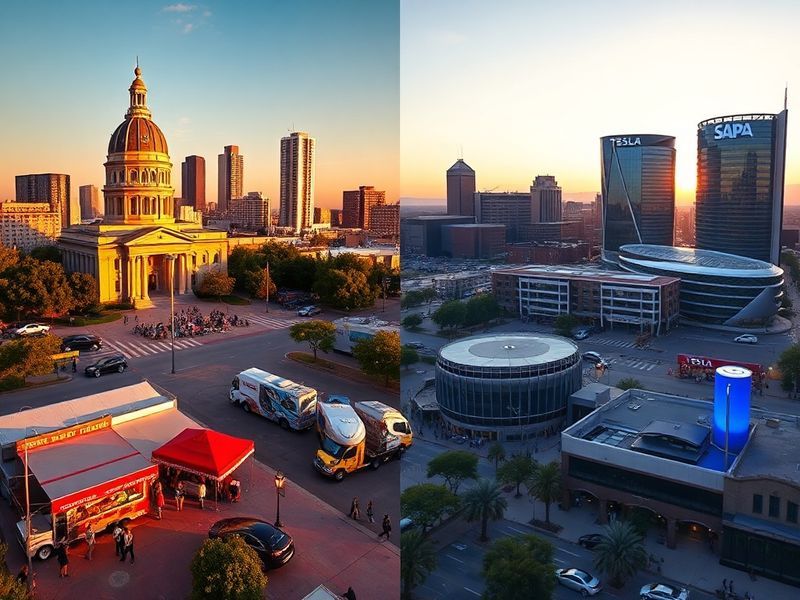
Austin and San Jose represent two very different faces of America’s tech-driven economy. One is a sprawling Southern city where tech meets cowboy culture, while the other is a dense Northern California enclave built on Silicon Valley’s foundation. Though both cities have become magnets for technology companies and young professionals, their economic structures, lifestyles, and futures diverge in meaningful ways.
The comparison isn’t just academic. With major corporations relocating headquarters and remote workers reconsidering geography, the rivalry between Austin and San Jose has taken on new significance. Each city offers distinct advantages—and trade-offs—that appeal to different kinds of talent, investors, and dreamers.
Economic Foundations: From Startups to Semiconductors
San Jose sits at the heart of Silicon Valley, where the economy is deeply rooted in high-value technology, venture capital, and global innovation. The city is home to industry titans like Adobe, Cisco, and Nvidia, as well as thousands of startups backed by top-tier venture firms. The median household income in San Jose is over $120,000, nearly double the national average, reflecting the concentration of high-paying tech jobs.
By contrast, Austin’s economy is more diversified. While tech dominates—with major employers including Tesla, Apple, and Dell—it also benefits from a strong education sector (home to the University of Texas at Austin), a thriving music and arts scene, and a growing healthcare industry. The median household income in Austin is lower, around $80,000, but so is the cost of living compared to Silicon Valley.
San Jose’s economic strength lies in its specialization. The city is a global leader in semiconductor design, cloud computing, and AI research, with companies like Nvidia shaping the future of computing. Austin, meanwhile, excels in software, cloud services, and hardware manufacturing, with Tesla’s Gigafactory serving as a symbol of the city’s industrial transformation.
One key difference: San Jose’s economy is more vulnerable to industry downturns. When tech stocks dip, so does the city’s revenue. Austin’s broader base provides more stability, though it means slower growth in any single sector.
Cost of Living: The Great Divide
The most glaring contrast between Austin and San Jose is affordability. In San Jose, the median home price hovers around $1.4 million, making it one of the most expensive housing markets in the nation. Rent for a one-bedroom apartment averages $2,800 per month. High housing costs have led to significant outmigration, especially among middle-class families and young professionals who can no longer afford to live near the tech industry they work for.
Austin’s median home price is about $500,000, and a one-bedroom apartment rents for around $1,600. While prices have risen sharply in recent years due to migration from high-cost cities, Austin remains far more accessible. The city has also invested in affordable housing initiatives and zoning reforms to manage growth.
But affordability comes with trade-offs. Austin’s rapid expansion has strained infrastructure, increased traffic, and raised concerns about gentrification in historically Black and Latino neighborhoods. San Jose faces similar challenges but with higher stakes—its lack of affordable housing has contributed to a visible homelessness crisis and strained public services.
- San Jose: High salaries offset high costs, but wealth disparity is stark.
- Austin: More accessible, but rapid growth risks eroding quality of life.
- Both cities: Struggle with housing shortages, rising rents, and infrastructure strain.
Culture and Lifestyle: Urban Energy vs. Southern Charm
San Jose is a 24/7 innovation hub where the pace of life matches the speed of technology. The city has a large international population, thanks to its proximity to Silicon Valley’s global workforce. Cupertino’s Asian food scene, downtown San Jose’s tech-fueled nightlife, and the presence of major cultural institutions like the Tech Interactive museum reflect its cosmopolitan identity.
Austin, by contrast, blends Southern hospitality with a rebellious, creative spirit. Known as “The Live Music Capital of the World,” the city’s culture is defined by festivals like SXSW and ACL, a thriving food truck scene, and a strong sense of community. The weather—warm most of the year—supports an outdoor lifestyle that appeals to those tired of Northern California’s gray winters.
San Jose’s cultural scene is more formal and curated, with world-class museums and performing arts venues. Austin’s is scrappier, more grassroots, and deeply tied to local identity. Both cities have vibrant LGBTQ+ communities, but Austin’s is often seen as more inclusive and politically progressive.
Politically, Austin is a blue island in a red state, consistently voting Democratic and pushing progressive policies on climate and social justice. San Jose, also solidly blue, faces less political tension locally but grapples with regional divides in the Bay Area.
The Future: Which City Will Lead the Next Tech Era?
The next decade may determine whether Austin or San Jose becomes the dominant force in American tech. San Jose’s future hinges on solving its housing crisis and maintaining its edge in high-value innovation. The city is investing in transit, affordable housing bonds, and workforce development, but progress is slow.
Austin’s growth is explosive. The city added over 50,000 residents in 2022 alone, and companies continue to flock to Texas for lower taxes and looser regulations. However, Austin risks repeating the mistakes of other fast-growing cities: overburdened schools, rising inequality, and a loss of local character.
Both cities are betting on the same industries: AI, clean energy, and biotech. But their approaches differ. San Jose focuses on research and development, leveraging its proximity to Stanford and UC Berkeley. Austin emphasizes scalability, manufacturing, and workforce training through partnerships with community colleges and trade schools.
One wildcard is remote work. As companies adopt hybrid and fully remote policies, workers have unprecedented freedom to choose where to live. Austin’s lower costs and vibrant culture make it a top destination, while San Jose’s global reputation as a tech nexus keeps it relevant—if less accessible.
Ultimately, the choice between Austin and San Jose isn’t just about jobs or rent—it’s about values. Do you prioritize innovation and global connectivity, or growth and local culture? The answer may define where the next generation of tech leaders chooses to build their lives.
For those considering a move, both cities offer opportunities—but also lessons in the costs of unchecked growth and the challenges of balancing progress with community.
Learn more about the tech industry’s impact on cities at Dave’s Locker Technology section and explore urban development trends in our News category.