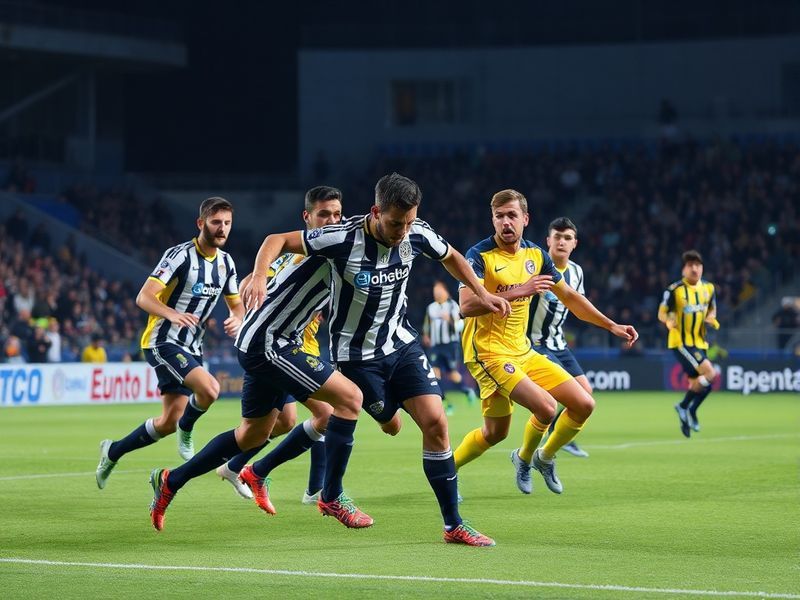
When Real Oviedo and Villarreal meet on the pitch, the contrast in their histories and current trajectories becomes immediately apparent. The match is more than just a fixture; it’s a collision between a club fighting for survival in Spain’s second tier and a La Liga mainstay with European aspirations. Oviedo, a club steeped in tradition but burdened by financial instability, faces Villarreal, a side that has transformed itself from a small-town underdog to a regular in European competitions.
The rivalry isn’t rooted in geographical proximity or bitter fan exchanges—it’s a clash of ambition versus pragmatism. Oviedo, playing in Spain’s Segunda División, represents the raw passion of lower-league football, while Villarreal embodies the polished professionalism of top-flight Spanish football. Their encounters, though infrequent in recent years, offer a fascinating study in contrasts.
The Historical Context: Two Clubs, Two Realities
Real Oviedo was founded in 1926 and has spent most of its history oscillating between La Liga and Segunda División. The club’s golden era came in the 1990s, when it established itself as a consistent top-flight team, even finishing sixth in the 1990-91 season. However, financial mismanagement and relegation in 2001 sent the club into a downward spiral, culminating in a brief stint in the third tier in 2012-13. Though Oviedo has since recovered, it remains a club defined by resilience rather than dominance.
Villarreal, on the other hand, was founded in 1923 but spent decades in the shadows of nearby giants like Valencia and Barcelona. The club’s breakthrough came in the early 2000s under the guidance of managers like Víctor Muñoz and Manuel Pellegrini. Villarreal’s rise was meteoric—from Segunda División in 1998 to a historic UEFA Champions League semifinal in 2006. Since then, the Yellow Submarine has become a staple of La Liga, known for its youth development and tactical sophistication.
When these two clubs meet, the contrast is stark. Oviedo’s struggles with consistency and financial constraints stand in stark relief against Villarreal’s structured approach to player development and financial planning. The matchup is a reminder of how far Spanish football has come—and how much further Oviedo still has to go.
The Tactical Battle: Pragmatism vs. Fluidity
The tactical battle between Real Oviedo and Villarreal is a study in contrasts. Oviedo, often playing in a compact 4-4-2 or 5-3-2 formation, relies on defensive solidity and quick counterattacks. The team’s style is reactive, shaped by limited resources and a focus on minimizing mistakes. Under manager José Luis Martí, Oviedo has prioritized organization over flair, making them a difficult side to break down.
Villarreal, meanwhile, is known for its possession-based, high-pressing style under managers like Unai Emery and Marcelino García Toral. The club’s philosophy emphasizes technical ability, positional play, and aggressive pressing. Villarreal’s midfielders, such as Étienne Capoue and Dani Parejo, dictate the tempo with precise passing and movement, while their full-backs provide width and defensive cover.
When these two approaches collide, the game often hinges on Villarreal’s ability to break down Oviedo’s low block. Oviedo’s defensive shape can frustrate Villarreal’s attackers, but the Yellow Submarine’s technical superiority usually prevails in the end. The match is less about direct confrontation and more about Villarreal’s ability to exploit the spaces behind Oviedo’s midfield.
Key Tactical Matchups
- Oviedo’s Midfield Wall vs. Villarreal’s Playmakers: Oviedo’s double pivot of Borja Bastón and Christian Rivera will look to disrupt Villarreal’s rhythm, while Villarreal’s midfield trio of Capoue, Parejo, and Gerard Moreno will aim to find pockets of space.
- Villarreal’s Full-Backs vs. Oviedo’s Wingers: Villarreal’s overlapping full-backs, such as Mario Gaspar, will test Oviedo’s defensive discipline, while Oviedo’s wingers like Kike Saverio will look to exploit gaps on the counter.
- Set-Piece Threats: Both teams rely on set pieces for goals. Oviedo’s physicality in the air could pose a threat, while Villarreal’s technical players like Gerard Moreno are equally dangerous from dead-ball situations.
Recent Encounters: A One-Sided Affair
In recent years, Villarreal has dominated the head-to-head record against Real Oviedo. The last meeting between the two sides came in the 2021-22 Copa del Rey, where Villarreal won 2-0 at the Estadio El Madrigal. The result was hardly surprising, given Villarreal’s superior squad depth and tactical flexibility. Oviedo, however, has shown resilience in their domestic league, where they finished 6th in the 2022-23 Segunda División and narrowly missed out on the promotion playoffs.
The disparity in their league standings reflects their broader trajectories. Villarreal has consistently finished in the top half of La Liga, with occasional European adventures, while Oviedo has battled to stay afloat in the Segunda División. The financial gap between the two clubs is also significant. Villarreal’s revenue streams—from broadcasting rights, sponsorships, and European competitions—far exceed Oviedo’s, which relies heavily on ticket sales and local sponsorships.
Despite the odds, Oviedo’s fans bring an unmatched passion to the stadium. The Carlos Tartiere, Oviedo’s historic home ground, is known for its electric atmosphere, with supporters creating an intimidating environment for visiting teams. Villarreal, accustomed to playing in front of larger crowds in La Liga, may find the intensity of Oviedo’s fanbase a refreshing challenge.
The Broader Implications: What’s at Stake?
For Real Oviedo, a strong performance against Villarreal could serve as a morale boost in their quest for promotion. A draw or upset would be a statement of intent, proving that they can compete with top-flight opposition. For Villarreal, the match is an opportunity to fine-tune their tactics ahead of a crucial La Liga campaign. A win would reinforce their status as a top-half team, while a loss could expose vulnerabilities in their squad.
Beyond the immediate stakes, the matchup highlights the broader divide in Spanish football. Villarreal represents the modern, data-driven approach to the game, while Oviedo embodies the romantic, underdog spirit of lower-league football. Their encounters, though rare, are a reminder of the diversity within Spanish football—a league where tradition and innovation coexist.
For fans of Spanish football, a Real Oviedo vs. Villarreal clash is a treat. It’s a chance to see two distinct philosophies collide, to witness the grit of Segunda División football against the polish of La Liga. While Villarreal will likely emerge victorious, the real winner is the spectator, treated to a match that transcends mere competition.
Why This Match Matters
- For Oviedo: A chance to prove they belong among Spain’s elite, even if only for a day.
- For Villarreal: An opportunity to test their squad depth and tactical flexibility before a demanding league campaign.
- For Neutral Fans: A reminder of the beauty of Spanish football, where David and Goliath narratives still play out in unexpected ways.
As the final whistle blows, one thing is certain: the contrast between Real Oviedo and Villarreal will leave a lasting impression. For Oviedo, it’s a reminder of the gap they must bridge. For Villarreal, it’s a chance to reaffirm their place among Spain’s top clubs. And for the fans, it’s another chapter in a rivalry that, while not steeped in history, is rich in meaning.
For more insights into Segunda División football, visit our News section. To explore tactical analysis of La Liga teams, check out our Analysis page.