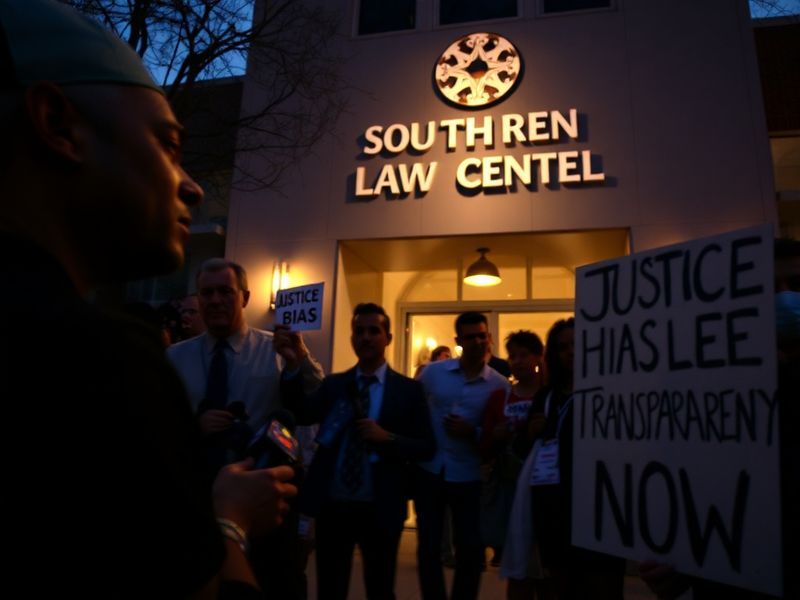
The Southern Poverty Law Center (SPLC) has long been a polarizing organization in American discourse. Founded in 1971 by Morris Dees and Joseph Levin Jr., the SPLC gained prominence for its legal battles against hate groups and its annual “Hate Map,” which tracks extremist organizations across the United States. While the organization has been celebrated for its efforts to combat racism and bigotry, it has also faced significant criticism over the years regarding its methods, funding, and perceived political bias. This article examines the complex legacy of the SPLC, the controversies that have surrounded it, and its evolving role in contemporary American society.
The SPLC’s Origins and Early Influence
The SPLC was established in Montgomery, Alabama, with a mission to fight racial injustice through litigation and education. In its early years, the organization achieved notable successes, including landmark cases against the Ku Klux Klan and other white supremacist groups. The SPLC’s innovative legal strategies, such as using civil lawsuits to bankrupt hate groups, set a precedent for civil rights litigation. By the 1980s and 1990s, the SPLC had become a leading voice in the fight against extremism, earning widespread recognition for its work.
One of the SPLC’s most significant contributions was the creation of its “Hate Map” in 1990. This interactive database tracks hate groups across the country, providing a visual representation of extremist activity. The map has been widely cited by journalists, researchers, and law enforcement agencies as a resource for understanding the landscape of hate in America. However, the SPLC’s designation of certain groups as “hate organizations” has also sparked controversy, with critics arguing that the labels are sometimes applied inconsistently or based on ideological grounds rather than objective criteria.
Controversies and Criticisms Surrounding the SPLC
The SPLC has faced criticism on multiple fronts, ranging from questions about its funding to accusations of hypocrisy in its own practices. One of the most persistent criticisms is the organization’s use of its “Hate Map” to label groups as extremist. Critics argue that the SPLC has at times included organizations that, while controversial, do not meet the traditional definition of hate groups. For example, in 2012, the SPLC listed the Family Research Council (FRC), a conservative Christian organization, as an “anti-gay hate group” based on its stance on LGBTQ+ issues. The FRC denied the characterization and argued that the label was politically motivated.
Another major controversy erupted in 2019 when the SPLC’s co-founder, Morris Dees, was ousted amid allegations of racial and gender discrimination within the organization. Former employees accused Dees of fostering a toxic work environment, including claims of racial insensitivity and unequal pay. The scandal led to the resignation of several board members and raised questions about the SPLC’s internal culture. In response, the SPLC launched an independent investigation and pledged to address the issues, but the damage to its reputation had already been done.
The SPLC has also been criticized for its financial practices. The organization has amassed a significant endowment, which has grown to over $500 million in recent years. While the SPLC has defended its financial reserves as necessary for its long-term mission, critics argue that the accumulation of wealth is excessive and that the organization could better serve its cause by redistributing funds to grassroots activists. The SPLC’s spending habits have come under scrutiny, particularly as it has faced legal challenges and internal turmoil.
Key Controversies in the SPLC’s History
- 2012: Family Research Council Designation – The SPLC labeled the FRC as an “anti-gay hate group,” sparking backlash from conservative organizations and accusations of ideological bias.
- 2019: Morris Dees Ouster – Allegations of racial and gender discrimination led to the resignation of the SPLC’s co-founder and several board members, raising questions about the organization’s internal culture.
- Financial Practices – Critics argue that the SPLC’s $500 million endowment is excessive and that the organization could better allocate funds to direct activism.
- Hate Map Accuracy – Some groups designated as hate organizations by the SPLC have argued that the labels are politically motivated and lack objective justification.
The SPLC’s Role in Modern American Society
Despite the controversies, the SPLC remains a significant force in the fight against hate and extremism. The organization continues to provide resources for communities targeted by bigotry, including legal assistance and educational programs. Its “Teaching Tolerance” initiative, now known as Learning for Justice, has been widely praised for its anti-bias curriculum, which is used in thousands of schools across the country. The SPLC’s work in this area has had a tangible impact on fostering dialogue and understanding in classrooms.
However, the SPLC’s influence has also been challenged by the rise of social media and the decentralization of extremist movements. Traditional hate groups, such as the KKK, have declined in prominence, while online radicalization has become a more pressing concern. The SPLC has adapted to this changing landscape by expanding its focus to include digital hate and misinformation. For example, the organization has tracked the growth of far-right online communities and provided resources for countering online radicalization.
The SPLC’s role in modern activism is also complicated by the polarization of American politics. While the organization is widely respected on the left, it has faced skepticism from conservatives who view it as an ideological opponent. This polarization has led some to question the SPLC’s objectivity and whether it can effectively serve as a neutral arbiter in the fight against hate. Despite these challenges, the SPLC continues to play a vital role in documenting extremist activity and advocating for marginalized communities.
Looking Ahead: The Future of the SPLC
The SPLC’s future will likely be shaped by its ability to address the criticisms that have plagued it in recent years. The organization has taken steps to improve transparency, including releasing more detailed financial reports and diversifying its leadership. In 2020, the SPLC hired its first Black president, Margaret Huang, in an effort to rebuild trust and address internal issues. These changes signal a potential turning point for the organization, but the road to recovery will not be easy.
One of the SPLC’s key challenges will be maintaining its relevance in a rapidly changing political and social landscape. The rise of new forms of extremism, such as QAnon and other conspiracy-driven movements, presents both opportunities and challenges for the organization. The SPLC will need to continue evolving its strategies to address these emerging threats while also addressing the criticisms that have dogged it for decades. Whether it can strike this balance will determine its long-term impact.
For those interested in the broader context of civil rights and activism, the SPLC’s work remains a critical area of study. Organizations like Dave’s Locker News provide ongoing coverage of these issues, offering insights into the evolving landscape of activism and extremism in America. By staying informed, readers can better understand the complexities of the SPLC’s role and the broader fight against hate.
The SPLC’s story is one of both inspiration and controversy. While its contributions to the fight against racism and bigotry are undeniable, its methods and internal practices have often been called into question. As the organization moves forward, it must confront these challenges head-on if it hopes to maintain its credibility and effectiveness. For now, the SPLC remains a polarizing but essential player in the ongoing struggle for justice and equality in America.