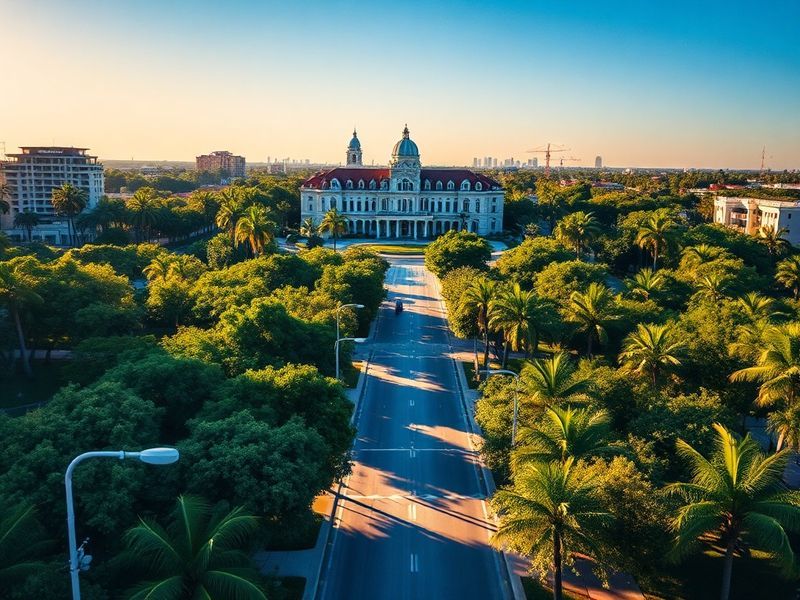
Nestled just southwest of Miami, Coral Gables, Florida, stands as a testament to meticulous urban planning and architectural elegance. Often overshadowed by the bustling energy of its neighbor, this city of approximately 50,000 residents offers a quieter, more refined slice of South Florida life. Its story begins in the early 20th century, when real estate mogul George E. Merrick envisioned a community that blended Mediterranean Revival architecture with lush subtropical landscapes. Today, Coral Gables remains a living museum of that vision, attracting visitors with its historic charm, cultural institutions, and thriving local economy.
The Birth of a Vision: From Farmland to Mediterranean Paradise
Coral Gables’ origins trace back to the 1890s, when the land was primarily used for farming. However, it was George E. Merrick’s family legacy that transformed the area. Merrick’s father, a horticulturist, introduced exotic plants to the region, while Merrick himself studied architecture and urban planning during his time at Harvard. Inspired by the Mediterranean style he admired during travels in Spain and Italy, Merrick set out to create a city that would reflect those aesthetics.
The development of Coral Gables began in earnest in 1921, with Merrick’s team laying out a grid of streets named after famous explorers and his own family members. The city’s iconic Miracle Mile, a commercial thoroughfare lined with Mediterranean Revival buildings, became the heart of the community. By the mid-1920s, Coral Gables was incorporated as a city, and its reputation as a “City Beautiful” was cemented.
Merrick’s vision extended beyond architecture. He prioritized green spaces, planting thousands of trees, palms, and flowering shrubs to create a verdant urban environment. This commitment to landscaping remains evident today, with Coral Gables earning the nickname “The City Beautiful” for its harmonious blend of nature and design.
Architectural Grandeur: A Walk Through Time
Coral Gables is a treasure trove of architectural styles, but its most defining feature is the Mediterranean Revival movement that Merrick championed. Characterized by stucco walls, red-tile roofs, arched doorways, and wrought-iron details, this style evokes the warmth of Southern Europe. The city’s historic district is a showcase of these elements, with buildings that have stood the test of time.
One of the most iconic structures is the Biltmore Hotel, a 1920s luxury resort that has hosted everyone from politicians to Hollywood stars. Its 275-foot tower, inspired by Seville’s Giralda, dominates the skyline and serves as a symbol of Coral Gables’ golden era. Nearby, the Venetian Pool—a former rock quarry transformed into a public swimming pool—exemplifies the city’s innovative use of natural resources. With its coral rock grottoes and Venetian-style bridges, it remains one of the most photographed spots in Florida.
The city’s commitment to preserving its architectural heritage is evident in its strict design guidelines. New construction must adhere to Mediterranean Revival aesthetics, ensuring that the city’s character remains intact. This dedication has made Coral Gables a model for historic preservation in the United States.
Notable Architectural Landmarks in Coral Gables
- Coral Gables City Hall – A stunning example of Spanish Colonial Revival architecture, completed in 1939.
- Douglas Entrance – One of the original entrances to the city, designed to resemble a Mediterranean gateway.
- Lowe Art Museum – Housed on the University of Miami campus, this museum features collections spanning 5,000 years of art history.
- Venetian Pool – A National Historic Landmark and one of the oldest public pools in the U.S.
A Cultural Hub: Arts, Education, and Global Influences
Beyond its architectural splendor, Coral Gables has cultivated a vibrant cultural scene. The city is home to the University of Miami, a private research university that attracts students from around the world. The institution’s Lowe Art Museum, with its diverse collections, and the Frost School of Music, which hosts world-class performances, contribute to the city’s intellectual and artistic vibrancy.
Coral Gables also embraces its role as a cultural crossroads. The city’s annual events, such as the Coral Gables Food & Wine Festival and the Festival of the Arts, celebrate its multicultural identity. The Miracle Mile, lined with galleries, theaters, and boutique shops, serves as a gathering place for locals and visitors alike. Meanwhile, the historic Miracle Theatre Group produces a range of performances, from classic plays to contemporary works.
In recent years, Coral Gables has also become a hub for international cuisine, reflecting Miami’s status as a global culinary destination. From Cuban cafés to French bistros, the city’s dining scene offers a taste of the world. This diversity is no accident; Coral Gables has long been a magnet for immigrants and expatriates, particularly from Latin America and Europe.
Economic Resilience: A Model of Sustainable Growth
Coral Gables’ economy is a blend of tradition and innovation. While tourism and hospitality remain vital—thanks in part to landmarks like the Biltmore Hotel—the city has also diversified into technology, healthcare, and education. The University of Miami, in particular, is a major economic driver, fueling research and entrepreneurship in fields like biotechnology and marine science.
The city’s business district, centered around the Miracle Mile and the downtown area, hosts a mix of corporate offices, law firms, and startups. Companies like Bacardi USA and Office Depot have established headquarters in Coral Gables, drawn by its strategic location, skilled workforce, and high quality of life. Meanwhile, the city’s walkable streets and mix of retail, dining, and entertainment options make it a model for urban livability.
Coral Gables has also prioritized sustainability. The city’s Green Initiatives Program focuses on energy efficiency, waste reduction, and the preservation of green spaces. Efforts like the Coral Gables Green Business Program encourage local businesses to adopt eco-friendly practices, while the city’s tree canopy—one of the densest in Florida—helps mitigate urban heat and improve air quality.
Key Industries in Coral Gables
- Hospitality & Tourism – Driven by historic hotels, cultural attractions, and events.
- Education & Research – Led by the University of Miami and its medical and scientific programs.
- Legal & Financial Services – Home to numerous corporate and law firm headquarters.
- Technology & Startups – A growing sector supported by the city’s innovation-friendly policies.
- Healthcare – With major hospitals and research facilities in the region.
A Global Perspective: Coral Gables in the 21st Century
From its Mediterranean-inspired beginnings to its role as a modern urban center, Coral Gables has continuously evolved while preserving its unique identity. Globally, it serves as an example of how cities can balance growth with heritage. Its success in attracting international businesses, students, and tourists underscores its appeal as a destination that offers both sophistication and warmth.
Yet Coral Gables is more than just a picturesque postcard. It is a city that has adapted to the challenges of the 21st century, from climate change to economic shifts. Its commitment to sustainability, education, and cultural diversity positions it as a model for other cities seeking to thrive in an increasingly interconnected world.
For visitors, Coral Gables offers a chance to step back in time while experiencing the pulse of contemporary urban life. Whether strolling along the Miracle Mile, exploring the Venetian Pool, or attending a performance at the Miracle Theatre, one is reminded that this city is a carefully crafted masterpiece—one that continues to inspire and endure.
Visiting Coral Gables: Practical Insights for Travelers
For those planning a visit, Coral Gables is easily accessible from Miami International Airport, just a 15-minute drive away. The city is best explored on foot or by bike, with its pedestrian-friendly streets and abundant green spaces. Parking is available, but many attractions are within walking distance of each other.
Accommodations range from historic luxury hotels like the Biltmore to boutique inns and modern serviced apartments. Dining options span from casual Cuban eateries to high-end French restaurants, reflecting the city’s multicultural fabric. Don’t miss the chance to try local specialties like croquetas, stone crab, or key lime pie.
Coral Gables is also a gateway to other South Florida attractions. Just a short drive away, visitors can explore the Everglades, relax on the beaches of Key Biscayne, or dive into the vibrant nightlife of Miami Beach. Yet, for those seeking a quieter, more refined experience, Coral Gables itself is a destination worth lingering in.
Top Attractions in Coral Gables
- Biltmore Hotel – Take a tour or enjoy afternoon tea in this historic landmark.
- Venetian Pool – Swim in a former rock quarry transformed into a Venetian-style oasis.
- Fairchild Tropical Botanic Garden – A 83-acre garden featuring rare palms and exotic plants.
- Coral Gables Museum – Learn about the city’s history and urban development.
- Matheson Hammock Park – A serene spot for picnics and waterfront views.
As Coral Gables continues to grow, it remains a reminder that great cities are not just built on concrete and steel, but on vision, culture, and community. Whether you’re a first-time visitor or a longtime admirer, this Mediterranean gem in the heart of South Florida offers something unforgettable.
For those interested in exploring more about Florida’s cultural and architectural landscapes, be sure to check out our Travel section for additional insights and recommendations.