A saber is more than a weapon—it is a symbol of power, craftsmanship, and cultural identity that has traversed centuries and continents. Its curved blade, designed for slashing from horseback, tells a story of military evolution, artistic expression, and even modern subcultures. While often associated with European cavalry or Middle Eastern warriors, the saber’s influence extends far beyond traditional battlefields. Today, it exists in ceremonial contexts, collector circles, and pop culture, reflecting humanity’s enduring fascination with blades.
This article explores the saber’s journey through history, its diverse forms across regions, and its surprising presence in contemporary society. From the Ottoman Empire to Hollywood films, the saber remains a potent emblem of heritage and innovation.
The Origins and Military Significance of Sabers
The saber’s roots can be traced to the early 17th century in Hungary, where the word “szablya” referred to a curved cavalry sword. Its design was practical: the curved blade allowed cavalrymen to deliver powerful slashes while mounted, a clear advantage in open combat. The weapon soon spread across Europe, adapted by militaries from Prussia to Russia. By the 18th and 19th centuries, the saber had become standard issue for officers in many armies, including the British, French, and American forces.
Each nation developed its own variations. The French modèle 1786, for instance, featured a single-edged, slightly curved blade ideal for dueling and ceremonial use. The British 1796 pattern saber, on the other hand, was heavier, built for both cutting and thrusting during the Napoleonic Wars. Meanwhile, the Ottoman Empire refined the curved blade into the iconic shashka, a weapon later adopted by Cossack warriors, known for its balance and razor edge.
The saber’s military role began to decline in the late 19th century with the advent of repeating rifles and trench warfare. Yet, it persisted in ceremonial roles—today, sabers are still used in military parades, officer commissions, and royal guard displays. The saber’s legacy endures not in battle, but in tradition.
Notable Saber Types Through History
- Hungarian Hussar Saber (17th century): One of the earliest curved sabers, favored by light cavalry for its slashing power.
- British 1796 Pattern Saber: A heavy cavalry sword used in the Napoleonic Wars, with a brass hilt for durability.
- Ottoman Kilij: A flamboyant, almost flame-like blade that became a symbol of the Janissaries and later Turkish identity.
- Russian Shashka: A Cossack warrior’s weapon, lightweight and designed for both cutting and quick draws.
- American M1840 Cavalry Saber: Used during the Mexican-American War and Civil War, later immortalized in pop culture.
The Saber as a Cultural Symbol
Beyond its military function, the saber has woven itself into the fabric of global cultures. In the Middle East, the saif or scimitar—often confused with the saber due to its curved profile—became a symbol of honor and chivalry. Arabic poetry and folklore frequently depict warriors wielding curved blades in acts of valor. Similarly, in South Asia, the talwar, a saber with a distinctive disc-shaped pommel, was associated with Rajput warriors and Mughal emperors, representing both martial skill and regal authority.
In Japan, the curved blade took a different form—the nodachi and tachi were mounted swords used by samurai, though their designs were more pronouncedly curved than European sabers. While not called sabers traditionally, their influence on global swordsmithing is undeniable. Japanese sword-making techniques, such as differential hardening, later inspired Western blade designs.
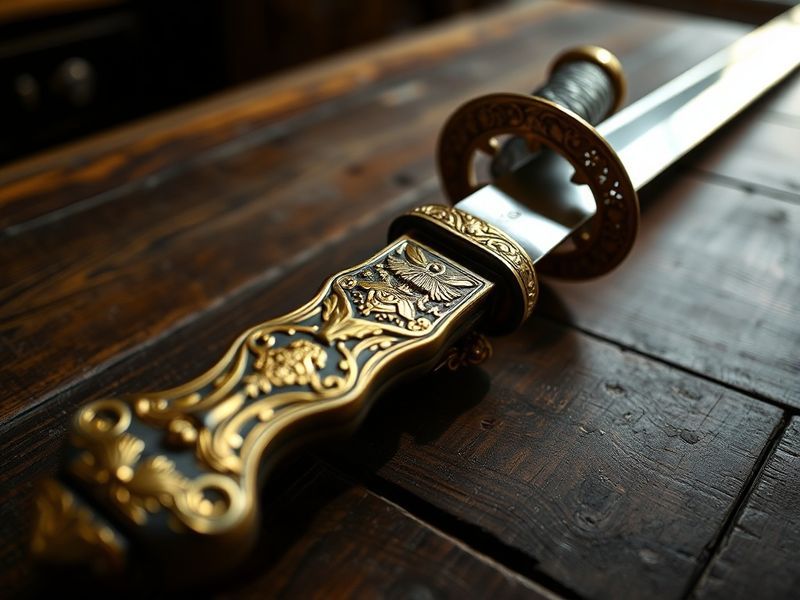
In Europe, the saber became a marker of aristocracy. French nobles in the 18th century carried finely crafted sabers as fashion statements, often engraved with family crests. The weapon’s elegance made it a staple in portraiture and heraldry. Even today, ceremonial sabers are gifted to heads of state and used in coronation regalia, such as the British State Sword presented to King Charles III during his coronation procession.
Sabers in Modern Times: From Collectors to Pop Culture
The saber has found new life in the 21st century, far removed from its battlefield origins. Collectors around the world seek antique sabers, drawn to their historical craftsmanship and stories. Auction houses regularly feature rare pieces, with prices ranging from a few thousand to over a million dollars for imperial-era weapons. Museums, including the Metropolitan Museum of Art in New York and the Hermitage in St. Petersburg, display sabers as artifacts of military and cultural history.
In popular media, the saber has become iconic. The Star Wars franchise popularized the “lightsaber,” a futuristic reinterpretation of the curved blade’s aesthetic. Though not a traditional saber, the lightsaber’s glowing energy and hilt design pay homage to real-world cavalry swords. Similarly, video games like The Witcher 3 and Assassin’s Creed feature saber-like weapons, reinforcing the blade’s mythic status.
Collecting sabers has also become a niche hobby. Enthusiasts restore antique weapons, study metallurgy, and even commission replicas. The saber community thrives online, with forums and social media groups dedicated to authentication, display, and historical reenactments. Some collectors focus on specific eras, such as the Napoleonic Wars, while others pursue sabers from lesser-known conflicts, like the Franco-Prussian War.
Additionally, the saber’s image has been co-opted by modern subcultures. In the world of competitive fencing, the saber is one of three disciplines, alongside foil and épée. Unlike the other two, the saber allows for slashing as well as thrusting, harkening back to its cavalry roots. Fencing sabers are lightweight and electronic, but their connection to tradition remains strong.
The Future of the Saber: Tradition Meets Innovation
As the world moves toward digital and automated warfare, the saber’s practical role has faded. Yet, its symbolic power persists. In a time of rapid technological change, the saber stands as a reminder of craftsmanship, discipline, and legacy. Modern swordsmiths continue to produce sabers using traditional methods, preserving techniques that date back centuries. Some artisans even blend old-world design with new materials, creating hybrid blades that honor history while meeting contemporary standards.
Culturally, the saber remains a bridge between past and present. It appears in films, literature, and even fashion—designers have incorporated saber-inspired motifs into clothing and accessories. The blade’s silhouette, elegant and dynamic, continues to inspire artists and storytellers.
Looking ahead, the saber’s legacy will likely endure not as a weapon, but as a cultural artifact. Museums will continue to preserve historic examples. Collectors will safeguard rare pieces. And in the hands of fencers, reenactors, and creators, the saber will keep evolving—silent, yet speaking volumes about who we were and who we aspire to be.
The saber’s journey from the battlefield to the gallery, from the cavalry charge to the fencing strip, is a testament to human creativity and adaptability. It is more than steel and craftsmanship—it is a story told in every curve and edge.