Mo Farah: From Refugee to Olympic Legend and Cultural Icon
“`html
Mo Farah: From Refugee to Global Running Legend
Mohamed Muktar Jama Farah, known universally as Mo Farah, is not just a name etched in athletics history—it is a symbol of perseverance, cultural integration, and athletic excellence. Born in Somalia in 1983, Farah’s journey to becoming one of the greatest distance runners of all time is a story of triumph over adversity and a testament to the power of community and opportunity.
Farah’s rise to global fame culminated in four Olympic gold medals and six world championship titles, making him one of Britain’s most decorated athletes. His legacy extends beyond medals and records; it is a narrative that resonates with millions of people worldwide, particularly those who have faced displacement and hardship. Through his achievements, Farah has become a cultural icon, representing the possibilities that open up when talent meets opportunity.
Early Life and Arrival in the UK
Farah’s early years were marked by instability. At the age of nine, he was sent from Somalia to live with relatives in Djibouti, fleeing the civil war that engulfed his homeland. His childhood was far from ordinary; he spent much of his time helping his aunt with household chores and running errands. Running was not yet a passion but a necessity—a way to navigate the harsh realities of life in a conflict-ridden region.
In 1993, at the age of eight, Farah was sent to the United Kingdom under the guise of joining relatives. However, upon arrival, he discovered that his paperwork had been falsified. Instead of being taken in by family, he was placed with a different Somali family in London. For years, Farah lived under the radar, unable to communicate his true circumstances due to language barriers and fear of deportation. He worked as a domestic servant, cooking and cleaning for the family that took him in, all while attending school and hiding his struggles.
It wasn’t until Farah was in secondary school that his talent for running was noticed. His physical education teacher, Alan Watkinson, saw his potential and encouraged him to join the school’s athletics team. This marked the beginning of a journey that would change the course of Farah’s life. Watkinson also played a crucial role in helping Farah regularize his immigration status, ensuring that he could compete legally and pursue his dreams without fear.
Rise to Athletic Prominence
Farah’s breakthrough in athletics came in 2005 when he won the European Athletics Championship in the 5,000 meters. This victory was a turning point, signaling his arrival on the global stage. By 2010, he had established himself as a dominant force in long-distance running, winning gold in both the 5,000 and 10,000 meters at the European Championships.
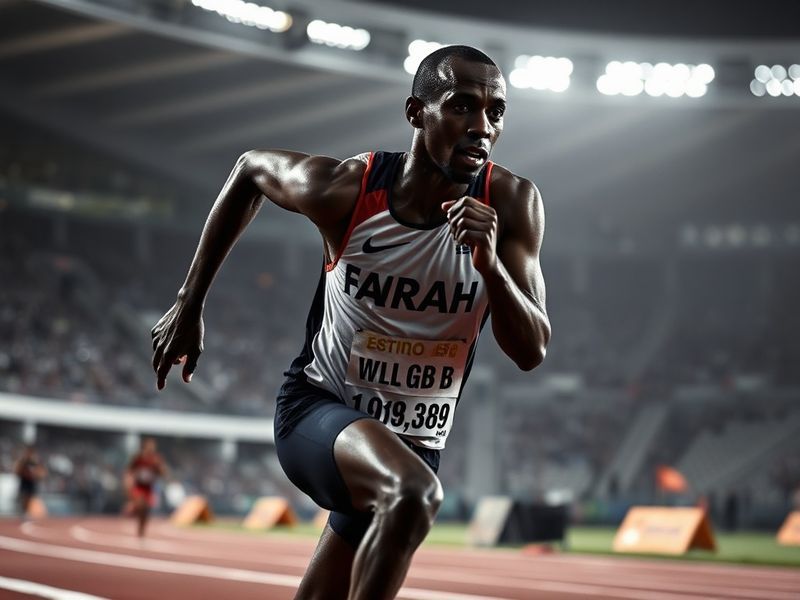
However, it was the 2012 London Olympics that catapulted Farah into the global spotlight. Competing on home soil, he made history by becoming the first British athlete to win gold in the 5,000 and 10,000 meters at the same Olympic Games. His iconic “Mobot” celebration—where he crossed his arms over his head in a gesture that became synonymous with his brand—captured the imagination of the public and cemented his status as a national hero.
Farah’s dominance continued at the 2016 Rio Olympics, where he defended his titles in both events, becoming the first athlete in history to win the 5,000 and 10,000 meters at consecutive Olympic Games. His achievements earned him a knighthood in the 2017 New Year Honours, making him Sir Mohamed Farah—a recognition of his contributions to sport and society.
Training Philosophy and Work Ethic
Behind Farah’s success lies an unparalleled work ethic and a meticulous approach to training. His coach, Alberto Salazar, played a pivotal role in shaping Farah into the athlete he became. Salazar’s training methods were rigorous, often involving high-intensity interval sessions and long runs that pushed Farah to his limits. Farah’s ability to maintain focus and discipline, even under immense pressure, set him apart from his competitors.
Farah’s training regimen was not just about physical endurance; it was also about mental resilience. He often spoke about the importance of visualization and positive thinking, techniques he used to overcome self-doubt and stay motivated during grueling workouts. His partnership with Salazar lasted over a decade, a testament to the trust and mutual respect between athlete and coach.
A Global Icon and Cultural Ambassador
Farah’s impact extends far beyond the track. As a Somali-British athlete, he has become a bridge between cultures, representing the diversity and inclusivity of modern Britain. His success has inspired countless young athletes from immigrant backgrounds, proving that talent and hard work can transcend barriers.
In 2022, Farah’s life story was brought to the screen in the BBC documentary “The Real Mo Farah,” which revealed the harrowing details of his early years in the UK. The documentary sparked conversations about immigration, child exploitation, and the importance of safeguarding vulnerable individuals. Farah’s willingness to share his story has helped raise awareness about these critical issues, further solidifying his role as an advocate for social justice.
Philanthropy and Community Work
Farah has also used his platform to give back to the community. He has been involved in numerous charitable initiatives, including his work with the Mo Farah Foundation, which supports education and healthcare programs in Somalia and Djibouti. His foundation aims to improve the lives of children and families in regions affected by conflict and poverty, a cause close to his heart.
In addition to his foundation, Farah has partnered with organizations like UNICEF and the British Red Cross to support refugees and displaced communities. His personal experiences have given him a unique perspective on the challenges faced by refugees, and he has used his voice to advocate for policies that protect and empower displaced individuals.
Legacy and Future Endeavors
As Farah transitions into the next phase of his career, his legacy is already secure. He has redefined what it means to be a British athlete, breaking barriers and setting new standards in long-distance running. His story is a reminder that greatness is not just about talent—it is about resilience, determination, and the courage to overcome adversity.
Looking ahead, Farah has expressed interest in coaching and mentoring the next generation of athletes. His experience and wisdom would be invaluable in shaping the future of British athletics. Whether on the track or in the community, Farah’s influence will continue to be felt for years to come.
For those interested in exploring more about athletes who have made a global impact, visit our Sports category for additional stories and insights.
Key Takeaways from Mo Farah’s Journey
- Perseverance in the Face of Adversity: Farah’s early life was marked by hardship, but he never let his circumstances define his future.
- The Power of Mentorship: Figures like Alan Watkinson and Alberto Salazar played crucial roles in guiding Farah toward success.
- Cultural Integration and Representation: Farah’s story highlights the importance of inclusivity and the impact of immigrant athletes on British culture.
- Giving Back to the Community: Through his foundation and partnerships, Farah has used his platform to support vulnerable communities.
- Legacy Beyond Athletics: Farah’s influence extends beyond sports, making him a role model and advocate for social change.
Mo Farah’s journey is more than a sports story—it is a human story. It is about resilience, opportunity, and the transformative power of community. As he continues to inspire future generations, his legacy serves as a reminder that greatness is not just about winning medals; it is about making a difference in the lives of others.