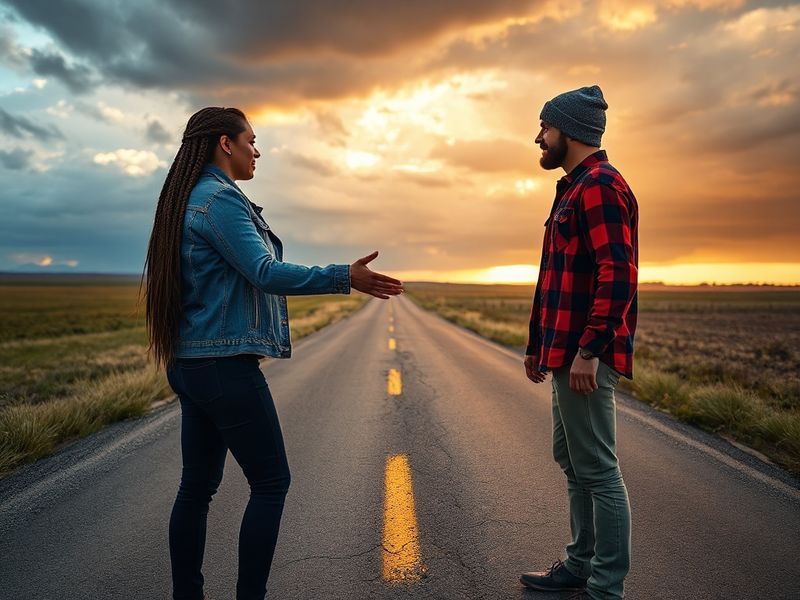
Reconciliation: How the World Heals from Conflict and Division
“`html
Reconciliation: A Global Look at Healing Divides
Across continents and cultures, the concept of reconciliation emerges not as a single moment but as a prolonged, often painful journey toward mutual understanding. It transcends legal agreements or political declarations—it is fundamentally human. Whether between nations scarred by war, communities divided by conflict, or individuals estranged by betrayal, reconciliation demands more than forgiveness; it requires acknowledgment, accountability, and a shared commitment to a different future.
What does reconciliation truly look like in practice? How do societies move from division to dialogue? And why do some efforts succeed while others collapse under the weight of old grievances? To explore these questions, we examine reconciliation through three critical lenses: historical trauma, transitional justice, and grassroots healing.
The Weight of History: When Trauma Lingers
History is not just a record of the past—it is a shadow that stretches into the present. In Rwanda, the scars of the 1994 genocide remain visible not only in memorials but in the daily lives of survivors and perpetrators living side by side. The government’s policy of gacaca courts—traditional community-based tribunals—sought to foster reconciliation by involving both victims and perpetrators in open dialogue. While controversial, these courts aimed to break cycles of silence and vengeance.
Yet, healing is uneven. In South Africa, the Truth and Reconciliation Commission (TRC) became a global model, offering amnesty in exchange for truth. Archbishop Desmond Tutu famously described it as a process of “restorative justice”—not to excuse evil, but to prevent its repetition. Still, many victims felt the TRC’s focus on public testimony did little to address economic injustice or intergenerational trauma.
These examples reveal a universal truth: reconciliation cannot be imposed from above without addressing systemic inequality. In Northern Ireland, decades of sectarian violence known as The Troubles have left a society grappling with divided neighborhoods, segregated schools, and unspoken trauma. Peace agreements in 1998 ended the fighting, but reconciliation remains a work in progress, hindered by political inertia and lingering distrust.
Lessons from the Ground
Grassroots movements often lead where governments fail. In Colombia, after decades of civil war between the government and FARC rebels, peace accords in 2016 included provisions for land restitution and community reparations. However, rural farmers—many of whom were displaced—found justice elusive. Women, in particular, organized to demand truth about missing loved ones, proving that reconciliation begins with listening to the most marginalized voices.
Transitional Justice: From Punishment to Restoration
Transitional justice refers to the set of judicial and non-judicial measures implemented to address legacies of widespread human rights violations. It includes criminal prosecutions, truth commissions, reparations, and institutional reforms. But its effectiveness depends on timing, political will, and public trust.
Consider Germany. After World War II, denazification efforts were uneven and, at times, performative. It wasn’t until decades later—with the opening of archives and public education—that a fuller reckoning with the Holocaust took root. Today, Germany’s culture of remembrance, including Holocaust memorials and mandatory education, reflects a society that chooses to confront its past rather than bury it.
Contrast this with Cambodia. The Khmer Rouge tribunal, established decades after the genocide, has faced criticism for being too slow, too politicized, and too focused on symbolic justice. Survivors often express frustration that the trials did not bring material relief or emotional closure. Reconciliation, it seems, cannot wait indefinitely.
The Role of Reparations
Reparations—whether financial, symbolic, or territorial—are a cornerstone of transitional justice. In 2008, Australia issued a formal apology to the Stolen Generations—Indigenous children forcibly removed from their families under government policies. While the apology was symbolic, it opened space for healing. Financial reparations followed, though many argue they fall short of addressing intergenerational harm.
Similarly, in Canada, the 2008 apology for residential schools—where Indigenous children were abused and stripped of their culture—led to the Truth and Reconciliation Commission’s 94 Calls to Action. Only a fraction have been implemented. The gap between acknowledgment and action remains one of the greatest barriers to reconciliation.
Everyday Reconciliation: Healing in Small Spaces
Reconciliation is not reserved for post-conflict societies. It happens in classrooms, workplaces, and families. In the United States, the legacy of slavery and Jim Crow laws continues to shape racial divisions. Movements like Black Lives Matter have forced a reckoning with systemic racism, pushing institutions to confront their histories. Universities have begun to acknowledge ties to slavery through land acknowledgments and curricular changes.
In Northern Ireland, community organizations run interface projects that bring Protestant and Catholic youth together through sports, art, and dialogue. These initiatives don’t erase decades of conflict, but they plant seeds of trust where none existed before.
Tools for Personal Healing
At the individual level, reconciliation often begins with storytelling. In Rwanda, the Ingando solidarity camps bring together survivors and perpetrators to share meals, labor, and stories. The process is not about forgiveness on demand but about recognizing shared humanity. Similarly, in Bosnia and Herzegovina, the Post-Conflict Research Center uses oral history projects to document war experiences, preserving memory as a path to understanding.
Yet, reconciliation is not linear. It demands patience and courage. In many cases, it requires sitting with discomfort—listening to painful truths without interruption, resisting the urge to defend or deflect, and acknowledging that healing is not a one-time event but a rhythm.
Barriers and Backlash: Why Reconciliation Fails
Not all reconciliation efforts succeed. In fact, many fail before they begin. Political leaders may use reconciliation as a performative gesture to secure votes or international aid without genuine commitment. In Myanmar, the government’s rhetoric of national unity rings hollow in the face of ongoing genocide against the Rohingya people. Reconciliation cannot coexist with oppression.
Another obstacle is the demand for quick resolution. In post-apartheid South Africa, some expected the TRC to “heal the nation” in a few years. But trauma does not obey timelines. When expectations outpace reality, disillusionment sets in, and reconciliation stalls.
Cultural differences also shape reconciliation. In Japan, the concept of wa—harmony—often prioritizes social cohesion over individual grievances. This can suppress open conflict but may also enable silence around injustice. In contrast, Western models of justice emphasize confrontation and adversarial processes, which can feel alien in communal societies.
When Reconciliation Becomes a Weapon
In some cases, reconciliation is weaponized to silence dissent. In Rwanda, the government has used laws against “genocide ideology” to prosecute critics, conflating political opposition with denialism. Similarly, in Sri Lanka, calls for reconciliation after decades of civil war have been undermined by militarization and impunity for war crimes.
These contradictions reveal a paradox: reconciliation can be both a path to peace and a tool of control. Its success depends on who controls the narrative—and who benefits from memory.
A Shared Future: What Reconciliation Requires
Reconciliation is not a destination but a practice. It requires three essential elements: truth, justice, and repair. Truth means confronting uncomfortable facts without revisionism. Justice means accountability—not necessarily punishment, but acknowledgment of harm. Repair means restoring dignity, whether through reparations, memorials, or cultural revival.
It also requires imagination. Reconciliation is not just about repairing what was broken; it is about co-creating what has never existed—a society where difference is not a threat but a strength.
Building Bridges Across Difference
Around the world, artists are using creativity to bridge divides. In Colombia, the Teatro por la Vida project brings former combatants and victims together to perform stories of the conflict. In the Middle East, the Paralympic movement has become a platform for athletes with disabilities from Israel and Palestine to compete as teammates, challenging stereotypes and fostering mutual respect.
Education plays a crucial role. In Rwanda, a national curriculum now includes lessons on the genocide, taught by both survivors and former perpetrators. In Germany, schools require visits to concentration camp memorials. These acts of memory are not about guilt—they are about ensuring that history’s lessons are never forgotten.
Ultimately, reconciliation is a choice. It is a choice to remember, to listen, and to act differently. It is not about forgetting the past but about refusing to let it dictate the future. In a world still torn by division, reconciliation remains one of humanity’s most urgent—and most difficult—projects.
As philosopher Hannah Arendt once wrote, “Forgiveness is the only way to reverse the irreversible flow of history.” Reconciliation is the courage to turn that reversal into reality.