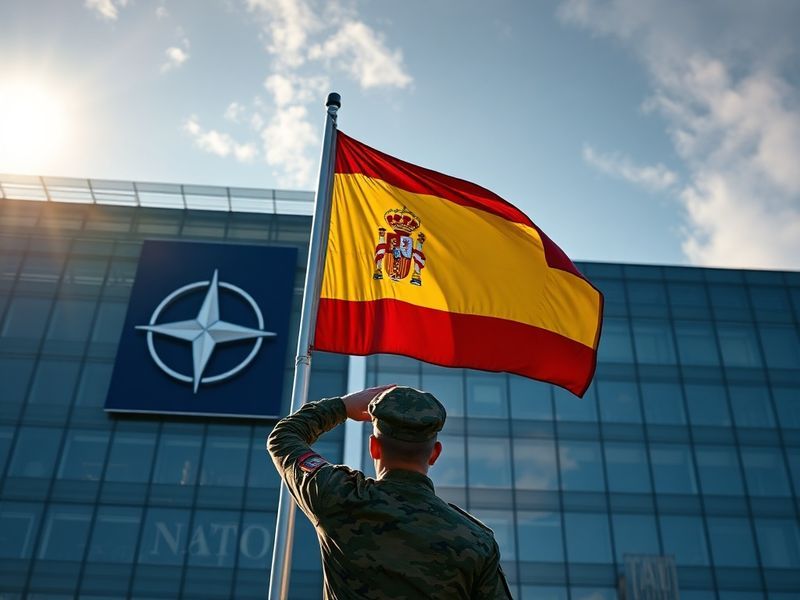
Spain’s Role in NATO: A Strategic Pillar in Southern Europe
For more than four decades, Spain has served as a critical anchor of stability in NATO’s southern flank. Since its accession to the alliance in 1982, the country has evolved from a post-Franco democracy into a trusted partner, contributing to collective defense, crisis management, and regional security. Its strategic location—bridging Europe, Africa, and the Atlantic—makes Spain indispensable to NATO’s broader mission of deterrence and cooperation.
Beyond geography, Spain’s military, diplomatic, and economic influence shapes NATO’s ability to respond to emerging threats. From counterterrorism operations in the Sahel to maritime security in the Mediterranean, Spanish forces are often at the forefront. This commitment reflects not only strategic necessity but also a deep alignment with the alliance’s values of democracy, rule of law, and multilateral cooperation.
The Evolution of Spain’s NATO Membership
Spain’s path to NATO membership was marked by political transformation. Following decades of isolation under Francisco Franco’s dictatorship, the country transitioned to democracy in the late 1970s. Joining NATO in 1982 signaled its reintegration into the Western security architecture and a commitment to shared defense principles.
Initially, Spain’s role was cautious. Public opinion was divided, with many Spaniards skeptical of military alliances. However, over time, successive governments strengthened their engagement, particularly after the Cold War. Participation in peacekeeping missions, such as in the Balkans during the 1990s, helped build credibility and trust within the alliance.
Today, Spain is a leading contributor to NATO’s rapid-reaction forces and hosts key installations, including the Rota naval base, which serves as a hub for U.S. and allied naval operations in the Mediterranean. This infrastructure underscores Spain’s role as a logistical and operational linchpin.
Military Contributions and Strategic Capabilities
Spain’s armed forces are among the most capable in Europe. With a professional volunteer military of over 120,000 personnel, Spain fields modern air, land, and naval capabilities. Its navy, in particular, is one of the strongest in the Mediterranean, with amphibious assault ships and advanced frigates.
Key contributions to NATO include:
- Air Policing: Spain regularly deploys fighter jets to patrol NATO airspace, including over the Baltics and Iceland.
- Maritime Security: The Spanish Navy participates in NATO’s Standing Maritime Groups and conducts anti-piracy operations off the Horn of Africa.
- Special Operations: Spanish commandos are integrated into NATO’s special forces units, providing expertise in counterterrorism and hostage rescue.
- Cyber Defense: Spain has invested in cyber capabilities and participates in NATO’s cyber defense initiatives.
These efforts are not merely symbolic. During Russia’s invasion of Ukraine, Spain reinforced its eastern flank by deploying Patriot missile systems to Romania and increasing its defense budget in line with NATO’s 2% GDP guideline. Such actions demonstrate Spain’s willingness to bear the costs of collective security.
Cultural and Political Nuances in Spain’s NATO Stance
While Spain’s military role is clear, its political approach to NATO is shaped by domestic and regional sensitivities. Spain maintains a delicate balance between alliance commitments and its unique geopolitical context. For instance, its relationship with Morocco—a key North African partner and former colony—requires careful diplomacy, especially when NATO operations intersect with North African security concerns.
Domestically, political parties have differing views on NATO. The left-leaning parties have historically been more skeptical, emphasizing peacekeeping over military engagement. Meanwhile, centrist and right-wing parties tend to prioritize strong defense ties with the U.S. and Europe. This internal debate reflects broader European discussions about sovereignty and security.
Spain’s position is also influenced by its historical memory. The legacy of the Spanish Civil War and Franco’s regime drives a cautious approach to military interventionism. Yet, today’s leaders recognize that NATO membership offers a framework for stability without reviving old conflicts.
Looking Ahead: Spain’s Future in NATO
As NATO adapts to new threats—from cyber warfare to hybrid attacks—Spain is positioning itself as a bridge between Europe and Africa. Its leadership in the NATO Mission Iraq, which trains Iraqi security forces, illustrates this forward-looking approach. Spain’s involvement in the alliance is no longer just about defense; it’s about shaping a secure and cooperative Mediterranean region.
Looking forward, Spain faces both opportunities and challenges. The rise of populist movements in Europe could strain transatlantic unity. Meanwhile, migration pressures and instability in the Sahel demand greater coordination between NATO and civilian actors. Spain’s ability to navigate these issues while maintaining its defense commitments will determine its future role in the alliance.
One thing is certain: Spain’s strategic location, military strength, and diplomatic agility make it a cornerstone of NATO’s southern strategy. As the alliance evolves, Spain’s voice will remain essential in shaping policies that ensure peace, security, and cooperation across three continents.
For readers interested in broader defense topics, explore our Politics section for more analysis on European security dynamics. To understand how regional conflicts shape global alliances, visit our Analysis category.
Conclusion
Spain’s NATO membership is a testament to its transformation from isolation to leadership. Over four decades, it has grown from a cautious newcomer to a trusted partner, contributing to collective defense while navigating complex regional dynamics. As NATO faces new challenges, Spain’s strategic insight and operational experience will continue to play a vital role in ensuring stability from the Atlantic to the Mediterranean.
In an era of shifting alliances and emerging threats, Spain stands not just as a member of NATO, but as a bridge between continents and a guardian of shared security.