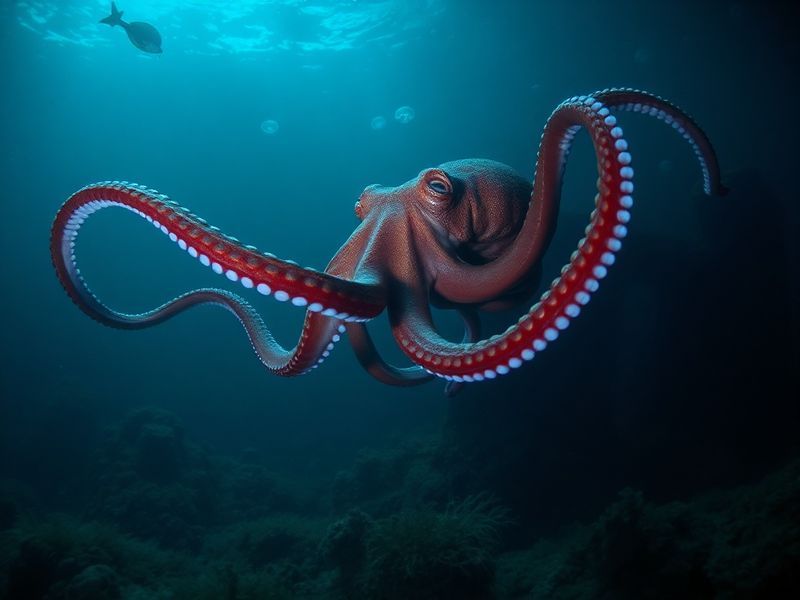
The giant octopus remains one of the ocean’s most compelling mysteries—a creature of extraordinary intelligence, mythic proportions, and ecological significance. While Hollywood often exaggerates its size and ferocity, real-world encounters and scientific research reveal a far more fascinating story. From the depths of the Pacific to the pages of ancient lore, the giant octopus occupies a unique space between biology and legend.
Its reputation precedes it. Fishermen’s tales of colossal tentacles dragging boats into the abyss have fueled centuries of speculation. Yet modern science paints a portrait of a highly intelligent, adaptable predator—one that challenges our understanding of marine life. This article explores the reality behind the myth, the science of its cognition, and why this creature continues to captivate researchers and the public alike.
What Defines a Giant Octopus?
The term “giant octopus” typically refers to species like Enteroctopus dofleini, commonly known as the North Pacific giant octopus. Found in the cold waters of the northern Pacific Ocean, this species holds the record as the largest octopus by weight and arm span. Adults can reach up to 16 feet across and weigh over 100 pounds, though most hover between 10 and 30 feet in total length and 30 to 50 pounds.
Size isn’t the only defining feature. The giant octopus possesses a suite of adaptations that set it apart: three hearts that pump copper-based blue blood, a near-muscular hydrojet propulsion system, and skin capable of rapid color and texture changes for camouflage. Its brain, distributed across its arms and central ganglia, allows for decentralized decision-making—a trait linked to its advanced problem-solving abilities.
Despite its name, the giant octopus is not known for attacking humans. Most encounters involve curious or defensive behavior rather than predatory intent. Its reputation as a monstrous creature stems more from human imagination than documented aggression.
The Intelligence Behind the Tentacles
Cephalopods, the class that includes octopuses, are among Earth’s most intelligent invertebrates. The giant octopus, in particular, demonstrates cognitive abilities that rival some vertebrates. It can solve puzzles, navigate mazes, and even recognize individual humans. In laboratory settings, octopuses have been observed opening jars, using tools, and exhibiting long-term memory.
This intelligence is not merely a curiosity—it’s a survival adaptation. The giant octopus hunts at night, relying on stealth and problem-solving to capture prey like crabs, clams, and small fish. Its arms, lined with chemoreceptors, can “taste” their surroundings, allowing it to detect food even in total darkness. Such sensory integration requires a brain capable of processing vast amounts of information rapidly.
Researchers believe the giant octopus’s intelligence evolved as a response to its ecological niche. Unlike social predators, it operates alone, requiring individual innovation to thrive. This solitary lifestyle may have driven the development of its advanced neural systems—a biological experiment in decentralized cognition.
Key Traits of Giant Octopus Intelligence
- Problem-Solving: Demonstrated in lab experiments involving puzzle boxes and escape tasks.
- Tool Use: Observed using coconut shells as portable shelters in the wild.
- Memory: Retains learned behaviors and recognizes familiar objects or individuals over time.
- Camouflage Expertise: Instantly matches its skin to surroundings using specialized cells called chromatophores.
- Communication: Uses body postures and color changes to signal intentions to other octopuses.
From Myth to Marine Science
The giant octopus’s cultural footprint is as vast as the ocean itself. Ancient mariners told stories of the Kraken, a colossal sea monster capable of dragging entire ships into the depths. Norse sagas describe the Hafgufa, a creature so large its tentacles could wrap around a vessel. These legends likely stem from real encounters with giant squid or misidentified whale carcasses—yet they endure in folklore and modern media.
Today, science seeks to separate myth from reality. Expeditions using deep-sea submersibles have captured footage of giant octopuses in their natural habitat, revealing behaviors previously only guessed at. One notable discovery came in 2007, when a team filming in the Pacific Northwest observed a female giant octopus guarding her eggs for four and a half years—longer than any known animal. This unprecedented act of maternal devotion challenged assumptions about octopus lifespans and parental investment.
The giant octopus also plays a crucial role in marine ecosystems. As a keystone predator, it helps regulate populations of shellfish and crustaceans, preventing ecological imbalances. Its presence—or absence—can indicate the health of an underwater environment. In regions where overfishing occurs, giant octopus populations sometimes surge, filling ecological gaps left by declining fish stocks.
Conservation and the Future of the Giant Octopus
Despite its resilience, the giant octopus faces growing threats. Climate change is altering ocean temperatures and acidity, disrupting the cold, oxygen-rich waters it depends on. Overfishing reduces prey availability, while habitat destruction from deep-sea mining and trawling endangers its natural environment.
Conservation efforts are underway, but the giant octopus’s elusive nature complicates research. Protected marine areas, such as those in the Pacific Northwest, offer some refuge. Public aquariums, too, play a role in education and breeding programs, though ethical concerns linger about keeping such intelligent creatures in captivity.
Looking ahead, the giant octopus may serve as a biological indicator of ocean health. Its sensitivity to environmental changes makes it a potential canary in the coal mine for deep-sea ecosystems. Understanding its biology could unlock insights into marine conservation, climate adaptation, and even the origins of intelligence itself.
For now, the giant octopus remains a symbol of the ocean’s mysteries—intelligent, adaptable, and largely unseen. Whether in the pages of a research journal or the depths of a midnight dive, it continues to challenge and inspire.
As we push further into the blue frontier, one truth becomes clear: the giant octopus is not just a creature of myth or science. It is a testament to nature’s capacity for wonder—and a reminder of what we have yet to discover beneath the waves.
For more on marine mysteries and deep-sea exploration, visit Trending or explore our Science section.