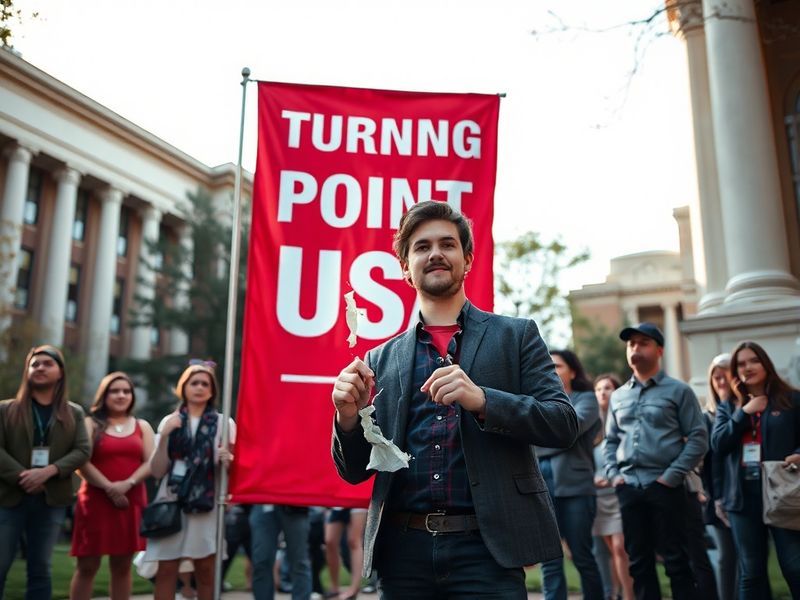
The resignation of a University of Georgia (UGA) student leader from TurnPoint USA has ignited conversations about political engagement, institutional neutrality, and student activism on campus. The decision, which came after months of escalating tensions, reflects broader divides within higher education spaces where ideological organizations often clash with academic values.
While the specifics of the resignation remain partially undisclosed, multiple sources confirm the student’s departure followed disputes over organizational practices and perceived conflicts with UGA’s mission. This incident is not isolated—it mirrors similar controversies at other universities where conservative advocacy groups have faced scrutiny over funding transparency, speaker invitations, and alignment with institutional policies.
Background: TurnPoint USA at UGA
TurnPoint USA, a nonprofit known for promoting conservative ideas on college campuses through initiatives like the “Professor Watchlist” and campus chapters, has operated at UGA for several years. The group’s presence has been both celebrated by supporters as a counterbalance to perceived liberal bias in academia and criticized by opponents who argue it fosters division rather than dialogue.
According to public records and student testimonies, TurnPoint’s UGA chapter had grown in visibility, hosting events and distributing materials aimed at engaging students in political discourse. However, internal documents obtained by The Red & Black, UGA’s student newspaper, suggest rising concerns among faculty and administrators regarding the group’s external funding sources and potential influence on campus discourse.
- Funding sources: TurnPoint USA receives donations from national conservative donors and foundations, raising questions about the transparency of financial ties to outside organizations.
- Event controversies: Past events have drawn protests, including a 2022 lecture series featuring a commentator known for inflammatory remarks.
- Student participation: While some students join for ideological alignment, others participate out of curiosity or academic interest in political organizing.
The Resignation: Why It Matters
The UGA student who resigned from TurnPoint USA’s leadership role—identified publicly only by initials in student media—stated in a written statement that the decision was “not made lightly.” The statement, shared with campus publications, cited “irreconcilable differences” with the organization’s national leadership over its approach to campus engagement. The student emphasized a commitment to “healthy discourse” but expressed concern that TurnPoint’s tactics risked undermining that goal.
Faculty members interviewed by campus media described the resignation as a symptom of deeper institutional challenges. One professor of political science noted that while universities should encourage diverse viewpoints, they must also ensure that external organizations operate within ethical boundaries and respect academic integrity.
“The role of student organizations is to enrich learning, not to weaponize debate. When groups import national agendas without regard for campus culture, it creates friction that distracts from education.”
— Dr. Elena Martinez, UGA Department of Political Science
Student reactions have been mixed. Some conservative students see the resignation as an overreaction to legitimate conservative advocacy, while progressive student groups view it as a sign of organizational misconduct. A poll conducted by the UGA College Republicans showed that 62% of respondents believed the resignation was politically motivated, though no direct evidence supports this claim.
Broader Implications for Campus Activism
This incident at UGA is part of a national pattern. In 2023, similar controversies emerged at universities like the University of Texas at Austin and the University of Florida, where student leaders of conservative groups resigned amid disputes over funding, speaker policies, or alignment with university values. These cases highlight a growing tension between student autonomy and institutional oversight in politically charged environments.
Experts in higher education governance argue that universities face a delicate balance: fostering free expression while maintaining a safe, inclusive environment. The UGA case raises key questions:
- Should student organizations be held to institutional standards of neutrality?
- How transparent must outside funding be for campus-affiliated groups?
- What role should university administrations play in mediating ideological conflicts?
According to a 2024 report by the Foundation for Individual Rights and Expression (FIRE), nearly 40% of public universities have faced challenges related to student group funding or speaker policies in the past two years. The report suggests that as political polarization increases, so does the scrutiny of campus organizations—regardless of ideological leaning.
Looking Ahead: What’s Next for UGA and TurnPoint?
As of publication, TurnPoint USA’s UGA chapter remains active, though its leadership structure is reportedly under review. The organization has not issued a public response to the resignation. Meanwhile, UGA’s administration has reaffirmed its commitment to free speech but emphasized that all student groups must comply with university policies on nondiscrimination, safety, and financial disclosure.
Student leaders from both conservative and progressive groups have called for dialogue. A joint statement from the UGA College Republicans and the UGA Young Democrats urged students to “focus on shared goals of civic engagement rather than division.”
The resignation may serve as a turning point—not for the organization itself, but for how UGA and similar institutions approach the role of ideological groups on campus. As universities navigate an increasingly polarized political landscape, cases like this one may force a reevaluation of policies governing student activism, transparency, and institutional neutrality.
For now, the campus community watches closely. The outcome could influence not only TurnPoint’s future at UGA but also set a precedent for how other universities manage similar challenges in the years ahead.