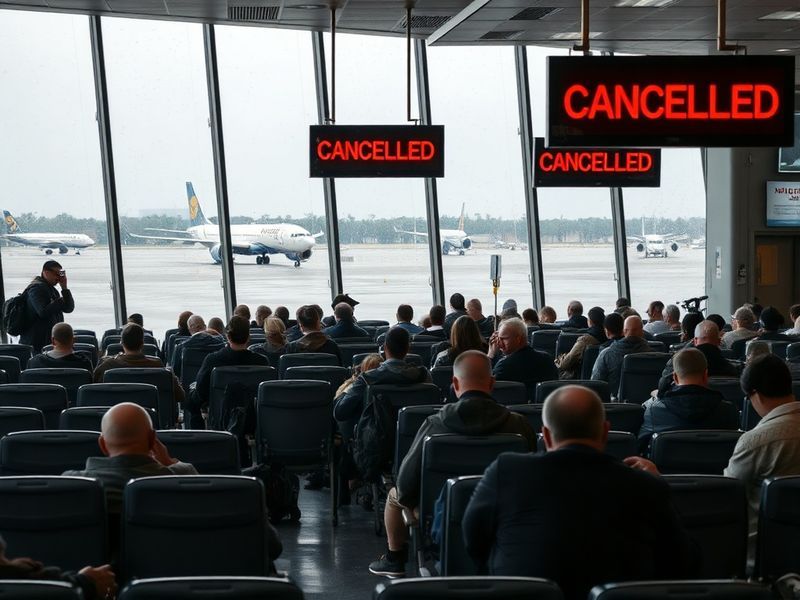
The past year has seen airlines scrambling to adjust schedules, issue refunds, and explain delays to frustrated passengers. While labor shortages and technical issues often grab headlines, a quieter but equally disruptive factor has been flying under the radar: soaring jet fuel prices. The cost of jet fuel, which accounts for nearly 30% of an airline’s operating expenses, has become a ticking time bomb for the aviation industry.
Unlike gasoline for cars, jet fuel is a specialized blend refined to withstand extreme altitudes and temperatures. Its price fluctuates based on global oil markets, geopolitical tensions, and refining capacity. When fuel costs spike, airlines face a brutal dilemma: absorb the expense, pass it to customers, or cut flights entirely. The result? More cancellations, reduced service, and a ripple effect across travel plans worldwide.
The Domino Effect of Higher Fuel Costs
Jet fuel prices have surged by over 50% in the last two years, driven by post-pandemic demand, the Russia-Ukraine war, and OPEC production cuts. For airlines, this isn’t just a budgeting challenge—it’s a strategic crisis. Fuel expenses can swing wildly from month to month, making long-term planning nearly impossible. Some carriers have responded by:
- Reducing flight frequencies on less profitable routes
- Shifting to smaller, more fuel-efficient aircraft
- Imposing fuel surcharges that can add hundreds of dollars to ticket prices
- Delaying fleet upgrades to older, less fuel-efficient planes
These adjustments aren’t just inconvenient for travelers. They reshape regional connectivity, hurt tourism-dependent economies, and force businesses to rethink travel policies. Smaller regional airports, already struggling to compete with major hubs, face the harsh reality of losing routes altogether.
Why Airlines Can’t Just ‘Switch Gears’
Unlike cars, airplanes can’t simply pivot to electric or alternative fuels at scale. Sustainable aviation fuel (SAF) exists but remains expensive—nearly three times the cost of conventional jet fuel—and supply is limited. Hydrogen-powered planes and electric aircraft are years, if not decades, away from commercial viability.
For now, airlines are stuck in a cycle of dependency. Major carriers like Delta, United, and American Airlines hedge fuel costs through futures contracts, but even that strategy has limits. When prices spike unexpectedly, as they did during the 2022 energy crisis, hedging fails to cover the gap. The result is a scramble to cut costs elsewhere, often at the expense of customer service and operational reliability.
Consider the case of Southwest Airlines in late 2022. A combination of fuel price volatility, outdated scheduling software, and a sudden winter storm led to thousands of cancellations. While the airline blamed a “technical issue,” industry analysts pointed to the strain of high fuel costs as a contributing factor. Pilots and crew, already stretched thin, faced grueling schedules to keep planes in the air, increasing fatigue-related risks.
Passengers Pay the Price
The human cost of flight cancellations extends beyond lost vacations. Business travelers miss critical meetings. Families separated by long distances struggle to reunite. Medical patients face delays in time-sensitive treatments. Airlines often offer vouchers or refunds, but the emotional and financial toll lingers.
For budget airlines like Spirit and Frontier, the pain is acute. Their business models rely on high-frequency, low-cost flights. When fuel prices rise, they have little room to maneuver. Frontier Airlines, for example, recently announced it would reduce its fleet size by 10% due to rising operational costs. Passengers on these carriers are the first to feel the pinch, with fewer options and higher fees.
Even premium airlines aren’t immune. Delta Air Lines reported a $1 billion loss in the first quarter of 2023, partly due to fuel expenses. The company responded by raising fares and cutting capacity, a move that may stabilize its finances but leaves travelers with fewer choices and higher prices.
The Broader Economic Impact
The ripple effects of flight cancellations and high fuel costs extend far beyond the aviation industry. Tourism-dependent regions, from Hawaii to the Swiss Alps, rely on reliable air travel to sustain their economies. When flights are canceled or routes disappear, local businesses—hotels, restaurants, tour operators—suffer. In 2023, the Caribbean tourism board reported a 15% drop in bookings compared to pre-pandemic levels, citing flight disruptions as a major factor.
Airlines aren’t the only ones feeling the pressure. Airports, too, face financial strain. Reduced passenger volume means lower revenue from parking fees, concessions, and retail sales. Major hubs like Chicago O’Hare and Los Angeles International are investing in infrastructure to attract airlines back, but the process is slow and costly.
Governments are also stepping in, though their responses vary. In the European Union, airlines have pushed for subsidies to offset fuel costs, arguing that high prices put them at a disadvantage against state-subsidized carriers from the Middle East and Asia. In the U.S., the Biden administration has floated the idea of a strategic jet fuel reserve, similar to the country’s oil reserves, to stabilize prices during crises.
Looking Ahead: Can the Industry Adapt?
The future of aviation depends on innovation and resilience. Airlines are exploring several strategies to mitigate fuel costs:
- More Efficient Aircraft: New planes like the Boeing 787 Dreamliner and Airbus A350 are designed to be 20-25% more fuel-efficient than older models. Retiring gas-guzzling jets like the Boeing 747 and Airbus A380 could save billions in fuel costs over time.
- Dynamic Pricing Models: Some airlines are experimenting with real-time pricing that adjusts based on fuel costs, demand, and other variables. This could help balance loads and reduce the need for last-minute cancellations.
- Alternative Fuels: While SAF remains expensive, advancements in production could drive costs down. Companies like Neste and World Energy are scaling up SAF refineries, and the U.S. Inflation Reduction Act includes tax credits to incentivize adoption.
- Policy Interventions: Governments may impose fuel taxes or carbon pricing to encourage efficiency, but these measures could further strain airline budgets. Finding the right balance will be critical.
Yet none of these solutions will materialize overnight. For now, travelers must brace for more disruptions. Airlines will continue to prioritize fuel efficiency, but the cost of flying will likely remain high. Passengers can mitigate risks by booking directly with airlines, choosing flexible fare options, and monitoring fuel price trends before booking.
The aviation industry has always been cyclical, bouncing back from crises with innovation and adaptability. But the current challenges—fueled by geopolitical instability, economic uncertainty, and environmental pressures—feel different. The question isn’t whether airlines will survive, but how much the flying public will have to endure in the meantime.
One thing is clear: the next time your flight is canceled, the culprit might not be a storm or a strike. It could be something as simple—and as complex—as the price of jet fuel.
For more insights on travel disruptions and industry trends, visit our Travel and News sections.