London Marathon: A Global Celebration of Endurance and Community
The London Marathon stands as one of the most prestigious and widely recognized sporting events in the world. Since its inception in 1981, it has grown from a modest gathering of 20,000 participants to a global spectacle drawing over 40,000 runners and millions of spectators each year. What began as a grassroots initiative to promote fitness and community spirit has evolved into an international phenomenon, blending athletic excellence with cultural significance. The event’s enduring appeal lies in its ability to unite people from diverse backgrounds under a shared passion for running.
The marathon’s origins trace back to the vision of former Olympic champion Chris Brasher and athlete John Disley. Inspired by the New York City Marathon, they sought to create a similar event in London that would inspire everyday runners. The first London Marathon took place on March 29, 1981, with just 6,255 finishers. Today, it is one of the six World Marathon Majors, alongside races in Boston, Chicago, Berlin, Tokyo, and New York, cementing its place in the global running calendar. The event’s success reflects a broader cultural shift toward mass participation in endurance sports, where personal achievement meets communal celebration.
The Cultural Impact of the London Marathon
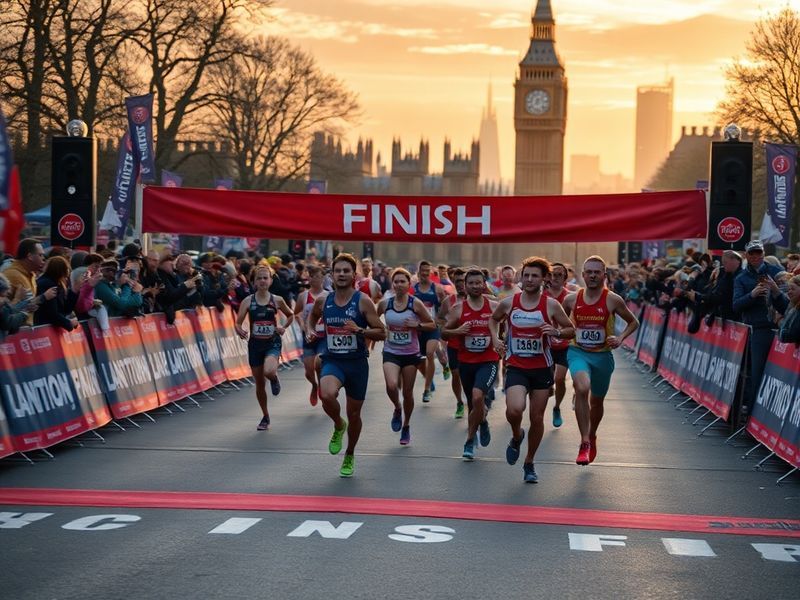
The London Marathon transcends sport, embedding itself into the city’s cultural fabric. Unlike many elite athletic events, it prioritizes accessibility, welcoming amateur runners alongside world-class competitors. This inclusivity has made it a symbol of London’s diverse and dynamic identity. The race route, which winds through iconic landmarks such as Tower Bridge, the London Eye, and Buckingham Palace, transforms the city into a stage for personal and collective achievement.
The event also serves as a platform for charitable giving, with runners raising millions of pounds annually for causes ranging from medical research to social justice initiatives. In 2023 alone, participants contributed over £66 million to charity, reinforcing the marathon’s role as a force for social good. This philanthropic dimension aligns with London’s reputation as a global hub for activism and community engagement.
Culturally, the London Marathon has inspired countless works of art, literature, and media. Films like Run for Your Life and documentaries such as Marathon: A Global Celebration explore the emotional and physical journeys of participants. The event’s vibrant atmosphere, fueled by spectators lining the streets with homemade signs and costumes, has become a staple of London’s springtime identity. It’s a reminder that sport, at its best, is about more than competition—it’s about connection.
Key Moments and Records in London Marathon History
The London Marathon has witnessed some of the most legendary performances in long-distance running. In 1985, Norwegian athlete Ingrid Kristiansen set a world record of 2:21:06, a mark that stood for nearly a decade. More recently, Kenya’s Eliud Kipchoge, widely regarded as one of the greatest marathoners of all time, has dominated the men’s race, winning four times between 2015 and 2022. His 2019 victory, clocking 2:02:37, remains one of the fastest marathons ever run.
Women’s racing has also seen historic moments. Paula Radcliffe’s 2003 victory, where she shattered the women’s world record with a time of 2:15:25, remains one of the most celebrated achievements in the event’s history. These records highlight the marathon’s role in pushing the boundaries of human endurance, while also showcasing the global reach of elite talent.
The event has not been without its challenges. The 2020 and 2021 races were held virtually due to the COVID-19 pandemic, a stark contrast to the usual bustling streets of London. Yet, even in these difficult circumstances, the marathon adapted, proving its resilience and commitment to community. The return to in-person racing in 2022 was met with overwhelming enthusiasm, underscoring the event’s importance to both athletes and spectators alike.
Why the London Marathon Matters Beyond the Finish Line
The London Marathon’s influence extends far beyond the 26.2-mile course. It has become a microcosm of global trends in health, technology, and urban development. For instance, the event has driven innovations in race-day logistics, from real-time tracking apps to sustainable water bottle initiatives. Organizers have also prioritized environmental sustainability, implementing measures like biodegradable cups and waste reduction programs. These efforts reflect a broader shift toward eco-conscious sporting events.
From a health perspective, the marathon has played a pivotal role in promoting physical activity as a public health priority. Studies have shown that mass-participation events like the London Marathon encourage lifelong fitness habits, particularly among amateur runners. The event’s emphasis on inclusivity—offering categories for wheelchair athletes and runners with disabilities—further reinforces its commitment to accessibility.
Economically, the marathon generates significant revenue for London, attracting tourists and boosting local businesses. In 2019, the event was estimated to contribute £130 million to the city’s economy. This financial impact extends to the charitable sector, where funds raised support a wide range of causes. The marathon’s ability to merge sport, charity, and commerce demonstrates the power of events to drive positive change.
The Future of the London Marathon
As the London Marathon approaches its fifth decade, its organizers face both opportunities and challenges. One key focus is expanding the event’s global reach while maintaining its local roots. In recent years, the marathon has introduced virtual participation options, allowing runners from around the world to take part in their own communities. This hybrid model could redefine mass-participation events in the post-pandemic era.
Another priority is addressing the climate crisis. The marathon has committed to becoming carbon-neutral by 2030, a goal that aligns with London’s broader sustainability initiatives. This includes reducing single-use plastics, promoting public transportation for spectators, and sourcing materials locally. Such efforts are critical in an era where environmental responsibility is increasingly central to public perception.
Finally, the marathon continues to innovate in terms of athlete experience. Recent years have seen the introduction of pacemaker systems to support elite runners and the expansion of prize money to attract top talent. These changes reflect a commitment to balancing tradition with progress, ensuring the event remains relevant in an ever-changing sporting landscape.
A Lasting Legacy
The London Marathon’s enduring success is a testament to its ability to evolve while staying true to its core values. It is more than a race; it is a celebration of human potential, community, and resilience. Whether through record-breaking performances, charitable endeavors, or cultural moments, the marathon continues to inspire millions each year.
For first-time runners and seasoned marathoners alike, the London Marathon offers a unique opportunity to test limits, forge connections, and contribute to a global movement. As it looks ahead to the future, the event stands poised to write its next chapter, one step at a time.
To explore more about the history of iconic sporting events, visit our Sports category. For insights into how endurance sports shape culture, check out our Health section.