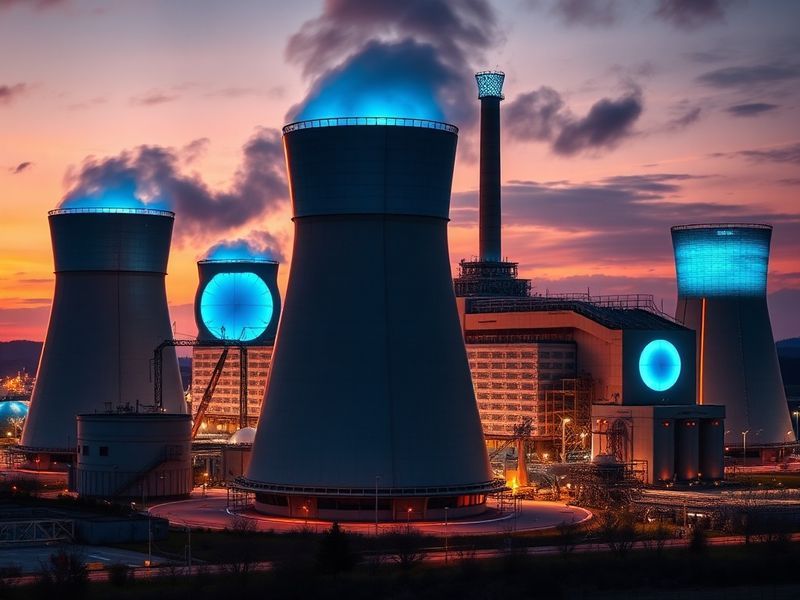
X Energy Stock: A Global Perspective on the Renewable Powerhouse
X Energy Ltd. has quietly emerged as one of the most compelling players in the global energy transition. Unlike the flashier electric vehicle manufacturers or solar panel startups, X Energy operates in the less glamorous but critical space of nuclear energy innovation. The company’s advanced reactor designs and fuel-cycle technologies position it at the forefront of a quiet revolution—one that could redefine how the world meets its growing electricity demands without exacerbating climate change.
Based in the United States but with partnerships spanning Europe and Asia, X Energy is not just another energy firm chasing subsidies or greenwashing its credentials. Its core technology, the Xe-100 high-temperature gas-cooled reactor, offers a scalable solution for both electricity generation and industrial heat applications. This versatility is crucial as industries from steelmaking to hydrogen production seek to decarbonize. The company’s recent breakthroughs in fuel manufacturing—using TRISO (tristructural isotropic) particles—have further solidified its reputation as a leader in next-generation nuclear safety and efficiency.
While nuclear energy remains a polarizing topic in many Western nations, X Energy’s approach has managed to bridge some of the ideological divides. By emphasizing modularity, passive safety features, and compatibility with existing infrastructure, the company has attracted interest from both traditional utilities and climate-focused investors. Its ability to generate baseload power without carbon emissions makes it a potential linchpin in the global shift away from fossil fuels.
The Technology Behind the Stock: Why Xe-100 Matters
At the heart of X Energy’s value proposition is the Xe-100 reactor, a fourth-generation nuclear design that promises to address many of the criticisms leveled at traditional nuclear power. Unlike conventional light-water reactors, the Xe-100 uses helium as a coolant and graphite as a moderator, allowing it to operate at much higher temperatures. This enables not only more efficient electricity generation but also the production of high-grade industrial heat, which is essential for processes that cannot be electrified easily.
The reactor’s fuel, TRISO, is another standout feature. Each TRISO particle is coated in layers of carbon and ceramic, preventing the release of radioactive materials even in extreme conditions. This inherent safety reduces the need for complex—and often costly—engineering safety systems. X Energy’s manufacturing process for TRISO fuel is also noteworthy for its scalability. By leveraging advanced 3D printing techniques, the company has reduced production costs while maintaining high precision, a critical factor for commercial viability.
Globally, the response to X Energy’s technology has been cautiously optimistic. In Japan, where nuclear energy has struggled to regain public trust after Fukushima, X Energy’s passive safety features have drawn attention from regulators and utilities alike. Meanwhile, in Europe, where nuclear is still a contentious issue, countries like Poland and Estonia have expressed interest in deploying Xe-100 reactors to replace aging coal plants. Even in the United States, where nuclear innovation has often been bogged down by regulatory hurdles, X Energy has made strides in securing permits and partnerships with utilities in Texas and Washington state.
Market Performance and Investor Sentiment: A Mixed but Growing Appeal
X Energy went public in 2022 through a merger with a special purpose acquisition company (SPAC), a move that initially sparked skepticism. SPACs had become synonymous with hype and volatility, and X Energy’s stock price reflected that uncertainty in its early days. However, as the company began to deliver on its technical milestones—such as completing the first fuel qualification test for TRISO particles in 2023—the stock gained traction among investors focused on long-term energy solutions.
Today, X Energy’s market performance remains volatile, as is typical for pre-revenue companies in the nuclear sector. The stock has seen fluctuations based on broader market sentiment, regulatory developments, and shifts in energy policy. For instance, when the U.S. Inflation Reduction Act introduced new tax credits for advanced nuclear projects, X Energy’s stock surged temporarily. However, macroeconomic factors such as interest rates and geopolitical tensions in energy markets have also played a role in its valuation.
Investor interest in X Energy is not purely speculative. The company has secured significant funding from both public and private sources, including grants from the U.S. Department of Energy and investments from firms like Dow Inc. and Japan’s IHI Corporation. These partnerships underscore the global confidence in X Energy’s technology, particularly in regions where energy security and decarbonization are top priorities.
For potential investors, X Energy represents a high-risk, high-reward opportunity. The nuclear sector is notorious for its capital intensity and regulatory complexity, but the potential payoff is substantial. If the Xe-100 and TRISO technologies prove scalable and cost-effective, X Energy could become a cornerstone of the global energy transition. Conversely, delays or technical setbacks could erode investor confidence rapidly.
Global Energy Challenges and X Energy’s Role
The world faces a paradox: while renewable energy sources like wind and solar are expanding rapidly, they are not yet capable of meeting all energy demands on their own. Intermittency issues and the lack of scalable storage solutions mean that fossil fuels still dominate during periods of high demand or low renewable output. Nuclear energy, particularly advanced designs like those from X Energy, offers a way to bridge this gap without relying on coal or natural gas.
In Asia, where energy demand is surging alongside economic growth, X Energy’s technology is being eyed as a solution to both pollution and energy security. China and India, despite their investments in renewables, continue to rely heavily on coal. Advanced nuclear reactors could provide a cleaner alternative while meeting the region’s insatiable appetite for power. Meanwhile, in Europe, where energy prices have been volatile since Russia’s invasion of Ukraine, nuclear energy is being reconsidered as a means to reduce dependence on imported fossil fuels.
X Energy’s global potential is not limited to electricity generation. The company’s reactors can produce high-temperature heat, which is essential for industries like steel and cement production—sectors that are notoriously difficult to decarbonize. By offering a clean alternative to natural gas in these industries, X Energy could play a pivotal role in reducing industrial emissions, which account for nearly a quarter of global carbon dioxide output.
However, challenges remain. Public perception of nuclear energy, particularly in Western democracies, remains skeptical. While X Energy’s passive safety features are an improvement over traditional reactors, convincing communities to accept nuclear plants in their backyards will require robust engagement and transparency. Regulatory hurdles, particularly in the United States, can also slow down deployment, as seen with other advanced reactor projects.
The path forward for X Energy will depend on its ability to demonstrate not just technical prowess but also economic viability. The company’s recent partnerships with utilities and industrial firms suggest that it is on the right track, but the road to commercialization is long and fraught with uncertainties. If successful, however, X Energy could redefine the energy landscape, offering a scalable, low-carbon solution that complements rather than competes with renewables.
What’s Next for X Energy?
The coming years will be critical for X Energy as it moves from prototype to commercial deployment. The company plans to begin construction on its first commercial Xe-100 reactor in the mid-2020s, with operations expected to commence by the end of the decade. This timeline aligns with global climate goals, which call for rapid decarbonization of the power sector. Success in this endeavor could position X Energy as a key player in the energy transition, alongside more established names in renewables and traditional nuclear.
For investors, the next few quarters will be particularly telling. Regulatory approvals, fuel qualification tests, and early-stage partnerships will provide clearer signals about the company’s trajectory. Analysts will be watching closely for updates on the company’s first full-scale demonstration project, which is expected to break ground in Texas. If this project proceeds smoothly, it could serve as a blueprint for future deployments worldwide.
Beyond its technical and financial milestones, X Energy’s success will also hinge on its ability to navigate the complex social and political landscape of nuclear energy. This will require not just engineering excellence but also strategic communication and community engagement. The company’s leadership has already begun to emphasize transparency and education, recognizing that public acceptance is just as critical as regulatory approval.
As the world grapples with the dual challenges of climate change and energy security, companies like X Energy offer a glimpse of what a sustainable future might look like. While the road ahead is uncertain, the potential rewards—both for investors and for the planet—are immense. Whether X Energy can deliver on its promises remains to be seen, but its journey is one worth following closely.