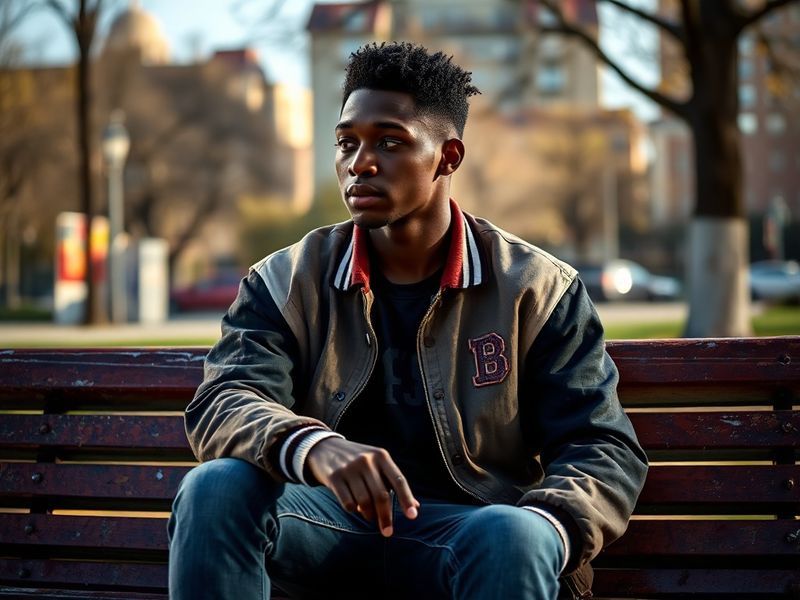
In the sun-scorched streets of Dakar, Senegal, a new wave of cultural influence is emerging—not through music or film, but through the unlikeliest of vehicles: skateboarding. At the forefront of this movement is Brandon Cissé, a 25-year-old skateboarder whose relentless energy and innovative style have begun to reshape how Africa engages with global urban sports. His journey from the sandy alleys of Yoff to international competitions is more than a personal triumph; it is a testament to the growing interconnectedness of youth culture across continents.
Cissé’s rise has coincided with a broader shift in perception. For decades, skateboarding was seen as a Western-dominated sport, rooted in the concrete jungles of California and New York. Yet today, cities like Lagos, Cape Town, and Nairobi are producing skaters who blend local rhythms with global trends. Dakar, with its vibrant street art and rhythmic pulse, has become an unlikely hub for this evolution. Cissé embodies this fusion—his skate style carries the fluidity of sabar drumming, while his tricks reflect the discipline of breakdancing, a cultural cousin in Senegal’s urban arts scene.
From Dakar’s Streets to the Global Stage
Brandon Cissé did not grow up with a skatepark in his neighborhood. His first board was a hand-me-down, its wheels wobbly and grip tape peeling. Yet, the lack of infrastructure did not deter him. Instead, it forced creativity. The uneven pavement of Dakar’s Plateau district became his training ground, where he learned to navigate cracks and potholes with the same precision as professional skaters elsewhere. By 16, he was competing in local contests, his raw talent drawing attention from older skaters who had never seen someone his age push boundaries so aggressively.
His breakthrough came in 2019 when he placed second in the Dakar Skateboarding Championship, a competition that had previously been dominated by expatriates. The win was symbolic. It signaled that Senegalese skaters could not only participate but excel on their own terms. Cissé’s victory was covered by regional outlets like Sports Afrique, which highlighted his ability to merge traditional Senegalese aesthetics with modern skate culture. His signature move—a kickflip off a makeshift ramp—became a viral sensation on Instagram, where clips of him skating past colonial-era buildings garnered thousands of views.
International recognition followed. In 2022, Cissé was invited to the Red Bull Cape Fear event in South Africa, where he stunned judges by landing a trick on a wave machine—a challenge even seasoned pros found daunting. His performance earned him a wildcard spot at the 2023 Street League Skateboarding (SLS) event in London, where he finished in the top 15. For many in the skateboarding world, Cissé was no longer a curiosity from Africa; he was a legitimate contender.
The Cultural Significance of Cissé’s Success
Cissé’s impact extends beyond medals and viral videos. He represents a cultural bridge, connecting Africa’s youth to a global movement that has historically excluded them. Skateboarding, as an art form, thrives on rebellion and individuality—values that resonate deeply in African cities where young people often grapple with limited opportunities. For skaters like Cissé, the board is not just a toy or a sport; it is a tool for self-expression and social commentary.
In Senegal, skateboarding is still in its infancy, but its growth mirrors the country’s broader cultural renaissance. Dakar’s skate scene is a microcosm of this shift. According to a 2023 report by the African Skateboarding Federation, the number of active skaters in Senegal has tripled since 2018, with most participants under 25. Cissé has been instrumental in this expansion, co-founding a nonprofit called Ride Dakar that provides free skateboards and lessons to underprivileged children. The organization’s motto—“Skate to Empower”—reflects a belief that the sport can be a vehicle for personal and community development.
Globally, Cissé’s success challenges stereotypes about African athletes. While football (soccer) and athletics have long been the continent’s primary exports in sports, Cissé’s achievements in skateboarding force a reimagining of what African excellence looks like. His story aligns with a growing trend of African athletes excelling in niche sports, from table tennis in Nigeria to surfing in Morocco. It is a reminder that talent is not confined by geography—and that global platforms are finally beginning to reflect this reality.
Challenges and the Road Ahead
Despite his progress, Cissé faces hurdles that are familiar to many African athletes: lack of sponsorship, limited access to high-quality equipment, and the logistical nightmare of traveling to international competitions. While brands like Nike SB and Vans have begun to invest in African skate talent, most contracts still favor skaters from North America or Europe. Cissé has had to rely on crowdfunding campaigns and local partnerships to fund his travels, a testament to the grassroots nature of his career.
Another challenge is the perception of skateboarding in Senegalese society. While youth embrace the sport, older generations often view it with skepticism, associating it with delinquency or Western influence. Cissé has worked to change this narrative by engaging with community leaders and organizing exhibitions that blend skateboarding with traditional Senegalese arts, such as ndombolo dance. His goal is to make skateboarding as culturally accepted as football or wrestling.
Looking ahead, Cissé has set his sights on the 2024 Paris Olympics, where skateboarding will make its second appearance as an official sport. While qualification remains uncertain, his participation could further elevate the profile of African skateboarding. More importantly, he hopes to inspire a new generation of skaters in Senegal and beyond. “I want kids to see me and think, ‘If he can do it, so can I,’” he said in a 2023 interview with Culture Afrique.
The Broader Movement: Skateboarding in Africa
Cissé is not alone in his mission. Across the continent, skaters are carving out spaces in cities where concrete and culture collide. In Morocco, the coastal town of Taghazout has become a magnet for skate tourists, while in Kenya, the Nairobi Skatepark has become a hub for East Africa’s skate scene. These developments are part of a larger trend: the globalization of skate culture, where local flavors are shaping a universal language of rebellion and creativity.
Africa’s skateboarding movement is also intersecting with other cultural shifts. In South Africa, skaters are using their platforms to address social issues like gender inequality, with initiatives like Skate Like a Girl encouraging young women to take up the sport. In Senegal, Cissé’s Ride Dakar program includes a strong emphasis on gender parity, with girls making up nearly 40% of participants. These efforts reflect a broader recognition that skateboarding can be a force for social change, not just athletic achievement.
As Cissé continues to push boundaries, his story serves as a case study in how sports can transcend borders. His journey is not just about winning competitions; it is about redefining what it means to be an African athlete in a globalized world. In a sport that has long been dominated by Western narratives, Cissé is writing a new chapter—one where Dakar’s rhythms meet California’s concrete, and where the next generation of skaters looks not just to Los Angeles or New York, but to Dakar, Lagos, and Nairobi for inspiration.
The world of skateboarding is changing, and Brandon Cissé is at its vanguard. His story reminds us that culture is not static; it is a living, breathing entity shaped by those who dare to innovate. As he continues to break barriers, one kickflip at a time, the question is no longer whether Africa will have a seat at the global skateboarding table—but when the rest of the world will start paying attention.