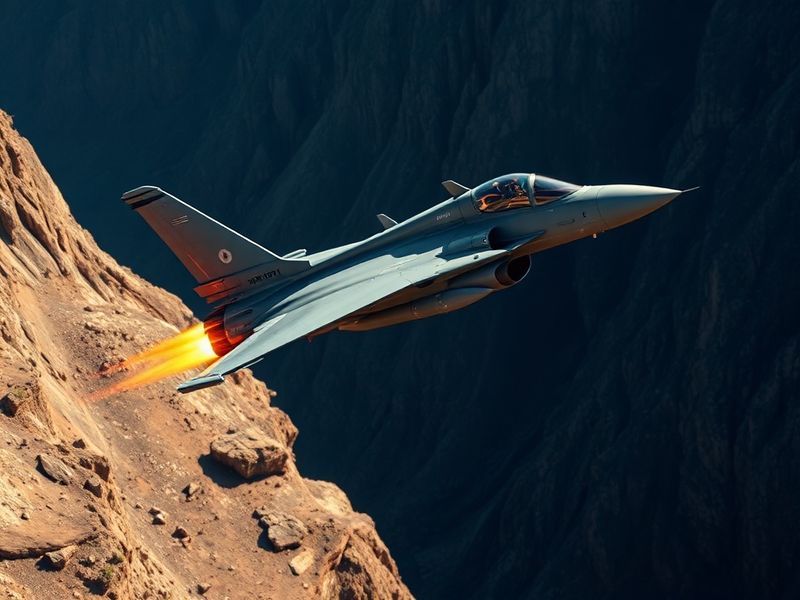
The Eurofighter Typhoon stands as one of the most advanced and versatile combat aircraft in the world today. Developed collaboratively by four European nations—Germany, Italy, Spain, and the United Kingdom—this twin-engine, canard-delta multirole fighter has evolved significantly since its inception. Designed primarily for air superiority missions, the Typhoon has expanded its role to include ground attack, reconnaissance, and electronic warfare, making it a cornerstone of modern European defense capabilities.
With its first flight taking place in 1994 and entering service in 2003, the Typhoon has since been adopted by multiple air forces beyond its original developers. Its blend of agility, advanced avionics, and sensor fusion sets it apart in a competitive global market. As geopolitical tensions rise and defense budgets tighten, the Typhoon remains a symbol of European aerospace innovation and strategic autonomy.
The Typhoon’s Design and Capabilities
The Eurofighter Typhoon’s design is a marvel of aerospace engineering, combining stealthy features, supercruise capability, and unparalleled maneuverability. Its airframe incorporates a delta wing and canard configuration, which enhances lift and reduces drag, allowing for exceptional agility at both subsonic and supersonic speeds. Powered by two Eurojet EJ200 turbofan engines, each producing approximately 90 kN of thrust with afterburner, the Typhoon can achieve a top speed of Mach 2 without the need for afterburner—a feature known as supercruise.
The cockpit is a testament to modern avionics, featuring a hands-on-throttle-and-stick (HOTAS) system, three multifunction head-down displays, and a wide-angle head-up display (HUD). Pilots benefit from a helmet-mounted display system, which projects critical flight and targeting data directly onto the visor, enhancing situational awareness. The aircraft’s Captor-E AESA radar, developed by Leonardo, is a game-changer in terms of detection range, electronic countermeasures, and multi-target tracking. This radar allows the Typhoon to engage multiple airborne and ground targets simultaneously, a critical advantage in modern combat scenarios.
The Typhoon’s armament capabilities are equally impressive. It can carry a mix of air-to-air missiles, including the AIM-120 AMRAAM, IRIS-T, and Meteor, as well as air-to-ground weapons like the Storm Shadow cruise missile, Brimstone anti-armor missile, and Paveway laser-guided bombs. The aircraft’s 27mm Mauser BK-27 cannon provides a reliable close-range option. Additionally, the Typhoon is compatible with a variety of external fuel tanks and pods, allowing for extended range and mission flexibility.
Stealth and Survivability
While not a true stealth aircraft like the F-35, the Typhoon incorporates several low-observable features to reduce its radar cross-section (RCS). The airframe’s angular surfaces and internal weapons bays (on later Tranche 3 aircraft) help minimize radar reflections. The use of radar-absorbent materials and careful design of engine inlets and exhausts further contribute to its reduced detectability. These features, combined with its advanced electronic warfare suite, make the Typhoon a challenging target for enemy air defenses.
Survivability is also enhanced by the Typhoon’s ability to fly at high altitudes and speeds, reducing exposure to surface-to-air missiles. Its defensive aids subsystem (DASS) provides real-time threat detection and countermeasure deployment, including chaff, flares, and electronic jamming. The aircraft’s twin-engine configuration ensures redundancy, allowing it to return to base even after sustaining significant battle damage.
Operational History and Global Deployments
The Eurofighter Typhoon has seen extensive operational service, proving its worth in real-world conflicts and exercises. Its first combat deployment occurred in 2011 during Operation Ellamy, part of the NATO intervention in Libya. Operating alongside other coalition aircraft, the Typhoon conducted precision airstrikes against Libyan ground forces, demonstrating its effectiveness in a contested environment. Since then, it has been involved in numerous missions, including the fight against ISIS in Syria and Iraq, where it provided close air support and intelligence, surveillance, and reconnaissance (ISR) capabilities.
Beyond Europe, the Typhoon has found a home in several international air forces. Austria, Oman, Saudi Arabia, Kuwait, and Qatar have all purchased the aircraft, recognizing its balance of performance, cost, and interoperability. The Typhoon’s participation in multinational exercises, such as the Red Flag and Exercise Cobra Warrior, has further cemented its reputation as a reliable and adaptable platform.
One notable deployment was the Typhoon’s role in NATO’s Baltic Air Policing mission. Stationed in Lithuania and Romania, Typhoons from the United Kingdom and Italy have been responsible for intercepting and escorting Russian aircraft that enter NATO airspace without proper communication or transponder signals. These missions highlight the Typhoon’s importance in maintaining air sovereignty and deterring aggression.
Challenges and Modernization
Despite its strengths, the Typhoon has faced challenges, including cost overruns during its development phase and debates over its long-term viability amid the rise of fifth-generation fighters like the F-35. However, ongoing modernization programs have ensured that the Typhoon remains relevant. The Technology section on Dave’s Locker covers how advancements in avionics, weapons integration, and networking continue to enhance its capabilities.
The Typhoon’s mid-life update (MLU) program, known as the Defense category, includes upgrades to the radar, electronic warfare systems, and weapons compatibility. The integration of the Meteor beyond-visual-range missile and the SPEAR 3 air-to-ground missile has significantly expanded its combat envelope. Additionally, the introduction of the Conformal Fuel Tanks (CFTs) has extended the aircraft’s range without compromising its stealth characteristics.
Another critical aspect of the Typhoon’s future is its potential role in the development of the Future Combat Air System (FCAS) and the Tempest program. While these initiatives aim to field a sixth-generation fighter by the 2030s, the Typhoon is expected to remain in service well into the 2040s and beyond, serving as a bridge between current and future capabilities.
Comparisons and the Future of the Typhoon
When compared to its contemporaries, the Typhoon holds its own against formidable rivals like the American F/A-18E/F Super Hornet and the French Rafale. Each aircraft has its strengths: the Super Hornet excels in carrier operations and electronic warfare, while the Rafale offers a robust ground attack capability and a lower operational cost. The Typhoon, however, stands out for its unmatched agility, sensor fusion, and multirole flexibility.
Looking ahead, the Typhoon’s future will be shaped by several factors, including geopolitical developments, defense budgets, and the emergence of next-generation technologies. One area of focus is the integration of artificial intelligence (AI) and machine learning into its avionics. These technologies could enhance pilot decision-making, automate routine tasks, and improve threat detection and response.
The Typhoon’s role in electronic warfare is also expected to grow. As adversaries develop more sophisticated air defense systems, the need for electronic attack (EA) and electronic protection (EP) capabilities becomes increasingly critical. Upgrades to the DASS and the integration of new jamming pods will ensure the Typhoon remains a dominant force in electronic combat.
Potential Export and Collaborative Opportunities
The Typhoon’s international appeal continues to grow, with potential customers eyeing the aircraft as a cost-effective alternative to newer, more expensive platforms. Poland, Finland, and Canada have all expressed interest in the Typhoon or similar multirole fighters as they modernize their air forces. Collaborative ventures, such as the proposed Global Combat Air Programme (GCAP) involving the UK, Japan, and Italy, could further extend the Typhoon’s influence and ensure its technological evolution aligns with future NATO and allied requirements.
Moreover, the Typhoon’s participation in international arms exhibitions, such as the Paris Air Show and the Farnborough Airshow, underscores its status as a premier export product. These events not only showcase the aircraft’s capabilities but also foster partnerships and technology transfer agreements that benefit European defense industries.
Conclusion: A Legacy of Innovation and Adaptability
The Eurofighter Typhoon represents a triumph of international collaboration and technological innovation. From its early development stages to its current role as a backbone of European air power, the Typhoon has consistently demonstrated its ability to adapt to evolving threats and mission requirements. Its blend of speed, agility, and advanced avionics ensures that it remains a formidable asset in the global defense landscape.
As the world faces new challenges, from hybrid warfare to great-power competition, the Typhoon’s role will continue to evolve. Whether through modernization programs, international partnerships, or deployments in support of NATO and allied missions, the Typhoon is poised to remain a critical component of airpower for decades to come. For enthusiasts and defense analysts alike, the Typhoon stands as a testament to what can be achieved when nations come together to push the boundaries of aerospace engineering.
For those interested in exploring more about advanced military technologies, the Technology category on Dave’s Locker offers a wealth of articles and insights into the latest innovations shaping the defense industry.